Control Secretory IgA & Keep A Happy Gut
By Jacob Gordon, INHC, FMT-CThis article contains affiliate links. As an Amazon Associate, MyBioHack earns from qualifying purchases at no extra cost to you. We only link products we research and stand behind.
I wrote this because mine was low (@29.5mg/dL) and used this protocol to bring my levels within range.
Basics
Secretory Immunoglobulin A (sIgA) is an antibody secreted by mucosal tissue and represents the first line of defense of the GI mucosa. R
It is a component of the adaptive immune system, and is an important player in the protection of epithelium. R
It is known to have an important impact on the regulation of microbiota composition. R
It is also found in other mucous linings including the respiratory, urinary, nasal, tear duct, and salivary systems. R
It is central to the normal function of the GI tract as an immune barrier. R
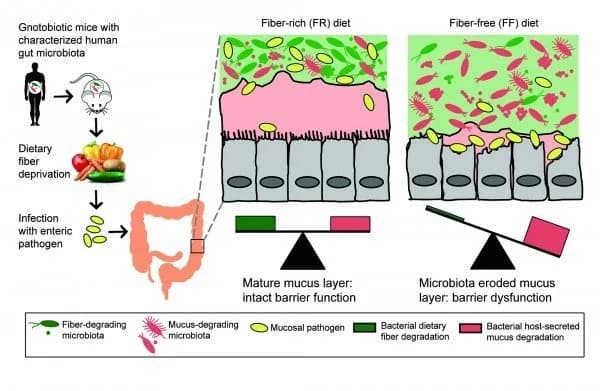
The SIgA mucus layer is crucial to the process of protection and homoeostasis of the gut. R
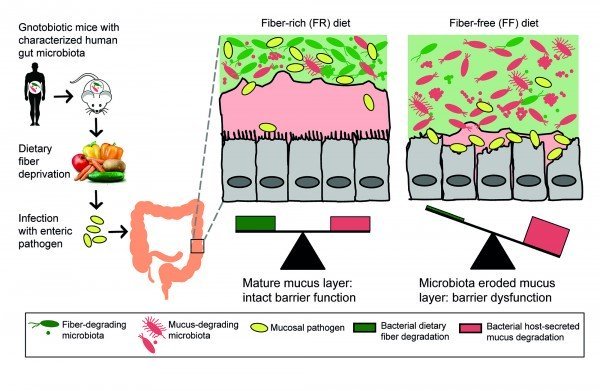
This is because if the bacteria, for example, don't get the fiber they need to replicate, they will eat the mucus layer and attack the gut cell lining. R
Essentially, SIgA:
Regulates pH in the gut lumen
Influences the composition of the intestinal microbiota (by producing biofilms to protect good bacteria and fighting off bad bacteria). R
Down-regulates pro-inflammatory responses (from highly pathogenic bacteria and allergenic antigens). R
Promotes the retro-transport of antigens. R
Prevents hyper-stimulation of the local and non-mucosal immune systems. R
High vs Low SIgA
High SIgA
Elevated levels of sIgA have been associated with an upregulated immune response.
For example, it is seen high in some psoriasis patients. R
It may mean you are fighting off an acute infection.
Circulating levels of SIgA antibodies in serum have been seen in rheumatoid arthritis patients. R
Also high antibodies can be seen in some Epstein Barr Virus patients. R
Other pathologies with high SIgA are:
Low SIgA
IgA-deficient patients are generally asymptomatic, but do exhibit a tendency to develop gastrointestinal disorders such as:
Celiac Disease R
Allergies (not necessarily food allergies) R
Food Intolerances R
Autism Spectrum Disorder R
Cancer R
Onset of depression-immunity R
Mice unable to produce SIgA had an increase in retinoic acid and CD103+ cells activation. R
Benefits
1. Blocks Pathogens
Immune exclusion has been recognized as a function of SIgA for nearly four decades. R
Via immune exclusion, SIgA can prevent microbial pathogens and antigens from gaining access to the instestinal epithilium and preventing their attachment (through a stepwise series of events involving agglutination, entrapment in mucus, and/or clearance via peristalsis and recognition of receptor-binding domains). R R R R
It can block:
Gastric "flu" R
Candida Albicans R
Reovirus T1L Infection R
C. Difficile R
Salmonella R
Streptococcus pneumoniae R
Shigella R
H. Pylori R
E. Coli (overcolonization, SIgA actually helps E. Coli attach to the gut in a preferable way) R R
HIV from entering the system R
Ricin poisoning R
SIgA (and SC) also protects against inflammatory lectins. R
Bacteria adhere to the mucous surface by binding to lectins. R
2. Scavenges For Allergenic Antigens

Reduction of fecal SIgA have been associated with:
Decreased control of allergic reactions R
Reduced airways responsiveness R
Lung eosinophilia R
Allergic rhinitis R
Increased gut permeability R
A greater immune response towards commensal bacteria R
In the nose, SIgA and heat shock proteins (and anti-bodies) regulate chronic rhinosinusitis. R
Interestingly, oral tolerance (suppression of immune responses to antigens) was enhanced in mice unable to produce SIgA. R
3. Down-Regulates Inflammation
SIgA can downregulate pro-inflammatory cytokines TNF-α, IL-6, IFN-γ from intestinal epithelial cells, while maintaining a sustained level of regulatory IL-10. R R
It can also increase production of TGF-beta (and IL-10). R
4. Protects The Gut Microbiome
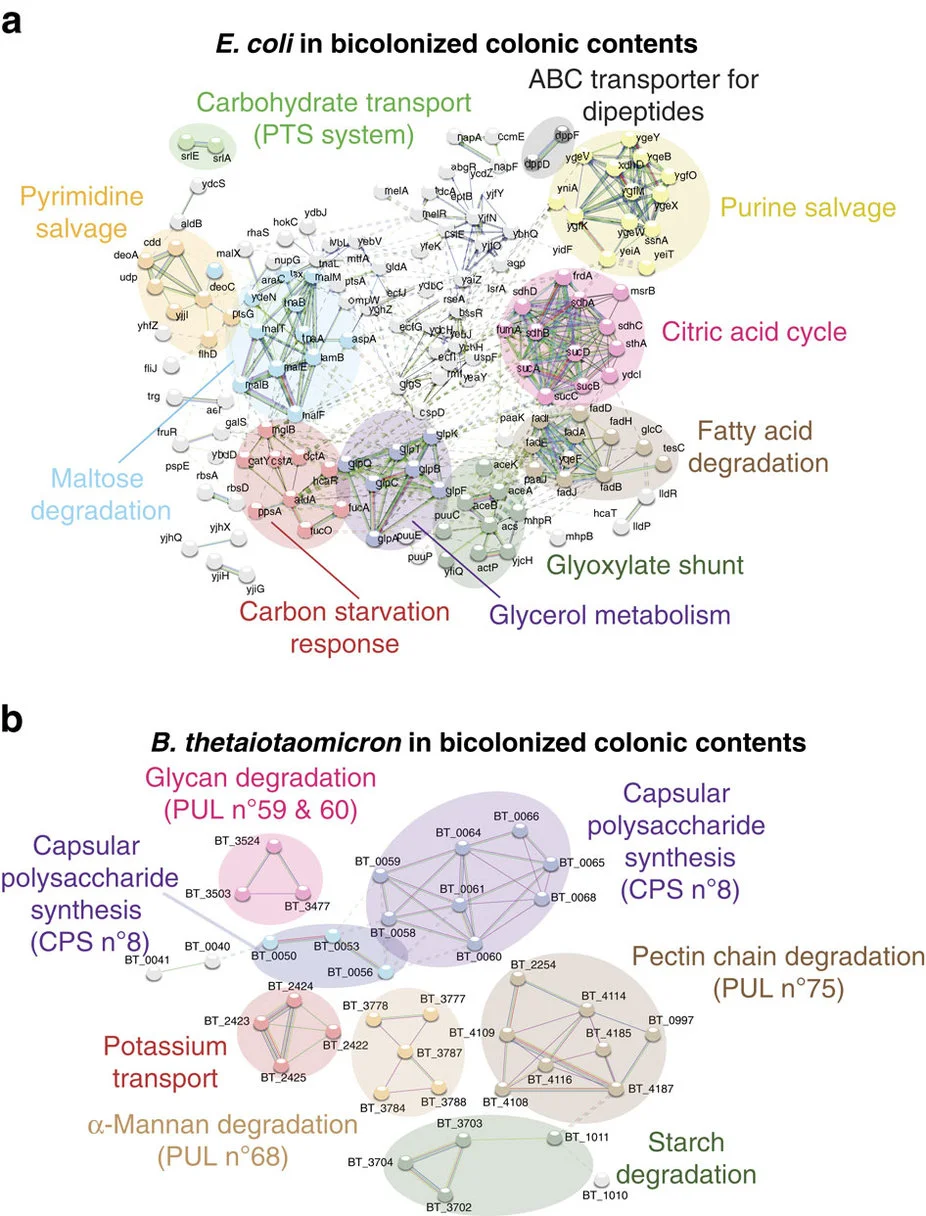
SIgA helps maintian the fragile balance between the triad composed of the microbiota, the intestinal epithelial cells lining the GI tract, and the underlying mucosal immune system. R
When this triad gets disrupted, problems like IBD and malnutrition can happen. R
SIgA hold housing for Lactobacillus, Bifidobacteria, Escherichia coli, and Bacteroides strains, and certain gram-positive and gram-negative bacteria. R
The role of SIgA in shaping the gut microbial community composition may arise from its ability to suppress expression of certain bacterial epitopes, and therefore favor the fitness of one species or genus over others.
5. May Help Against Autism
Low SIgA has been found in autistic children, as well as lower levels of short chain fatty acids (SFCAs like acetate proprionate and valerate). R
They also have lower leves of bifidobaterium and lactobacillus. R
SIgA helps maintain intestinal permeability. R
Gluten and casein break down SIgA, increasing intestinal permeability. R
Autistic patients going on a gluten-free, casein-free diet had significantly lower intestinal permeability. R
How To Increase SIgA
Diet
Decrease Inflammation and Regulate Autoimmunity (see below for more specific)
High Fiber Diet R
Mother's Milk R
Supplements
Agaricus bisporus (white button mushroom) R
Bone Broth (rich in glutamine and collagen)
Choline (and Phosphatidylcholine to increase choline-binding protein A) R
Enteragam (by prescription)
Retinoic Acid (Vitamin A) R
Probiotics/Prebiotics
Bifidobacterium (most do, see specific below) R
Bifidobacterium adolescentis BBMN23 R
Bifidobacterium longum BBMN68 (BB536 is my favorite) R
Lactobacillus KLDS 1.8701 R
Other
Vasoactive intestinal peptide (VIP) R
APRIL (a proliferation-inducing ligand) R
IL-5 R
IL-6 R
IL-10 R
TGFβ R
What To Avoid
Antibiotics (also make glutamine less effective) R
Gluten, esp. if you are Celiac (definitely not the best idea) R
Casein (A2 is generally best to avoid) R
Rancid (oxidized) fish oil R
Increasing TNF-alpha, pIgR (polymeric immunoglobulin receptor) activation, and IL-8
Retinoic Acid (suppresses VIP, it is only bad if you are deficient) R
Being fed intravenously (total parenteral nutrition/TPN) R
Tests And Biomarkers
Doctor's Data Comprehensive Parasitology (this will give you a direct number of SIgA and SCFAs, the other tests are used as estimates for SIgA levels) R R
Serum SIgA
Saliva SIgA
Lysozyme R
Lactoferrin R
Elastase R
Lactulose/Mannitol Test R
Occludin R
IL-5 R
IL-6 R
IL-10 R
VIP R
TGFβ and IL-10 (required for maintaining mucosal tolerance) R R
C-Reactive Protein (CRP) R
Mechanism of Action

When we are born, we move from a sterile environment to a highly colonized environment. Our gut is protected and comprised of IgA antibodies acquired through breast-feeding. R R
The microbiota stimulates GALT (gut-associated lymphoid tissue) maturation, which results in the producing IgA. R R
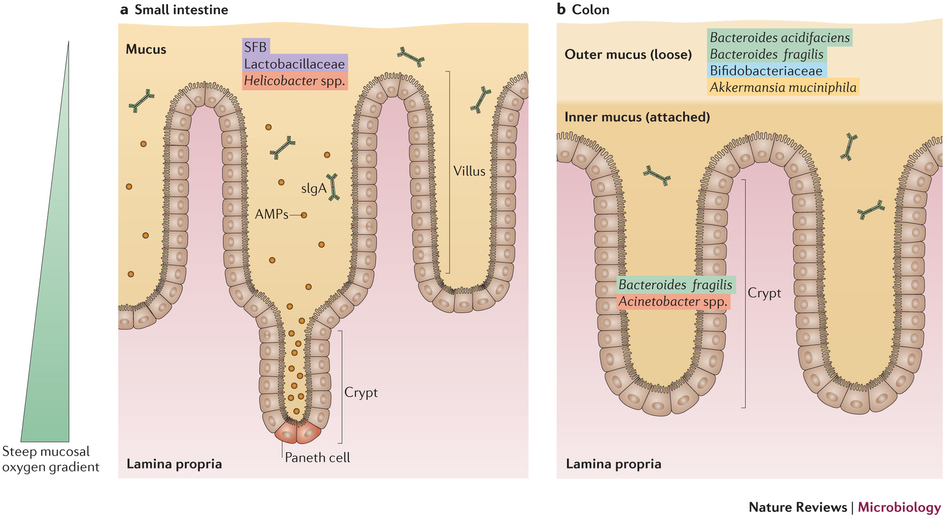
In the small intestine the mucus is discontinuous, but in the stomach and large intestine (colon) there are two layers. R
Mucus is a highly regenerative protective lubricant glycoprotein sheet secreted by host intestinal goblet cells; the inner mucus layer is nearly sterile. R
The outer layer is looser and contains intestinal bacteria. R
As mucus thickens, the microbiota becomes more diverse. R

sIgA primarily acts by blockading epithelial receptors (e.g. by binding their ligands on pathogens), by sterically hindering attachment to epithelial cells, and by immune exclusion. R
Since sIgA is a poor opsonin and activator of complement, simply binding a pathogen isn't necessarily enough to contain it—specific epitopes may have to be bound to sterically hinder access to the epithelium. R
SIgA displays a very different molecular form as compared to IgA antibodies found in the circulation and tissues. R
SIgA is comprised of both the joining chain (JC) and secretory component (SC), which is a polypeptide comprising the extracellular portion of the precursor pIgR that transports polymeric IgA across epithelial cells, a process also known as transcytosis. R
SIgA can transport immune complexes via M‐cells to underlying dendritic cells, thus inducing attenuated mucosal and systemic immune responses. R
Genetics
More Research
Jacob Gordon
INHC, FMT-C
Integrative Nutrition Health Coach
I cover mold illness, post-viral recovery, methylation, and complex chronic disease, drawing on ten years of clinical research, work inside a functional medicine clinic, and my own recovery from all of it. Every claim here is cited.
Book a ConsultationRelated Protocols & Supplements
Deep-dive chapters and recommended supplements for this topic
Quercetin
500mg 2x/day
Vitamin D3 + K2
5000 IU + 200mcg/day
DAO Enzyme
1 cap before meals