CoQ10 And Ubiquinol: Mitochondrial Energy, Statin Depletion, And Aging
By Jacob Gordon, INHC, FMT-CCoenzyme Q10 is one of the most commonly recommended mitochondrial supplements, yet the difference between CoQ10 and ubiquinol is often misunderstood.
In this post, we will discuss what CoQ10 does, whether ubiquinol is better, how statins deplete it, and what the evidence shows for heart failure, migraines, and fertility.

What Is CoQ10
Coenzyme Q10 (CoQ10) is a fat-soluble, vitamin-like compound found in every cell of the body. RIt is a critical component of the mitochondrial electron transport chain and a lipid-soluble antioxidant. R
CoQ10 is synthesized endogenously, but production declines with age. R
CoQ10 Vs Ubiquinol
CoQ10 exists in two interconvertible forms: ubiquinone (oxidized) and ubiquinol (reduced). R
Ubiquinol was marketed as more bioavailable, but the difference is less clear than advertising suggests. R
Ubiquinol is unstable and oxidizes to ubiquinone in the stomach. R
Bioavailability depends more on formulation technology, crystal dispersion, and carrier oil than on the starting redox form. R
High-quality ubiquinone with thermal crystal dispersion can outperform generic ubiquinol. R
Statin Depletion
Statins inhibit HMG-CoA reductase, the rate-limiting enzyme in the mevalonate pathway. R
Because CoQ10 is also synthesized through this pathway, statins can lower serum and tissue CoQ10 levels. R
This depletion is a leading hypothesis for statin-associated muscle symptoms (SAMS). R
CoQ10 supplementation can ameliorate muscle symptoms in some statin users. R
Heart Failure And Cardiovascular
CoQ10 has the strongest evidence base for heart failure. R
A meta-analysis of 33 studies found that CoQ10 as an adjunctive therapy reduced all-cause mortality, hospitalizations, BNP levels, and improved left ventricular ejection fraction. R
The landmark Q-SYMBIO and KISEL-10 trials used ubiquinone, not ubiquinol. R
This is important because many consumers assume ubiquinol is the only effective form. R
Migraine, Fertility, And Exercise
Migraine
CoQ10 is recognized for migraine prophylaxis. R
It reduces attack frequency, severity, and duration through anti-inflammatory and mitochondrial mechanisms. R
Fertility
CoQ10 supports fertility by reducing oxidative stress. R
In men, it improves sperm parameters. R
In women, it supports oocyte quality by protecting mitochondrial integrity. R
Exercise
Supplemental CoQ10 is associated with improved aerobic power and performance in both trained and untrained individuals. R
Dosage And Absorption
Clinical studies typically use 100-300 mg per day. R
Higher doses have been used in research with a high safety profile. R
Absorption is highly variable and requires taking CoQ10 with a fat-containing meal. R
Splitting doses into two administrations often yields higher serum levels. R
Mechanisms Of Action
Simple:
CoQ10 shuttles electrons in the mitochondrial electron transport chain. It acts as an antioxidant in cell membranes. It supports energy production in high-demand tissues like the heart, brain, and muscles.Advanced:
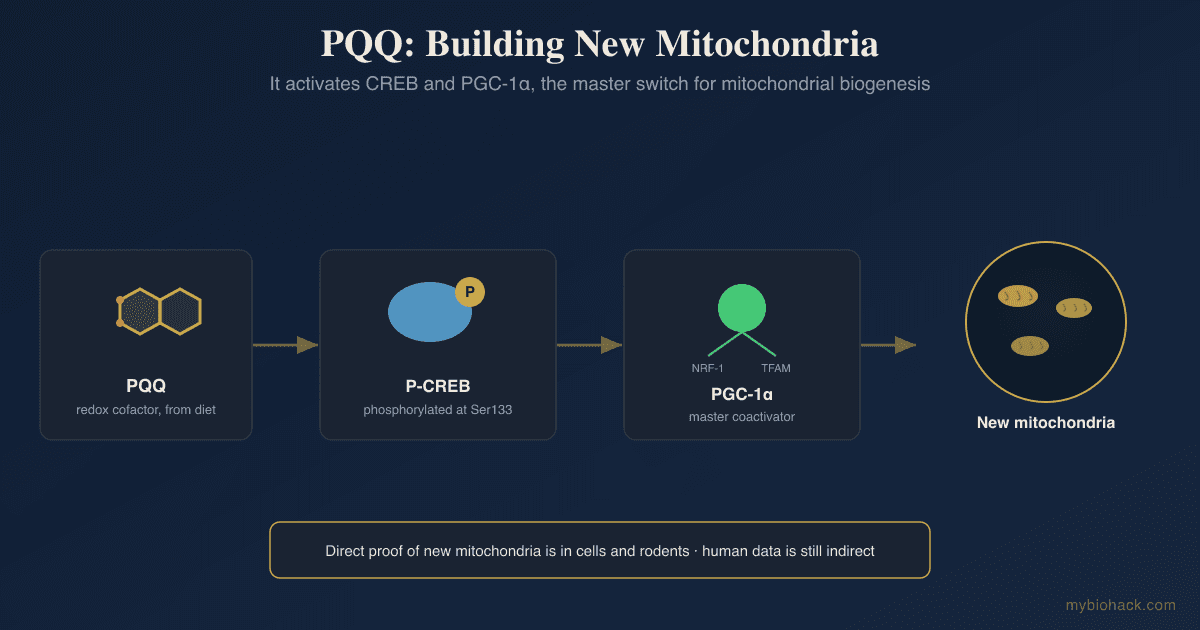
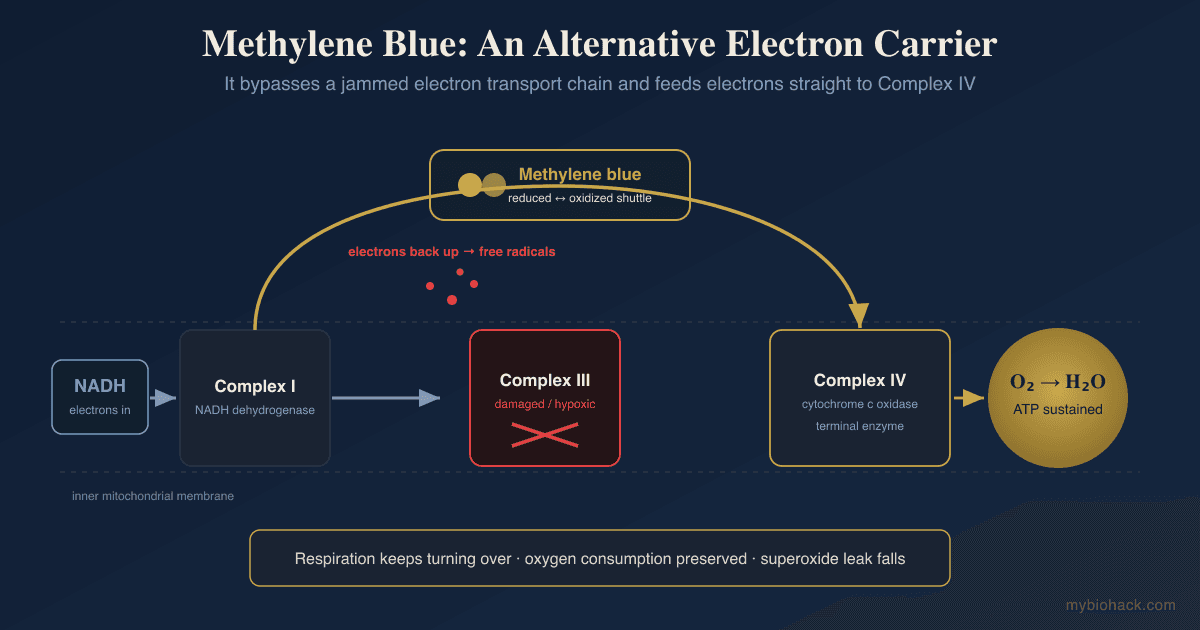
Electron transport. CoQ10 accepts electrons from Complex I and II and donates them to Complex III, generating the proton gradient used for ATP synthesis. R Lipid peroxidation defense. CoQ10 and ubiquinol protect membrane phospholipids from oxidative damage by neutralizing peroxyl radicals. R Mitochondrial biogenesis signaling. CoQ10 influences mitochondrial function and may support biogenesis through effects on PGC-1α and related pathways. R NAD+/NADH regulation. CoQ10 participates in cellular redox balance and supports efficient NAD+/NADH cycling. RGenetics
COQ2 / PDSS1
Mutations in COQ2 and PDSS1 cause primary CoQ10 deficiency, a rare but serious mitochondrial disorder. R
These genes encode enzymes required for CoQ10 biosynthesis. R
NQO1
NQO1 encodes NAD(P)H quinone oxidoreductase 1, which reduces ubiquinone to ubiquinol. RVariants may influence CoQ10 redox status and response to supplementation. R
APOE
APOE variants may affect CoQ10 metabolism and tissue distribution. RMore Research
Neurodegeneration. CoQ10 has been studied in Parkinson's and Huntington's disease, with some positive signals but no definitive disease-modifying effect. R Diabetes. Some trials show CoQ10 improves glycemic control and insulin sensitivity, though results are inconsistent. R Skin aging. CoQ10 is used topically for wrinkles and photoaging, though oral effects on skin are less established. R- Testing. For biomarker testing I use the Comprehensive Metabolic Panel and Cardiovascular Panel to assess metabolic and heart health.
Jacob Gordon
INHC, FMT-C
Board Certified Health Coach
I spent years battling unexplained chronic illness before discovering biohacking, epigenetics, and functional medicine. Now I share that research at MyBioHack to help others find their own answers.
Book a ConsultationRelated Protocols & Supplements
Deep-dive chapters and recommended supplements for this topic
Quercetin
500mg 2x/day
Vitamin D3 + K2
5000 IU + 200mcg/day
Magnesium Glycinate
400mg at bedtime