IL-8: 53 Ways to Naturally And Artificially Lower This Chemokine
By Jacob Gordon, INHC, FMT-CThis article contains affiliate links. As an Amazon Associate, MyBioHack earns from qualifying purchases at no extra cost to you. We only link products we research and stand behind.
I decided to write this post because my IL-8 serum levels were elevated @228.8 pg/mL.

Basics

Interleukin 8 (IL8 or CXCL8) is a chemokine produced by macrophages and other cell types such as epithelial cells, airway smooth muscle cells and endothelial cells. R
IL-8, also known as neutrophil chemotactic factor, has two primary functions: R
It induces chemotaxis in target cells, primarily neutrophils but also other granulocytes, causing them to migrate toward the site of infection.
It also induces phagocytosis once they have arrived.
IL-8 is also known to be a potent promoter of angiogenesis. R
The primary targets of IL-8 are neutrophil granulocytes, endothelial cells, macrophages, mast cells, and keratinocytes. R
IL-8 can be secreted by any cells with toll-like receptors that are involved in the innate immune response. R
IL-8 can also be neuroprotective and help with anxiety in suicidal patients. R
Downsides To Elevated IL-8
There are many pathologies associated with high IL-8:
Allergic Rhinitis R
ALS R
Alzheimer's Disease R
Asthma R
Atherosclerosis (TNF, IL1b and IL-8 enhance the binding of LDL to blood vessels) R R
Behçet's Disease R
Cancer (Prostate, Breast, Colorectal Liver, Thyroid, Myeloma) R R R R R
Colitis R
COPD R
Crohn's R
Cystic Fibrosis R
Eczema R
Fibromyalgia R
Gingivitis R
Heart Disease R
IBS R
Increased Chance of Offspring Having Schizophrenia (if mother is pregnant with high IL-8) R
Lower Chances of Reacting to Anti-Psychotics R
Lower Gray Matter in the Hippocampus R
Lyme R
Migraines R
Multiple Sclerosis R
Obesity R
Oxidative Stress/Inflammation R
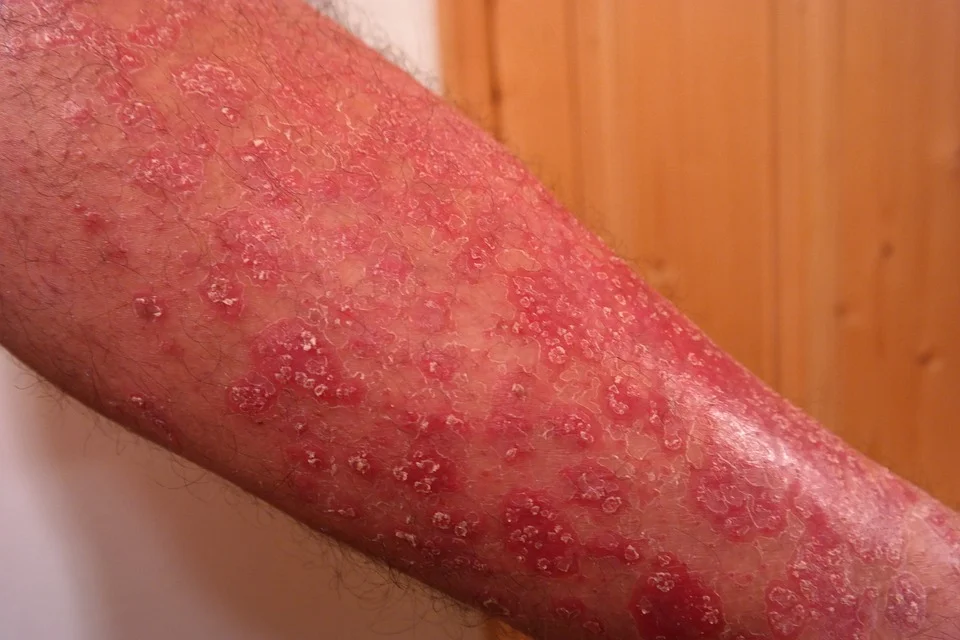
Psoriasis R
Rheumatoid Arthritis R
Sleep Apnea (IL-8 and hypoxia) R
Thyroiditis R
How To Decrease IL-8

L. casei + B. infantis + L. lactis R
B. longum + L. Bulgaricus R
Butyricicoccus pullicaecorum R
S. Boulardii R
B. Subtilis R
Grape Seed Extract R
Oat Polyphenols R
KaempferolR
Caffeic Acid R
Hormones
ACTH R
DHEA R
Cortisol R
Progesterone R (IL-8 also increases progesterone production in the ovaries) R
Devices/Drugs
What Increases IL-8?
If your IL-8 serum levels are high, its probably better to stay away from these:
Mechanism of Action

IL-8 is initially produced as a precursor peptide of 99 amino acids long which then undergoes cleavage to create several active IL-8 isoforms. R
There are many receptors on the surface membrane capable of binding IL-8; the most frequently studied types are the G protein-coupled serpentine receptors CXCR1 and CXCR2.
Expression and affinity for IL-8 differs between the two receptors (CXCR1 > CXCR2).
Through a chain of biochemical reactions, IL-8 is secreted and is an important mediator of the immune reaction in the innate immune system response.
In target cells, IL-8 induces a series of physiological responses required for migration and phagocytosis, such as increases in intracellular Ca2+, exocytosis (e.g. histamine release), and the respiratory burst.
Usually, it is the macrophages that see an antigen first, and thus are the first cells to release IL-8 to recruit other cells. R
Both monomer and homodimer forms of IL-8 have been reported to be potent inducers of the chemokine receptors CXCR1 and CXCR2. R
The homodimer is more potent, but methylation of Leu25 can block the activity of homodimers. R
In human keratinocytes, MSK acts predominantly to regulate inflammation via IL-8. R
Expression
The expression of IL-8 is negatively regulated by a number of mechanisms. MiRNA-146a/b-5p indirectly represses IL-8 expression by silencing the expression of IRAK1. R
Additionally, the 3'UTR of IL-8 contains a A/U-rich element that makes it extremely unstable under certain conditions. IL-8 expression is also regulated by the transcription factor NF-κB. R
Genetics
In humans, the IL-8 protein is encoded by the IL8 gene. R
IL-8 is a member of the CXC chemokine family. The genes encoding this and the other ten members of the CXC chemokine family form a cluster in a region mapped to chromosome 4q. R R
SNPs
rs4073
rs2227306
rs2227307
rs20541
rs1800871
rs1061170
rs2274700
rs4253778
rs708272
rs2230199
rs16858811
rs1800795
rs2243250
rs380390
rs2234671
rs10191411
rs1800925
rs11536889
rs40401
rs2070874
rs4986790
rs2227284
rs5882
rs6723449
rs1008563
More Research
Appendicitis patients had lower level of neutrophil DEFA1,3, but higher levels of ALPL and CXCR2/IL8RB. R
NF-κB regulation represents a novel anti-IL-8 therapy for use in inflammatory diseases such as cystic fibrosis. R
Addition of IL-8 rescued defects in cell migration and invasion observed in ATM-depleted cells thus validating this target. R
The production of IL-8 was inhibited by IFN-gamma, and IFN-gamma and IL-4 both completely abrogated the histamine-induced IL-8 production. These results suggest that the histamine-induced IL-6 production and IL-8 production are differentially regulated by IFN-gamma and IL-4. Histamine may be an important modulator of cytokine production in epidermal milieu. R
Jacob Gordon
INHC, FMT-C
Integrative Nutrition Health Coach
I cover mold illness, post-viral recovery, methylation, and complex chronic disease, drawing on ten years of clinical research, work inside a functional medicine clinic, and my own recovery from all of it. Every claim here is cited.
Book a ConsultationRelated Protocols & Supplements
Deep-dive chapters and recommended supplements for this topic
Electrolyte Complex
1 scoop/day
CoQ10
200mg/day
Magnesium Glycinate
400mg at bedtime