How To Increase Healing Of Dura Mater After Lumbar Puncture, Epidural, and Other Injuries
By Jacob Gordon, INHC, FMT-CThis article contains affiliate links. As an Amazon Associate, MyBioHack earns from qualifying purchases at no extra cost to you. We only link products we research and stand behind.

After epidurals or lumbar punctures, Dura Mater can get damaged, so in this post, we will discuss how to enhance its healing in the early phases after injury and other treatments later on.
What Is The Dura?

The dura or dura mater is a thick protective wrapping which is outermost of the three layers of the meninges that surround the brain and spinal cord.
Normally it stays intact but idiopathic problems, epidurals, and lumbar punctures can cause openings in the dura mater.
Dura mater can also become punctured from minor trauma (such as a tumble) and dural tears are more common (2-5x) in young females (dural integrity may possibly be hormone related). R R R
Other factors for decreased integrity:
Around 500ml of CSF is produced daily, with 150ml being replenished every 3-4 hrs. R
How To Avoid Intracranial Hypotension And CSF Leak
One major problem with an unhealed dural puncture is that it can leak cerebrospinal fluid (CSF), which is called a CSF leak.
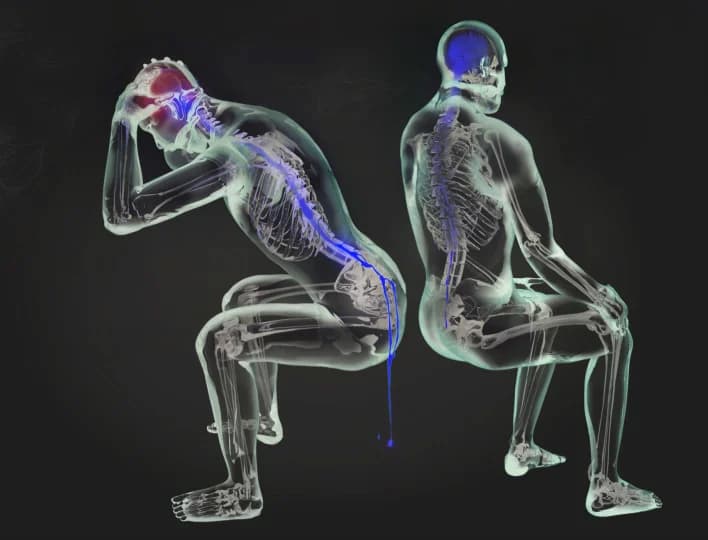
A CSF leak may cause hypotension of the cerebrospinal fluid and let the brain "sag" which can cause headaches/migraines, dizziness, fatigue and and other problems similar to Postural Orthostatic Tachycardia Syndrome (POTS).
After a lumbar puncture, Post-Lumbar Puncture Headache (PLPH) is usually caused by CSF leak. R
PLPH and CSF leak are usually clinically presented as a gradual or thunderclap headache/migraine in onset, more positional over time, can be intermittent, may not be positional and may get better or worse when lying down, although there may be no headache at all. R R R R R R
Other clinical symptoms may or may not include unconsciousness, nausea, vomiting, neck pain/stiffness, blurred vision, visual field deficits/diplopia, cough headache, facial pain/numbness, tinnitus, taste alternations, limb paresthesias, transient third cranial nerve palsy, neurocognitive decline such as dementia, behavioral changes, and parkinsonism. R R R R R R R R R R R R R R R
Other diagnostic imaging measures:
- Cranial CT - helpful initial diagnostic tool for its non-invasive R
- Cranial MRI - may present subdural fluid collection (most common feature), pachymemningeal enhancement, engorgement of venous structures, pituitary hyperemia and sagging of the brain relevant with effacement of perichiasmatic cisterns, bowing of the optic chiasm, flattening of the pituitary stalk and pons, effacement of the prepontine cisterns, descent of the cerebellar tonsils within the posterior fossa - 20–30% of patients with SIH may have a normal brain MRI R
- Spinal MRI - may yield false-negative results because a collapse of the dural sac and epidural CSF accumulations are easily missed R
- Myelography - CTM and Gd-MRM fail to identify a CSF leak in close to 30% of subjects with suspicious SIH R
- Radionuclide Cisternography - considered obsolete due to its poor resolution and non-invasive quality of CTM R
My Experience With Lumbar Puncture
I had a lumbar puncture recently to look for meningitis as I was having significant neck/spinal pain and headaches.
At the hospital they wanted use antibiotics (like vancomycin and ceftriaxone) prophylactically, but I didn't want to mess up my microbiome.
Anyway after 3 failed attempts to extract CSF at the ER, I was given a steroid with a half life of 36 hours (bad for wound healing) and the next day had a lumbar puncture under guided CT.
Turns out my CSF white blood cell count was 0 (normal) so there was no bacterial infection, so I'm glad I stayed away from using broad spectrum antibiotics.
I did appear to have Post-Lumbar Puncture Headache (PLPH) as when I stand up I'm dizzy and have headaches.
Currently, I'm still healing, but I'm making sure things are healing up well so right now I'm taking arginine and ibutamoren (ghrelin agonist) and getting sun on my back in the morning/evening for infrared.
What Helps With Healing The Dura?
- L-Arginine – “systemic supplementation of L-arginine has positive effects on dural healing by increasing collagen deposition and vascularization in the field of trauma, which can reduce the possibility of cerebrospinal fluid leakage and complications" R
- FGF-2 R
- GM-CSF (topically) R
- Human Serum R
- Insulin R
- Phenytoin sodium R
Other Ways of Wound Healing that may have an effect on dural healing:
- Ghrelin can be used for radiation-induced impaired wound healing and growth hormone may increase intracranial CSF pressure; also CSF leak causes sagging of the brain and strain on the hypothalamus, thus causing problems with growth hormone release and excessive prolactin R R
- Infrared
- Quercetin R
- TGF-β1 may mediate fibrosis in adults' wounds, while TGF-β3 may promote scarless healing in the fetus and reduced scarring in adults. R
What Are Some Ways To Repair A Punctured Dura?

- Adherus Dural Sealant R
- Collagen Biomatrix (TissuDura®) R
- DuraGen R
- Epidural Blood Patch - has better rate of working < 48 hours after puncture, use ~20ml (highest success rate), unless too painful R R
- when the location of CSF leakage is unclear, blind EBP is recommended R
- if the CSF leakage identified, target EBP should be provided under CT or fluoroscopic guidance with a 50 to 100% symptomatic improvement rate R
- using the Trendelenburg position before, during and after the EBP procedure has been reported to improve the success rate in over half of cases because this position might reduce the flow of spinal CSF fistula and anti-Trendelenburg position increased the flow of CSF leaks R
- failure can come from Inadequate blood volumes, early patching, steroids in the epidural space and dural punctures performed with large bore needles R
- Nanofibrous graft prevents leaks and brain tissue adhesions and encourages dura mater regrowth R
- Negative pressure therapy R
- Neuro-patch R
What Makes It Worse?
Jacob Gordon
INHC, FMT-C
Integrative Nutrition Health Coach
I cover mold illness, post-viral recovery, methylation, and complex chronic disease, drawing on ten years of clinical research, work inside a functional medicine clinic, and my own recovery from all of it. Every claim here is cited.
Book a ConsultationRelated Protocols & Supplements
Deep-dive chapters and recommended supplements for this topic
Electrolyte Complex
1 scoop/day
CoQ10
200mg/day
Magnesium Glycinate
400mg at bedtime