How To Naturally Reverse Psoriasis
By Jacob Gordon, INHC, FMT-CThis article contains affiliate links. As an Amazon Associate, MyBioHack earns from qualifying purchases at no extra cost to you. We only link products we research and stand behind.
There is a lot of bunk info out there about psoriasis and how to treat it, so I want to effectively and scientifically tackle this autoimmune disorder.
Basics
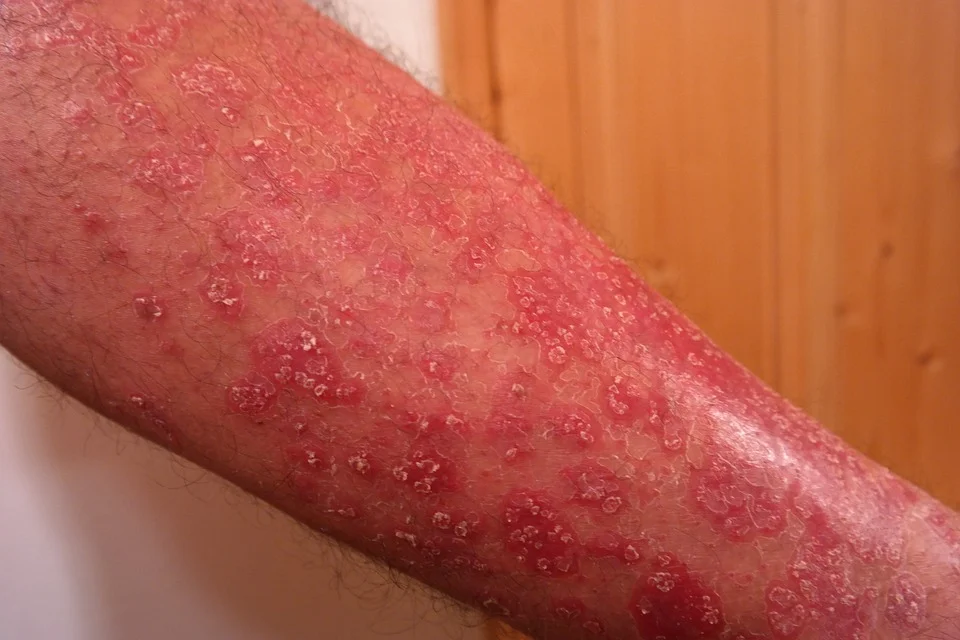
Psoriasis is a chronic inflammatory skin disorder that affects 1 to 3 percent worldwide, 3.2% of the US population (8 million Americans). R R
The most common form is plaque psoriasis (psoriasis vulgaris), which accounts for the majority of cases. R
Psoriasis is characterized by well-circumscribed, erythematous plaques with scale that represent a response to an infiltration of inflammatory T-cells producing disease-stimulating cytokines in skin lesions. R
Symptoms
The symptoms of psoriasis are:
These symptoms most commonly affect the elbows, knees, scalp, lower back, face, palms, soles of the feet, nails, and soft tissues. R
Depression, anxiety, eating disorders, schizophrenia, sexual disorders, sleep disroders, samatoform disorders, substance abuse/dependence, and bipolar disorder are all commonly linked to psoriasis. R R
Psoriasis is also associated with:
Mircobiome
Microbiome of the Skin
The microbiome diversity of the skin appears to be less in psoriasis patients. R
There is a high amount of Firmicutes and Actinobacteria on the skin of psoriasis patients, but a lower amount of Proteobacteria and Bacteriodetes. R
Microbiome of the Gut
Psoriasis can be exacerbated by Staphylococcus aureus and fungi like Candida albicans and Malassezia. R
Psoriatic arthritis is similar to the profile commonly observed in the gut of inflammatory bowel disease patients. R
This possibly suggests a decrease of Faecalibacterium prausnitzii and increase of E. coli. R
Gut dysbiosis in psoriatic arthritis has been shown to correlate to an increase of secretory IgA (sIgA) levels and a decrease of receptor activator of nuclear factor kappa-B ligand (RANK-L) levels within the gut luminal content. R
Intestinal Permeability
Toxic-irritative pollutants can cause problems with the gut in patients with skin disorders.R
Serum histamine levels rise when they are exposed to lactose, sucrose, tyramine, serotonine or phenylethylamine. R
This is a very common problem seen in dysbiotic patients. R
Alcohol and other toxins increased intestinal permeability, histamine release and impairment of liver detox functions. R
Psoriasis patients may have a problem in MAO, DAO, and NMT (being inhibited). R
Biomarkers and Tests
There are the biomarkers commonly found in psoriasis:
C4a R
IL-1ß
IL-4 R
IL-6 R
IL-8 R
IL-10 R
IL-12 R
IL-17 R
IL-23 R
IL-27 R
TNF-a R
Vitamin A (Retinol) R
Folate R
Uric Acid R
Selenium R
Prostaglandin E2 R
C-Reactive Protein R
H. Pylori Infection R
CRH R
Prolactin R
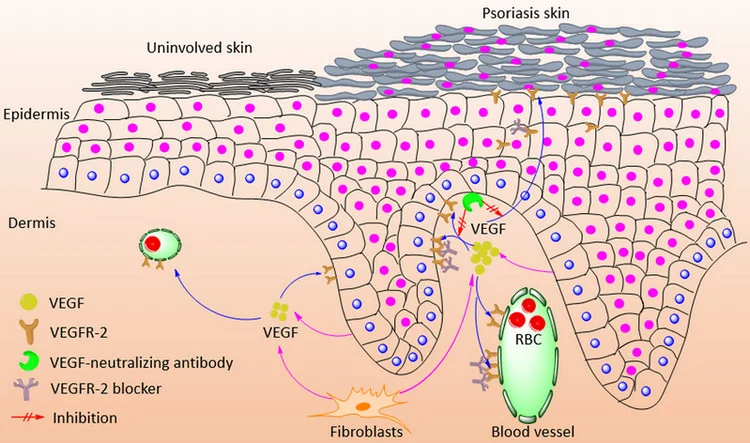
VEGF R
Here are the blood tests you can do to check for these levels.
Treatment
Actions To Take
Get more sun exposure (UVB inhibits IL-17/TNF-α-induced IL-6, IL-8, and CXCL-1 production and decreases the expression of IL-17 receptors on fibroblasts through TGF-β1/Smad3 signaling pathway) R
Decrease/Deactivate/Inhibit:
Alpha-MSH (sun will increase this, so increase it if you have an infection like Candida , Streptococcus, E. coli) R
Anxiety R
C4a
Homocysteine
IFN-gamma R
IL-1b
IL-6
IL-23
NF-kB R
Prolactin
Prostaglandin E2
Stress R
TNF-a
VEGF
Increase/Activate:
IL-4
IL-10
IL-27
Also, fix any underlying Dysbiosis and Histamine Intolerance.
Diet/Lifestyle Actions
Avoid Gluten (psoriasis has been linked to celiac, as they both involve Th1 cytokines, so a lectin avoidance diet would help too) R R R
Vegetarian Diet R
Vegan Diet (somewhat effective) R
Supplements To Take
Calcium (as blocking calcium exacerbates psoriasis and if calcium is altered in some psoriasis patients then adding Vitamin K2 and magnesium should help) R R R
Cannabidiol (CBD) R
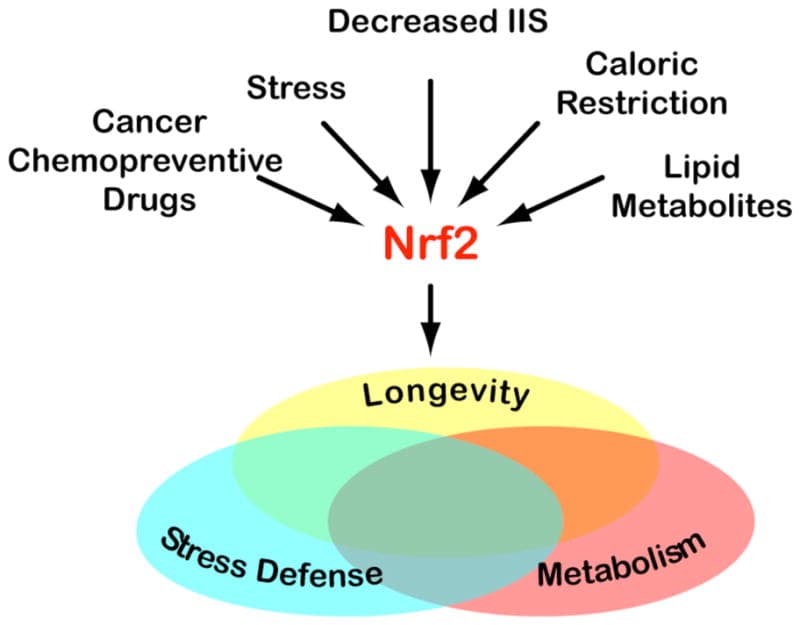
Curcumin + Resveratrol (synergize through CD28/CTLA-4 and CD80 suppressing Th1&Th2 and also inhibiting the NF-kB pathway) R R R R R
Folate (or Methyl-Folate) R R
Mahonia aquifolium (Oregon Grape) R
PSORI-CM01 (Chinese herbal formula) R
Sweet Whey Extract (so Glutathione should be just as effective) R
Vitamin B12 or Methyl-B12 (intramuscular and cream also effective) R
YXBCM01 (Chinese herbal medicine) R
Drugs
Adalimumab (for nails) R
Apremilast R
Itolizumab R
Liarozole (inhibits cP450) R
Low Dose Naltrexone (LDN) R R
RAMBAs R
Scedosporium Dehoogii R
Thiazolidinediones (by regulating PPAR-gamma and retinoic acid receptor activity) R
Treatments, Lotions, and Devices
453nm of Blue Light R
Adapalene R
Ammonium Lactate Lotion R
Ixekizumab (inhibits il-17) R
Low-Level Laser Therapy (LLLT) R
Methotrexate (better results combining it with calcium) R
Possibly Ammonia-Oxidizing Bacteria
Tretinoin R
Topical Corticosteroids (can have unwanted cutaneous side effects) R
UV-B therapy (decreases MMP2) R
Other
BAY 11-7082 (by inhibiting NF-kB and NLRP3 ) R
Calcipotriol and betamethasone dipropionate R
Cardarine R
CD1a blockade R
Fullerene Nanomaterials (by inhibiting the allergic response) R
Givinostat R
Methylene Blue R
PLA2 inhibition R
Stay Away From
Mechanism Of Action
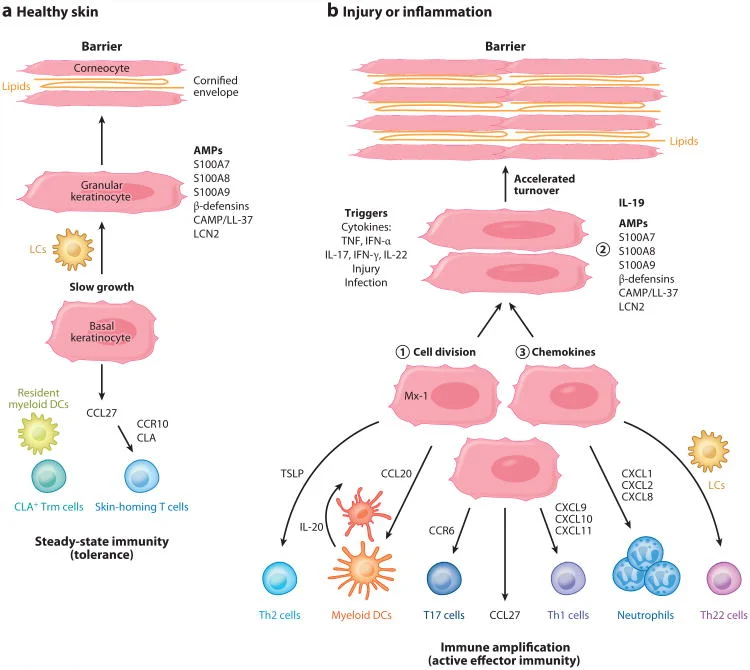
Like many other autoimmune conditions, psoriasis is mediated by T cells and dendritic cells. R
Inflammatory myeloid dendritic cells release IL-23 and IL-12 to activate IL-17-producing T cells, Th1 cells, and Th22 cells to produce abundant psoriatic cytokines IL-6, IL-17, IFN-γ, TNF, and IL-22. R R
These cytokines mediate effects on keratinocytes and mast cells to amplify psoriatic inflammation. R R
Activation of IL-17-producing T cells, leading to IL-17 release, activates CCL20, CXCL1, CXCL2, and CXCL8/IL-8 synthesis, leading to recruitment of more IL-17-producing T cells and neutrophils into the skin. R
TNF-a also stimulates VEGF and activation of NF-kB. R
Elevated levels of Nerve Growth Factor have been found in psoriasis. R
In psoriasis, skin cells have lots of Tregs but reduced Foxp3. Butyrate would help this. R R
Psoriasis patients who have itches usually have increased histamine. R
CD49a
Psoriasis is characteriszed by the accumulation of a subgroup of T cells called CD49a- and it in the afflicted skin and produces the inflammation-causing protein IL-17. R
Also, in vitiligo another kind of T cell is accumulated, called CD49a+, which recognise and are ready to kill pigment cells. R
In healthy skin, CD49a+ and CD49a cells are dormant, but quickly respond with inflammatory and cytotoxic effects when stimulated by IL-15, a protein secreted from skin cells as a rapid-response defence against microbial attack. R
Genetics
MTHFR
C677T - CC is involved with psoriasis (38.46%). R
SOD
SOD activities were significantly decreased in mild (P < 0.01), moderate (P < 0.01), severe (P < 0.01) psoriasis patients, as compared with healthy controls. R
Decreased SOD activity might be related to epidermal hyper proliferation, because the ROS are thought to induce cell proliferation in various cell systems. R
CARD
CARD14 mRNA was found to be elevated 2.7-fold in the psoriasis transcriptome (activating Bcl10 and NF-κB). R
CDKAL1
rs6908425 - CC homozygotes were significantly more common responders to anti-TNF biological drugs among Psoriasis (Psor) patients. R
NLRP3
rs3806265- increased susceptibility to psoriatic juvenile idiopathic arthritis. R
PSORS
rs3823418 - mutation in this can predict psoriasis in 68% of patients. R
rs3130457 - mutation associated with psoriasis in Chinese. R
TNFα
rs361525 - associated with psoriasis in several populations worldwide R
VDR
An increased association of the A allele for the VDR was found in patients with psoriasis. R
VEGFR
More Research
Psoriasis and stress: NPF grantee Theoharis Theoharides discusses his psoriasis research V
Treating Asthma and Eczema With Plant-Based Diets V
Glycine Regulates Protein Turnover by Activating Protein Kinase B/Mammalian Target of Rapamycin and by Inhibiting MuRF1 and Atrogin-1 Gene Expression in C2C12 Myoblasts. R
Jacob Gordon
INHC, FMT-C
Integrative Nutrition Health Coach
I cover mold illness, post-viral recovery, methylation, and complex chronic disease, drawing on ten years of clinical research, work inside a functional medicine clinic, and my own recovery from all of it. Every claim here is cited.
Book a ConsultationRelated Protocols & Supplements
Deep-dive chapters and recommended supplements for this topic
Quercetin
500mg 2x/day
Vitamin D3 + K2
5000 IU + 200mcg/day
DAO Enzyme
1 cap before meals