Reverse Hemorrhage Stroke Degeneration Naturally
By Jacob Gordon, INHC, FMT-CThis article contains affiliate links. As an Amazon Associate, MyBioHack earns from qualifying purchases at no extra cost to you. We only link products we research and stand behind.
This article is on how to reverse hemorrhaging caused by stroke.
Basics

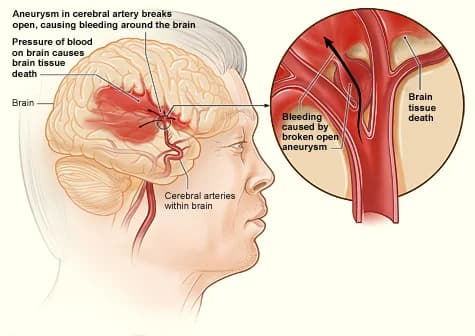
A hemorrhagic stroke happens when an artery in the brain leaks or bursts (ruptures) with bleeding directly into the brain (intracerebral) or into the space between the brain's membranes within the skull (subarachnoid). R R
The leaked blood causes swelling of the brain and increased pressure in the skull. R
The swelling and pressure damage cells and tissues in the brain. R
About 13% of strokes are hemorrhagic. R
Hemorrhagic strokes may start off as ischemic first. R
Inflammation can contribute to a secondary brain injury after hemorrhage. R
The reason why hemorrhagic strokes become toxic to the brain is that they increase reactive oxygen species that through a downward cascade, open up the blood brain barrier, introduce pro-inflammatory molecules into the brain, and drive further damage to the brain tissue.
This also causes a decrease in energy metabolism (reduction in pyruvate dehydrogenase enzymes). R
Risk Factors to Avoid
- Statins R
- Diabetes R
- Hypertension R R
- Late menopause R
- Brain trauma R
- Bleeding Disorders R
- Amyloid Angiopathy R
- Illicit drug use (like amphetamines) R
- Anti-coagulants (IMPORTANT!) R
- Antithrombotics R
- Benzos (esp, in Alzheimer's patients) R
- Epidural surface electrodes R
- Atrial fibrillation R
- Hyperlipidemia (high blood cholesterol levels R
- Cigarette smoking R
- Alcohol consumption R
- Lack of physical activity R
- Obesity R
- Processed/red meat consumption/bad diet R R
- Age (although hard to avoid) R
- Being a man (30% increased chance) R
- Sickle cell anemia R
- Heart attack R
- Being African American R
- Migraine headaches R
- Berry aneurysms R
- A prior stroke R
- Sleep apnea R
- Birth control pills R
- Stress R
- Photo-mediated ultrasound therapy R
- Growth hormone usage R
Mechanism Of Action
Hemorrhagic strokes are classified based on their underlying pathology. R
Some causes of hemorrhagic stroke are hypertensive hemorrhage, ruptured aneurysm, ruptured AV fistula, transformation of prior ischemic infarction, and drug induced bleeding. R
They result in tissue injury by causing compression of tissue from an expanding hematoma or hematomas. R
In addition, the pressure may lead to a loss of blood supply to affected tissue with resulting infarction, and the blood released by brain hemorrhage appears to have direct toxic effects on brain tissue and vasculature. R
After stroke there is vascular impairment which can lead to dementia. R
Interestingly, intracerebral hemorrhage induces neurogenesis in the adult human brain. R
Blood Brain Barrier and Inflammation

Microglia express Toll-like receptors (TLR) and NOD-like receptors (NLR), allowing them to detect bacterial pathogens and molecular signatures of injury, leading to the transcription of proinflammatory cytokine genes. R
TLR2, TLR4, TLR8 and TLR9 have been closely associated with stroke events. R
The expressions of TLR2 and TLR4 were associated with poor outcomes in ischemic stroke patients. R
Ischemic stroke induces the release of DAMPs, such as cellular fibronectin (c-Fn), HSP60, and HSP70, which function as endogenous ligands for TLR2 and TLR4, and promoting activation of the inflammatory cascade. R
TLR8 activation plays a detrimental role in stroke outcome by promoting neuronal apoptosis and T cell- mediated post-stroke inflammation (in mice). R
Mitochondrial failure decreases ATP production in the endothelial cells surrounding the blood vessels in the brain, causing a breakdown of the BBB and further exacerbating stroke damage. R
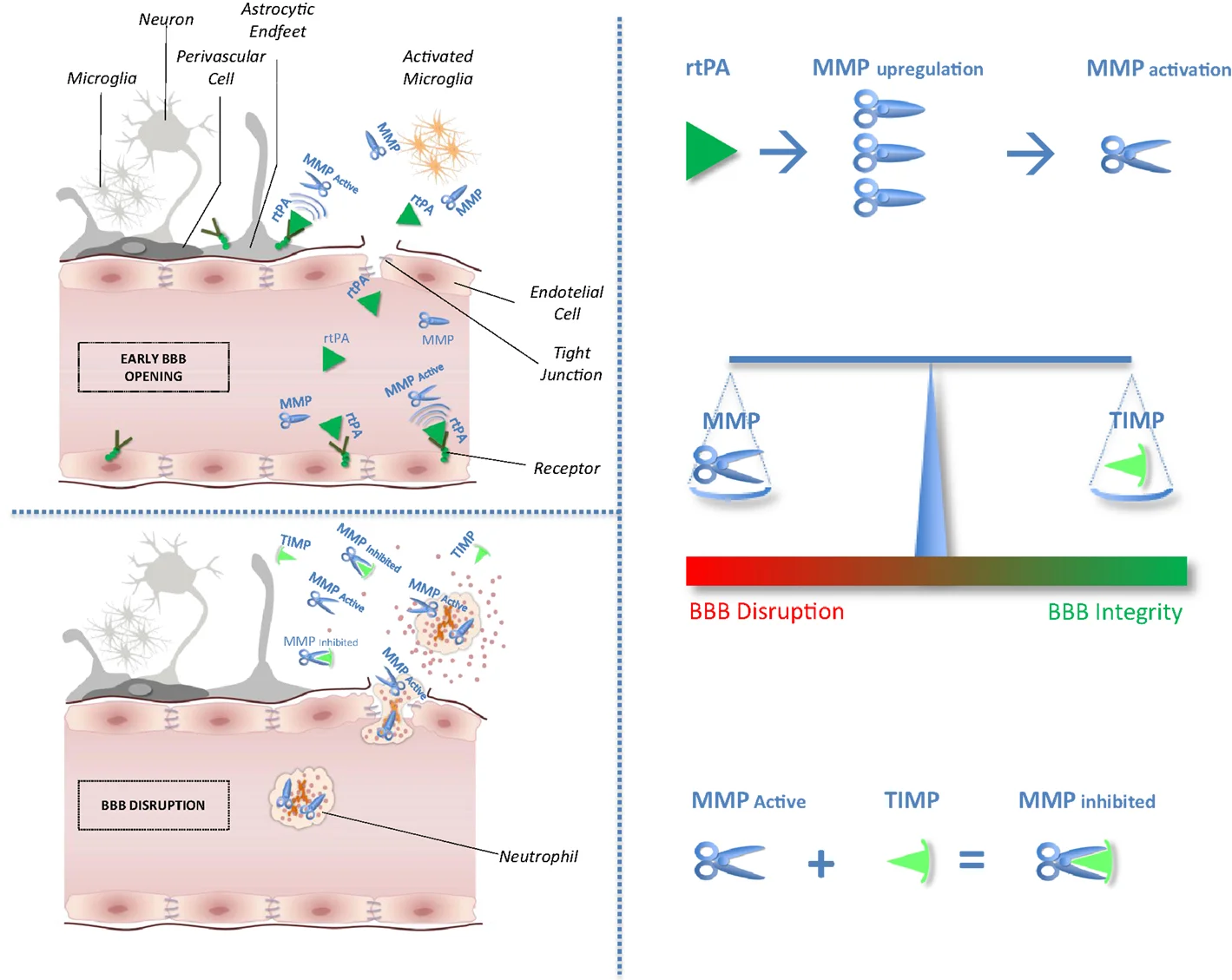
Unbalance between MMPs and their natural inhibitors (tissue inhibitors of metalloproteinases, TIMPs) may exacerbate BBB disruption leading to hemorrhagic transformation and edema of an ischemic brain lesion.
http://journal.frontiersin.org/article/10.3389/fneur.2015.00121/full
In stroke, reactive oxygen species is increased. R
This causes damage to mitochondrial DNA, induces activation and secretion of matrix metalloproteinases (MMPs), activates inflammatory responses, and lead to cell swelling and death. R
Tissue inhibitors of metalloproteinases (TIMPs) may exacerbate BBB disruption leading to hemorrhagic transformation and edema of an ischemic brain lesion. R
Following the BBB disruption, neutrophils, lymphocytes, and monocytes from peripheral blood infiltrate into the brain tissue. R
Also neutrophils phagocytose dying neurons and release a large amount of granules and ROS that may
kill both dying and living neurons. R
Antigen presentation cells may produce pro-inflammatory cytokines, such as TNF-α and IL-1β that contribute to post-stroke inflammation. R
APCs may also produce anti-inflammatory cytokines IL-10 and TGF-β, which promote healing and reduce inflammatory responses. R
Tolerated T-cells that induce a TH2 cytokine response, including IL-4 and IL-10 secretion, reduce stroke infarction.
TH1 cells, secreting pro-inflammatory cytokines (such as IL-1beta, TNF-alpha, and IFNgamma,) exacerbate stroke. R
Nitric oxide (NO) and peroxynitrite (ONOO−) produced simultaneously with superoxide in stroke, are detrimental to brain neurons. R
Blood brain barrier damage from hemorrhagic stroke causes increased CD36 gene expression. R
Biomarkers
These are common symptoms:
To diagnose it, CT scans can be done (with or without contrast), but MRI scan is more sensitive. R
These are common biomarkers:
- alpha-MSH R
- Brain Natriuretic Peptide (BNP) R
- D-Dimers R
- F2-isoprostanes R
- Free Fatty Acids (FFA) R
- Galectin-3 R
- GFAP R
- HMGB1 R
- hsCRP R
- hsTNT R
- ICAM-1 R
- IL-1α R
- IL-1β R
- IL-4 R
- IL-6 R
- IL-10 R
- IL-33 R
- MMP2 R
- MMP9 R
- TIMPs R
- NSE R
- NT-proBNP R
- Occludin (to check if blood brain barrier is permeable) R
- PAI-1 R
- RBP4 R
- RDW R
- S100b R
- Creatinine R
- TAFI R
- TGFb1 R
- TNFα R
- Uric Acid R
Cerebral Microbleeds
60% patients with hemorrhage stroke have cerebral microbleeds CMB. R
CMBs may be related to the impaired delayed memory. R
Treatment
Diet/Lifestyle
- Increase EAAT activity
- Increase neurotrophic factors (NGF, BDNF, CNTF, GDNF)
- Increase a-MSH
- Increase Lactate (decrease excess excitoxicity) R R
- Reverse Diabetic Markers (A1c, fasting glucose/insulin, CRP) R
- Fix a leaky Blood Brain Barrier
- Fix any underlying dysbiosis
- Activate CB2 receptors (ameliorates brain edema, damage, and neuron death after ICH) R
- Get better sleep R
- Decrease MMP2 and MMP9
- Reduce ROS R
- Massage (Touch and Thai) R R
Supplements
- Apigenin R
- Bile Acids (intra-artery injections decrease lesion volumes, peri-hematoma apoptosis, caspase activity, NF-κB activiation; increases AKT activation, neurobehavioral improvement) R
- Calcium R
- CDP-choline (for memory) R
- Copper R
- CoQ10 R
- Curcumin (attenuates brain edema, inhibits NF-kB, TNFa, IL-6, IL-1b, and MMPs) R RR R
- Folate (or methylfolate) R
- Garlic R
- Ginkgo Biloba (in helping vascular-dementia like symptoms, but is an anticoagulant so beware) R
- Huperzine A R
- Magnesium R R
- Manganese R
- NAC R
- Potassium R
- Sulforaphane (by increasing brain haptoglobin) R
- Vitamin B6 R
- Vitamin B12 (or methyl B12) R
- Vitamin C R R
- Zinc R
Hormones
Drugs/Peptides
- BPC-157 (reduces hemorrhaging) R
- Cerebrolysin (P21 or Peptide 6 may help) R
- Deferoxamine R
- Nimodipine R
- Simvastatin (enhanced brain hematoma absorption, alleviated hydrocephalus, and improved neurological recovery by downregulated CD36 expression) R R
- Valproic Acid R
Advanced Treatments
- Acetyl-DL-leucine (helps cerebellar ataxia) R
- Electroaccupuncture (helps restore BBB) R
- Injection of ZPP R
- Kudiezi injection (in mice) R
- Purmorphamine (if taken within 48 hours after stroke onset) R
- SiDkk-1 treatment R
- Surgery (in subarachnoid) R
- Stem Cell Therapy (very effective in animal models, taken intranasally or intravenously) R R R R R R
- Traxoprodil (if used within 12hrs after stroke) R
- Tuftsin (Selank possibly) R
Pathways
Prevention
These can help prevent stroke:
- Cut down your risk factors (see above)
- High levels of physical activity reduce the risk of stroke by about 26%. R
- Lower blood pressure (below 140/90 mmHg) R R
- Hysterectomy is possibly protective against any stroke. R
- Low Laser Light Therapy decreased hemorrhages induced by thrombolytic therapy by30%. R
- Optimize hormones (can take progesterone) R
More Research
- FAST is an acronym used as a mnemonic to help detect and enhance responsiveness to stroke victim needs. The acronym stands for Facial drooping, Arm weakness, Speech difficulties and Time to call emergency services. R
- Beta-blockers have no beneficial effect after stroke. R
- Potassium and magnesium intakes are inversely associated with the risk of cerebral infarction among hypertensive women. R
- More on the biomarkers after hemorrhagic edema R
- Thioredoxin-interacting protein links endoplasmic reticulum stress to inflammatory brain injury and apoptosis after subarachnoid haemorrhage R R
Jacob Gordon
INHC, FMT-C
Integrative Nutrition Health Coach
I cover mold illness, post-viral recovery, methylation, and complex chronic disease, drawing on ten years of clinical research, work inside a functional medicine clinic, and my own recovery from all of it. Every claim here is cited.
Book a ConsultationRelated Protocols & Supplements
Deep-dive chapters and recommended supplements for this topic
Electrolyte Complex
1 scoop/day
CoQ10
200mg/day
Magnesium Glycinate
400mg at bedtime