Epigenetic Clocks And Biological Age: What DNA Methylation Testing Can And Cannot Tell You
By Jacob Gordon, INHC, FMT-CEpigenetic clocks estimate how old your body is biologically by reading chemical marks on your DNA, and the result is being sold as a single number that most people misread.
In this post, we will discuss what biological age actually means, how DNA methylation clocks are built, the three generations of clocks, what moves them, which consumer tests exist, and what a reading can and cannot honestly tell you.

What Biological Age Means
Chronological age is how many years you have been alive.
Biological age is an estimate of how worn your tissues actually are, which can run ahead of or behind the calendar.
Two people born the same year can sit years apart in disease risk, and biological age is the attempt to put a number on that gap.
The most developed way to estimate biological age from a single sample is the epigenetic clock.
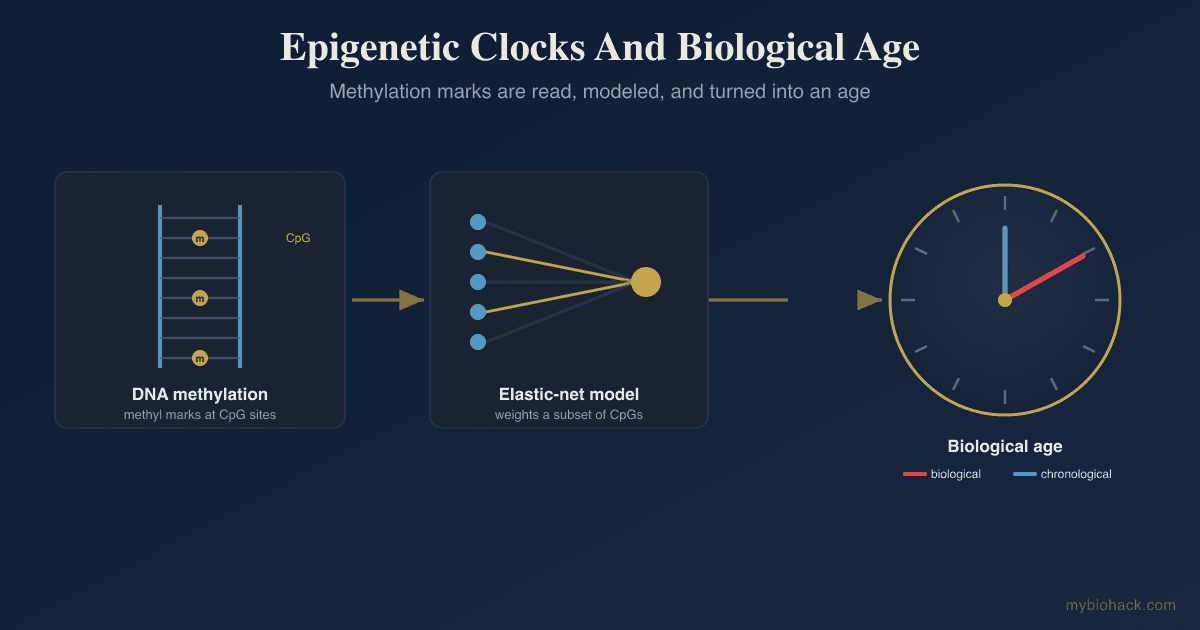
An epigenetic clock reads patterns of DNA methylation (DNAm) across the genome and runs them through a statistical model that outputs an age.
When that output is higher than your real age, the difference is called epigenetic age acceleration (EAA), and higher EAA tracks with higher risk of disease and death. R
One clarification up front, because the word methylation gets overloaded.
The epigenetic clock reads methyl marks sitting on your DNA, which is a different thing from the one-carbon methylation cycle that regulates homocysteine and SAM-e.
The two are linked, because methyl-donor supply can influence DNA methylation, but a clock is not a homocysteine test and a homocysteine test is not a clock.
How DNA Methylation Clocks Work
DNA methylation is the addition of a methyl group to a cytosine base, almost always where a cytosine sits next to a guanine.
These sites are called Cytosine-phosphate-Guanine (CpG) sites, and the human genome has roughly 28 million of them.
Methylation at a CpG can silence or tune a nearby gene, and the overall pattern shifts in predictable ways as we age. R
Commercial and research clocks measure methylation with an array, historically the Illumina 450K chip and now the EPIC chip, which reads several hundred thousand CpGs at once.
A clock is then built by feeding those CpG values into a penalized regression model, usually an elastic net, that selects a few hundred to a few thousand sites whose methylation best predicts the target the model was trained on. R
Steve Horvath's original 2013 clock used 353 CpG sites and predicted chronological age across nearly every human tissue. R
What the clock predicts depends entirely on what it was trained to predict, and that is the single most important thing to understand before reading a result.
A clock trained to guess your birthday behaves very differently from a clock trained to guess who dies first.
The Generations Of Clocks
First-Generation: Trained On Chronological Age
The first clocks were trained to predict how old you are.
Horvath's pan-tissue clock and the Hannum blood clock both minimized the gap between predicted age and calendar age. R R
They are impressive engineering, correlating with chronological age at better than 0.95 in many datasets.
The catch is structural.
A clock optimized to reproduce chronological age is, by design, discarding the very signal that would tell you someone is aging faster than their years.
First-generation clocks are therefore weak predictors of health outcomes relative to what came next. R
Second-Generation: Trained On Mortality And Clinical Markers
The second generation stopped chasing the calendar and started chasing outcomes.
Phenotypic Age (PhenoAge) was trained on a composite of nine clinical markers, including glucose, C-reactive protein, and white blood cell measures, that themselves predict mortality, then distilled into a DNA methylation score. R
It substantially outperforms first-generation clocks for all-cause mortality, cancer, physical functioning, and Alzheimer's risk. R
GrimAge went further by building DNA methylation surrogates for seven plasma proteins plus smoking pack-years, then training the composite directly on time to death. R
In its validation it predicted time to death, time to coronary heart disease, and time to cancer more strongly than any prior clock. R
When people say an epigenetic clock told them their heart is aging fast, they almost always mean a second-generation clock like GrimAge.
Third-Generation: Trained On The Pace Of Aging
The third generation measures a rate rather than a state.
Instead of asking how old you are, it asks how fast you are currently aging.
DunedinPoAm and its successor Pace of Aging Calculated from the Epigenome (DunedinPACE) were built from the Dunedin birth cohort, where investigators tracked within-person decline across 19 organ-system markers over two decades, then found the methylation signature of that decline. R R
A DunedinPACE of 1.0 means you are aging one biological year per calendar year, 1.2 means twenty percent faster, and 0.8 means twenty percent slower. R
Because it is a rate measure taken from one blood draw, it is the clock most likely to move on the timescale of an actual intervention. R

What Actually Moves Your Clock
Factors linked to faster epigenetic aging (not an exclusive list):
- Alcohol, at heavy intake, though moderate intake shows a mixed and sometimes opposite association R
- Blood pressure, when chronically elevated, as one of the clinical drivers behind second-generation clocks R
- Body Mass Index, with liver epigenetic age rising about 3.3 years for every 10 BMI units R
- C-Reactive Protein and chronic inflammation, a core input to PhenoAge R
- Glucose, when fasting levels run high, also a PhenoAge input R
- Smoking, which is the single strongest lifestyle mover and is baked directly into GrimAge as pack-years R
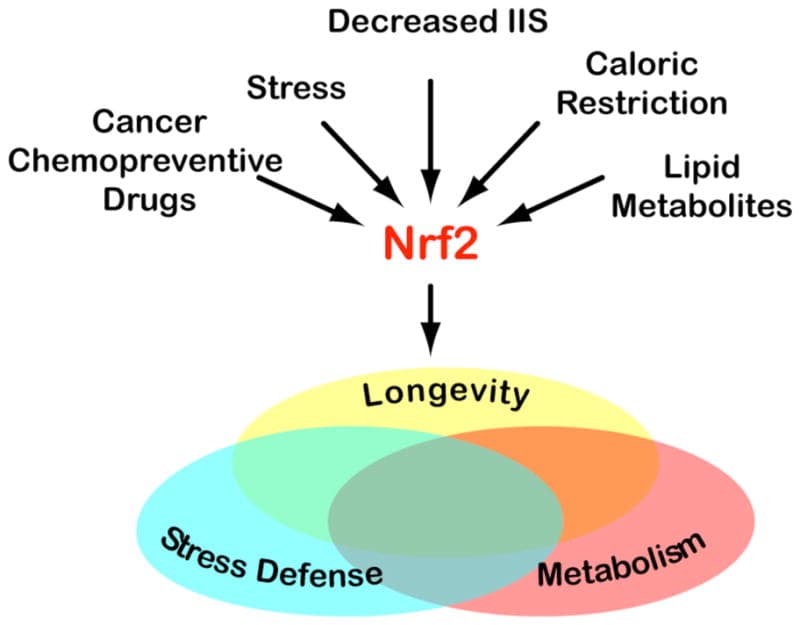
- Stress, chronic and psychological, associated with faster aging across several cohorts R
Factors linked to slower epigenetic aging (not an exclusive list):
- Caloric restriction, which slowed DunedinPACE by 2 to 3 percent in the CALERIE randomized trial R
- Education and higher socioeconomic status, a consistent signal in large cohorts R
- Exercise and physical activity, though the association is real but modest R
- Fish and plant-forward eating patterns R
- Smoking cessation, given how heavily smoking loads onto the clocks R

Two honest caveats belong here.
Most of these links come from cross-sectional data, which shows association and not causation, so a lower clock in fish eaters does not prove fish lowered their clock.
And the interventions that have been tested head to head produce small effects, with the CALERIE trial moving the pace measure but not the static PhenoAge or GrimAge scores, which suggests the pace clocks are simply more responsive to change. R
The supplement angle deserves the same restraint.
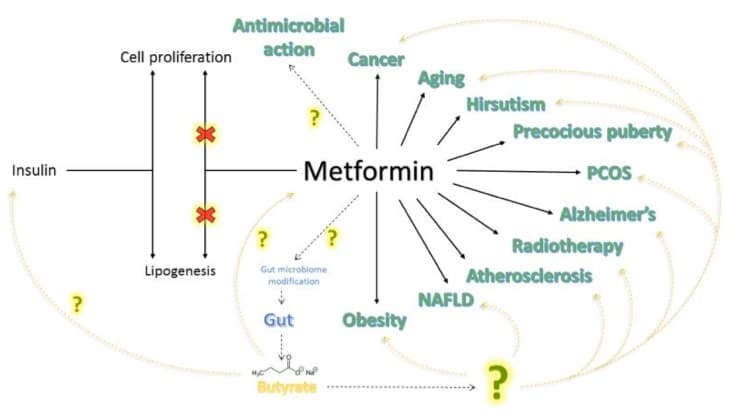
Compounds marketed for longevity, including spermidine, the senolytic fisetin, and metformin, have real mechanistic rationale but do not yet have solid human evidence that they lower an epigenetic clock. R
Tellingly, the flagship metformin longevity trial, Targeting Aging with Metformin (TAME), was designed around hard clinical disease endpoints rather than epigenetic clocks, precisely because clocks are not yet accepted as proof of benefit. R
The Consumer Tests And Their Limits
Several companies now sell epigenetic age testing directly to the public, usually from a finger-stick blood spot or a saliva sample run on an Illumina methylation array.
TruDiagnostic's TruAge reports a panel that includes DunedinPACE alongside PhenoAge and a GrimAge-style composite, and other providers such as Elysium Health sell their own biological-age index.
GlycanAge sits in the same marketing category but is a different technology entirely, measuring antibody glycosylation rather than DNA methylation, so do not treat it as interchangeable.
The honest limits matter more than the marketing, and there are five worth internalizing before you pay for one.
- Correlational, not causal. Clocks predict risk at the population level, but no epigenetic clock has been formally validated as a surrogate endpoint, meaning a change in your clock is not proven to change your actual outcome. R
- Single readings are weak. A static clock at one moment carries wide error, so a rate measure like DunedinPACE, and repeated readings over time, tell you far more than one number ever will. R
- Technical noise is large on the older clocks. Running the same sample twice on first-generation clocks produced differences of up to 9 years between replicates, and only the newer principal-component versions bring that down to under a year. R
- Tissue specificity is real. Most consumer tests read blood only, yet tissues age at different rates, and obesity can push liver epigenetic age forward while blood looks unremarkable. R R
- Which clock you get matters. A first-generation chronological clock is nearly useless for health decisions, while second-generation and pace clocks carry the mortality and disease signal you actually care about. R R
Testing
How To Interpret A Result
Treat a single epigenetic age number as a weak signal and a pace-of-aging number, tracked over time, as the useful one.
If you test, use the same provider and platform each time so you are measuring change rather than lab-to-lab variation.
Favor a report that includes a principal-component-adjusted or pace measure, because those are the versions engineered for reliability. R
Do not make a medical decision off one reading, and do not panic over a two-year acceleration that could sit entirely inside the assay's noise.
Pair It With The Markers The Clocks Are Built From
The second-generation clocks were trained on ordinary blood chemistry, which means the same inputs are cheaper, faster, and directly actionable on their own.
I use the Foundation Zoomer (Vibrant Wellness) to assess CBC, a metabolic panel, liver enzymes, and fasting glucose, which are among the very markers behind PhenoAge.
I use the Cardio Zoomer (Vibrant Wellness) to assess fasting insulin, C-reactive protein, lipoproteins, and ApoB, the drivers of cardiovascular and metabolic aging that a GrimAge result is largely reflecting.
Because the DNA methylation clock is distinct from the one-carbon methylation cycle, it is worth checking both.
I use the Methylation Genetics panel (Vibrant Wellness) to assess MTHFR, MTR, MTRR, and COMT variants that shape methyl-donor supply, with the caveat that this panel does not measure the epigenetic clock itself.
Tracking these numbers over months is where the value lives, and the Health Hub lets Pro members log lab results and watch trends rather than reacting to one printout.
For readers trying to interpret a confusing biological-age report against their own labs, a consultation is the more reliable path than acting on a single number alone.
Mechanisms Of Action
Simple:
- As you age, the chemical tags on your DNA drift in a patterned way, and a clock is a formula that reads that drift and converts it into an age.
- The clocks that predict health were trained on who got sick and who died, not on birthdays, which is why they carry more useful information.
Advanced:
- CpG methylation drift. Specific CpG sites gain or lose methylation with age in a reproducible direction, driven by the balance of the DNMT methyltransferases that write marks and the TET enzymes that remove them, and this drift is the raw substrate every clock reads. R
- Elastic-net age prediction. A clock is a penalized regression that assigns weights to a subset of CpGs, so the model is only ever as meaningful as its training target, and a model trained on chronological age cannot outperform one trained on mortality for predicting mortality. R R
- Surrogate protein composites. GrimAge does not read aging directly, it reads DNA methylation surrogates for plasma proteins such as those tied to smoking and inflammation, then combines them into a mortality predictor, which is why it captures cardiovascular and cancer risk so well. R
- State versus rate. DunedinPACE is not a snapshot age, it is a slope, estimating current velocity of decline from a single sample, which makes it more sensitive to short-term intervention than a cumulative state clock. R R
Genetics
Epigenetic aging is partly heritable, and a large meta-analysis identified 137 genetic loci associated with DNA methylation aging biomarkers, most of them previously unknown.
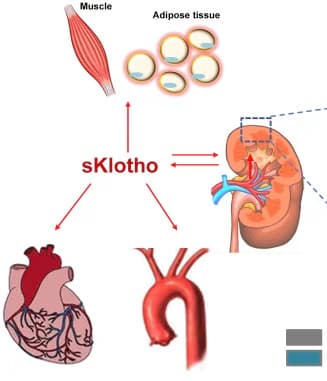
That polygenic spread means no single variant explains much, and genetic factors that shape lifespan more broadly, such as the KLOTHO longevity variants, sit largely outside the clock machinery. R
TERT
TERT encodes the catalytic subunit of telomerase, the enzyme that maintains the protective caps on chromosomes.
Variants in TERT associated with longer telomeres paradoxically associate with higher intrinsic epigenetic age acceleration, so telomere length and epigenetic age are separate axes of aging rather than one shared clock.
rs7726159 and neighboring TERT variants are among the strongest genome-wide hits for intrinsic epigenetic age acceleration in blood. R
ELOVL2
ELOVL2 encodes an enzyme that elongates long-chain polyunsaturated fatty acids.
The CpG island in its promoter gains methylation with age more cleanly than almost any other site in the genome.
Methylation at the ELOVL2 locus correlates with chronological age at roughly 0.9 and is used as a standalone forensic age marker. R
DNMT3A
DNMT3A encodes one of the enzymes that establishes DNA methylation marks in the first place.
Age-related mutations in DNMT3A drive clonal hematopoiesis, where a mutant blood-cell lineage expands with age, which can shift a blood-based clock independent of whole-body aging.
This is a genuine confounder for any consumer test read from blood, because the reading may partly reflect the state of one cell clone rather than the organism. R
More Research
- Clonal hematopoiesis is an underappreciated confounder, since expanding mutant blood-cell clones can move a blood-derived clock without reflecting how the rest of the body is aging. R
- Organ-specific clocks are the current frontier, with plasma-proteomic models now estimating the age of individual organs and finding that accelerated brain aging carries the strongest link to mortality, which points past the whole-body blood clock toward organ-level resolution. R
- Pace measures respond faster than state measures, as the CALERIE caloric-restriction trial moved DunedinPACE but not PhenoAge or GrimAge, a pattern worth remembering when a static clock fails to budge after a real change. R
- Reliability engineering matters, and the principal-component reworking of the major clocks is the reason a modern report can be trusted to within about a year where an older one could swing nine. R
- Validation as a trial endpoint is still open, which is why the field's consensus framework treats epigenetic clocks as promising but not yet qualified surrogate endpoints for longevity interventions. R
For biomarker tracking I use the Foundation Zoomer and Cardio Zoomer to follow the clinical inputs behind these clocks over time, and Pro members can log and trend those results inside the Health Hub.
Jacob Gordon
INHC, FMT-C
Board Certified Health Coach
I spent years battling unexplained chronic illness before discovering biohacking, epigenetics, and functional medicine. Now I share that research at MyBioHack to help others find their own answers.
Book a ConsultationRelated Protocols & Supplements
Deep-dive chapters and recommended supplements for this topic
Methylated B Complex
1 cap/day with food
SAMe
400mg on empty stomach
Resveratrol
250mg/day