7 Steps to Naturally Treat Long Covid (Science-Based Protocol)
Back to Research Library
Vascular Health

7 Steps to Naturally Treat Long Covid (Science-Based Protocol)

|11 min read|0 likes

This article contains affiliate links. As an Amazon Associate, MyBioHack earns from qualifying purchases at no extra cost to you. We only link products we research and stand behind.

Long Covid is what happens when an acute viral infection ends but the damage it did to your blood vessels, immune system, and energy production never resolves.

In this post, we will discuss what Long Covid actually is, why it persists at a mechanistic level through Junction Dysfunction, which conditions overlap with it, the step-by-step protocol I use to address it, what to avoid, and how to test for the underlying drivers.


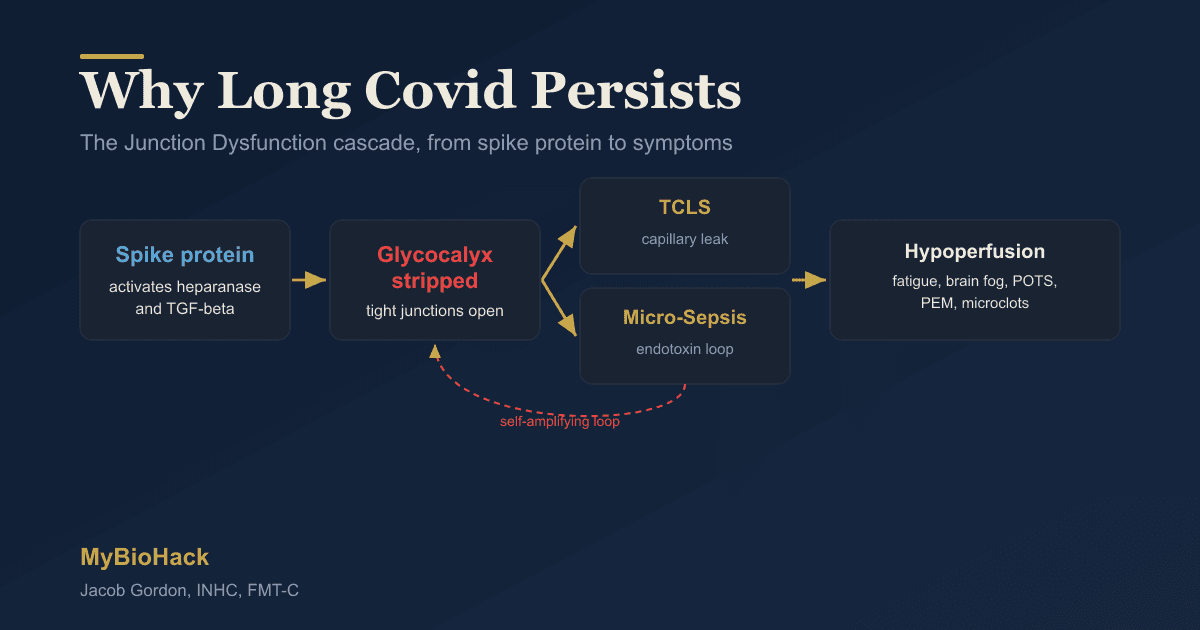
How Long Covid persists through glycocalyx degradation, capillary leak, and micro-sepsis

Basics Of Long Covid

Long Covid, also called Post-Acute Sequelae of SARS-CoV-2 (PASC), is a collection of symptoms that persist or appear weeks to months after the acute infection has cleared.

The symptom list is large because the underlying damage is vascular and systemic, not organ-specific.

Common Long Covid symptoms include: (not exclusive list)

  • Brain fog (cognitive slowing, word-finding difficulty, poor recall)
  • Dysautonomia (heart rate and blood pressure instability on standing)
  • Exertion intolerance (symptoms worsen after physical or mental effort)
  • Internal tremors (a buzzing or vibrating sensation without visible shaking)
  • Loss of smell and taste (anosmia, parosmia)
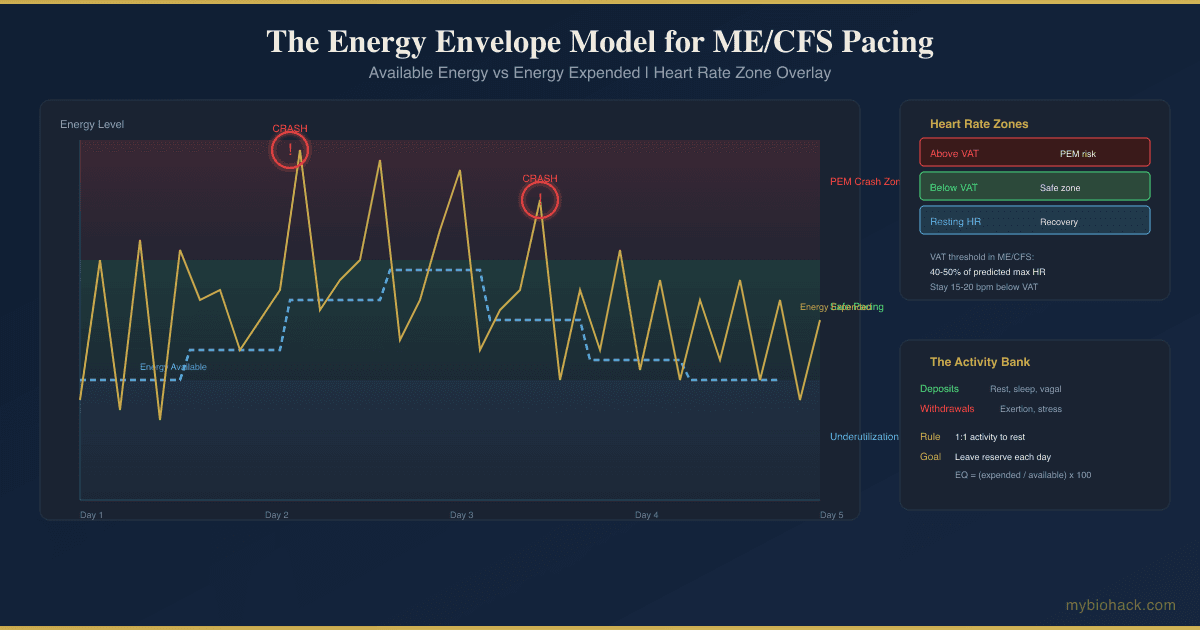
  • Post-exertional malaise (a delayed crash 12 to 72 hours after exertion)
  • Sleep disruption (often with a flipped circadian rhythm)
  • Unrefreshing fatigue (not corrected by rest)

The reason these symptoms cluster together is that they all trace back to one upstream problem.

That problem is damage to the glycocalyx, the protective sugar layer that lines every blood vessel in your body.

This is the foundation of what I call Junction Dysfunction (JD), the framework I use to understand post-viral illness.

What Causes Long Covid

The acute infection is the trigger, but the persistence is driven by damage that outlasts the virus.

SARS-CoV-2 uses heparan sulfate, a core component of the glycocalyx, as a co-receptor that concentrates the virus at the cell surface before it binds ACE2. R

The spike protein then engages glycosaminoglycans on the endothelial surface, activates the TGF-beta pathway, and upregulates heparanase, the enzyme that cleaves heparan sulfate and strips the glycocalyx. R

This is not a transient event.

A prospective multicenter study found elevated syndecan-1, a direct marker of glycocalyx shedding, in convalescent patients who had only mild Covid and were never hospitalized. R

In hospitalized patients, syndecan-1 levels predict mortality, which tells you the degree of glycocalyx loss tracks with the severity of the disease. R

Once the glycocalyx is degraded, the tight junctions underneath are exposed and the vessel starts to leak.

This is what I call Transient Capillary Leak Syndrome (TCLS), the micro and transient version of clinical capillary leak.

The second driver is Micro-Sepsis (MSS), a chronic sub-lethal sepsis state.

When the gut lining leaks for the same reason the blood vessels do, lipopolysaccharide (LPS) from gut bacteria translocates into the blood, activates TLR4, and drives a low-grade systemic immune activation that never fully resolves. R

TCLS and MSS reinforce each other, which is why Long Covid becomes self-sustaining long after the virus is gone.

How The Glycocalyx Breaks And Drives It

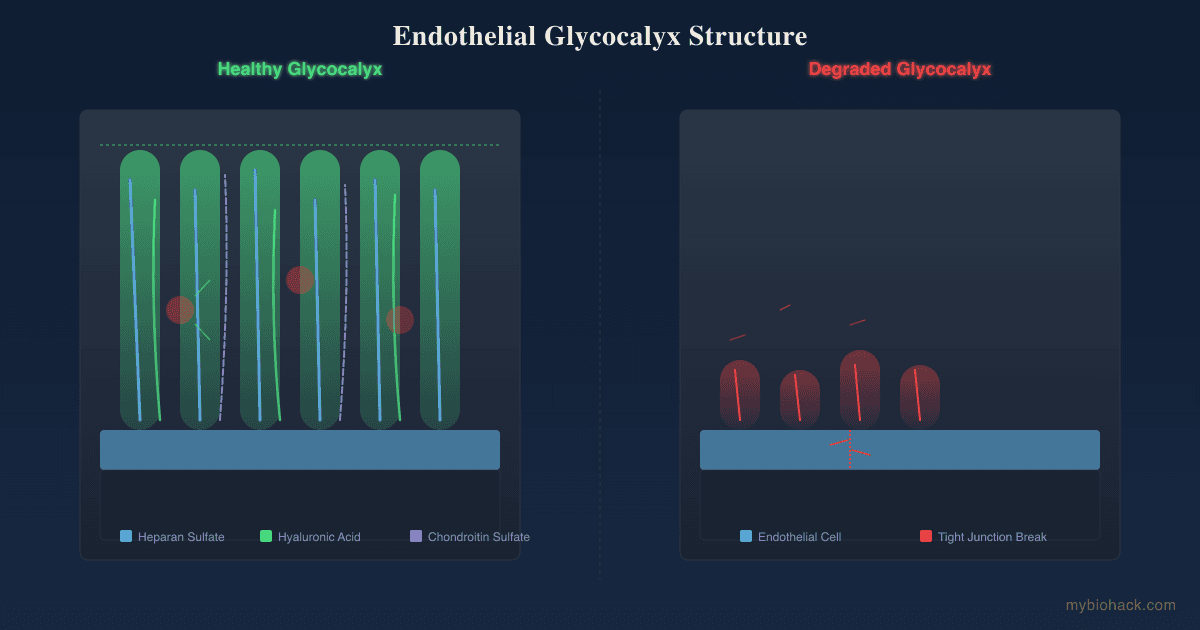
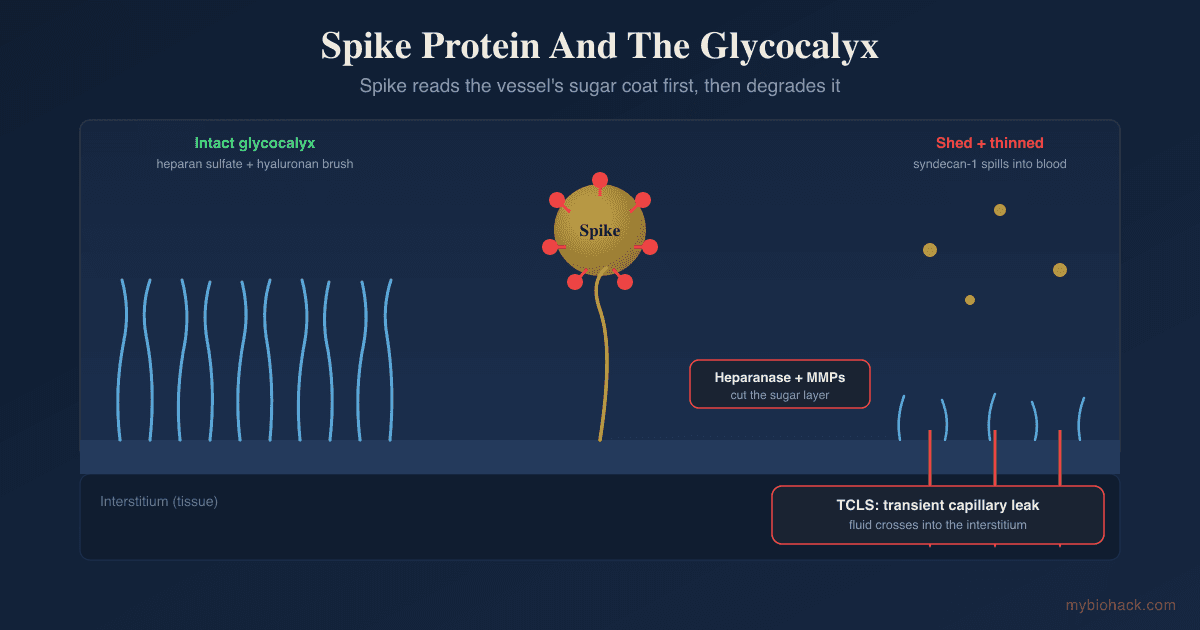
The glycocalyx in health versus in TCLS. A degraded layer lets plasma leak from the vessel into the tissue.

The glycocalyx is a negatively charged, heavily sulfated mesh of sugars on the inner wall of every blood vessel.

It keeps plasma inside the vessel, keeps blood cells from sticking, and houses the enzymes that regulate vascular tone.

When PAMPs from infection or DAMPs from tissue damage activate the immune system, immune cells release hyaluronidase and matrix metalloproteinases (MMPs) that cut through this layer. R

Once the layer thins, fluid leaks from inside the vessel into the surrounding tissue.

The result is not whole-body dehydration.

It is selective intravascular hypovolemia with simultaneous interstitial edema, which is why standard blood volume sensors do not register the problem.

This sets off a destabilizing loop between the glycocalyx and the ANGPT/TIE2 axis.

The evidence here is mixed, and it is worth being honest about that.

One study of post-Covid and ME/CFS patients found confirmed endothelial dysfunction on reactive hyperemia testing and elevated endothelin-1, but angiopoietin-2 was actually lower than in controls, not higher. R

So the direction of the ANGPT2 signal in chronic Long Covid is not settled, even though the endothelial dysfunction itself is well documented.

The hypoperfusion from TCLS produces tissue hypoxia.

That hypoxia stabilizes HIF1a and HIF2a, which I view as an adaptive response to low oxygen, not the primary defect.

There is a separate clotting problem layered on top.

The spike protein induces fibrin(ogen) that is resistant to normal breakdown, contributing to the fibrinaloid microclots documented in Long Covid. R

These microclots further block the microcirculation that TCLS has already compromised.

Finally, the chronic immune activation reroutes your tryptophan.

Inflammatory cytokines turn on indoleamine 2,3-dioxygenase (IDO1), which shunts tryptophan away from serotonin and melatonin and into the kynurenine pathway.

A meta-analysis found a significantly increased kynurenine-to-tryptophan ratio in Long Covid patients compared to controls, which maps directly onto the mood, cognitive, and sleep symptoms. R R

This is the cascade the protocol below is built to interrupt.

Long Covid And Overlapping Conditions

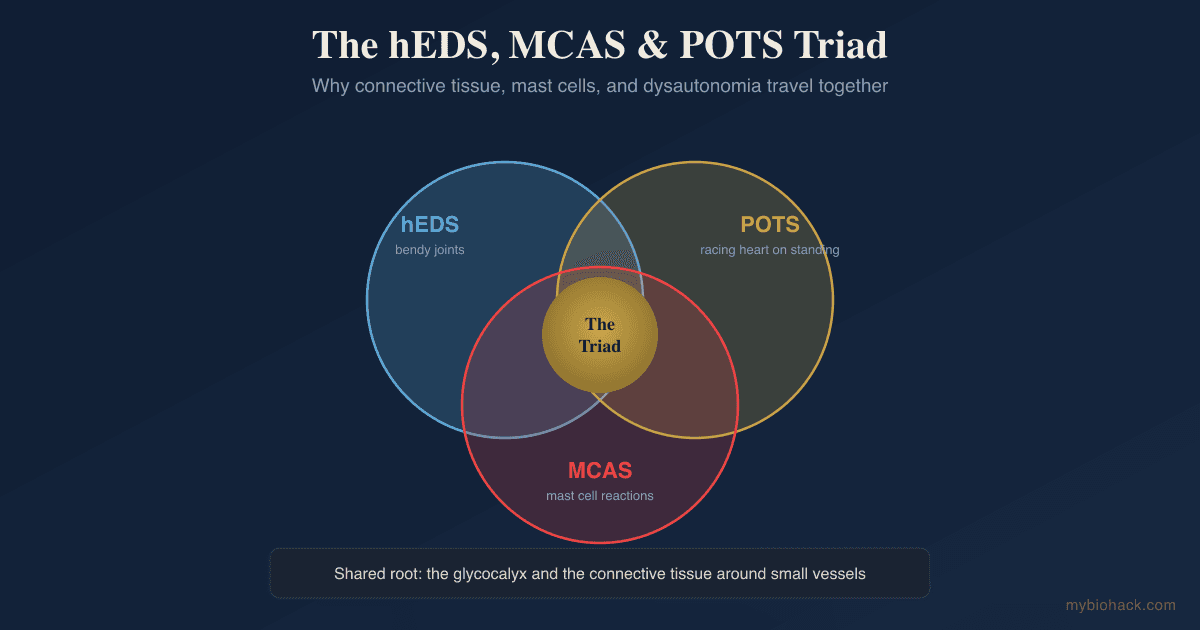
Because the root mechanism is vascular, Long Covid overlaps heavily with other conditions I treat as part of the same framework.

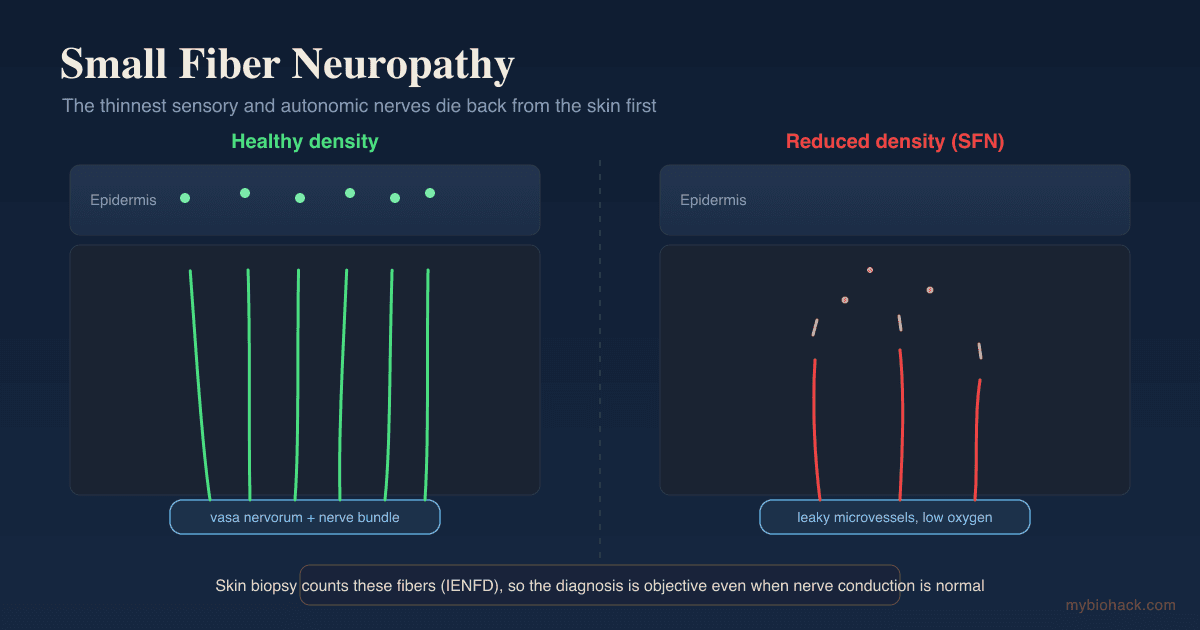
  • Dysautonomia and POTS (I reframe the vascular subtype as Vaso-Adaptive Disorder (VAD), where loss of reserve microcapillaries drives the tachycardia)
  • Mast Cell Activation Syndrome (mast cells degranulate in hypoxic, poorly perfused connective tissue)
  • ME/CFS (the same TCLS plus MSS picture with circadian uncoupling)
  • Histamine intolerance (downstream of mast cell activation and gut barrier breakdown)
  • Mold illness and CIRS (a different trigger reaching the same glycocalyx, TCLS, and MSS endpoint)

If your Long Covid is dominated by gut symptoms, histamine reactions, and methylation issues, the protocol in my post on naturally treating histamine intolerance overlaps directly with the steps below.

The 47-chapter Junction Dysfunction guide covers the vascular mechanism in full depth for those who want it.

How To Improve Long Covid

This protocol is sequenced.

The order matters, because rebuilding the glycocalyx while the gut is still leaking endotoxin will not hold.

1. Rebuild The Glycocalyx

This is the upstream target, and sulfated marine polysaccharides are the core tool.

Sulfated polysaccharides bind tightly to the spike protein and act as decoys that compete with the heparan sulfate co-receptor. R

Seaweed-derived fucoidans and rhamnan sulfates show potent anti-SARS-CoV-2 activity through this mechanism. R

A low-molecular-weight fucoidan analogue blocked both spike-to-heparin and spike-to-ACE2 binding and inhibited heparanase, the enzyme doing the glycocalyx damage. R

Use both high and low molecular weight forms, because they do different jobs.

Fucoidan (high molecular weight): electrostatic binding of spike and bacteria, NK cell activation, neuroprotection.

Ecklonia Cava: phlorotannins that support the glycocalyx and convert to GABA at night for sleep.

Sea Moss: a food-source sulfated polysaccharide.

For deeper coverage of which seaweeds to use and why, see my JD chapter on why not all fucoidans are equal.

2. Clear Residual Spike And Microclots

If spike persists in tissue, it keeps driving the damage in Step 1.

Nattokinase degraded the SARS-CoV-2 spike protein in a dose and time dependent manner in cell culture, and it has fibrinolytic activity relevant to microclots. R

Nattokinase: take away from food and away from any prescription blood thinner.

Lumbrokinase: a stronger fibrinolytic enzyme for established microclots.

This step needs caution if you are on anticoagulants or have a bleeding risk, which is a reasonable thing to review with the bot or in a consultation.

3. Stop The Endotoxin Loop

Micro-Sepsis is driven by LPS crossing a leaky gut and recirculating through the portal vein.

You address this by reducing the bacterial load, supporting the barrier, and binding what translocates.

Saccharomyces boulardii: crowds out pathogenic species and supports the gut barrier.

Butyrate: the primary fuel for colonocytes and a sealant for the gut lining.

Bifidobacterium longum: a low-histamine strain to repopulate.

For the full gut rebuild logic, see my post on dysbiosis.

4. Restore Mitochondria And NAD

The hypoxia and the IDO shunt both deplete the cofactors your mitochondria need.

Restoring NAD is central, because the kynurenine shunt and the virus both drain it.

Niacin or NMN: rebuild the NAD pool the kynurenine shunt drained.

CoQ10 (Ubiquinol): supports the electron transport chain under low-oxygen stress.

Creatine: supports the phosphagen energy system and the brain.

Sulforaphane (broccoli sprout extract): activates NRF2 and the antioxidant response.

5. Calm The Neuroinflammation And Reset Tryptophan

The kynurenine shunt steals the raw material for serotonin and melatonin.

You support the pathway downstream rather than forcing more tryptophan in.

Beta-Caryophyllene: a CB2 agonist that raises NRF2 and inhibits TLR4.

Magnesium L-Threonate: modulates NMDA tone against quinolinic acid excess.

Sublingual Melatonin: replaces what the shunt is no longer making and supports the antioxidant system.

Low-Dose Naltrexone (LDN) is worth discussing with a prescriber.

A 2025 systematic review of observational data found moderate effects for reducing Long Covid fatigue, with one cohort reporting improvement in 54 percent of patients, though no randomized controlled trial has confirmed it yet. R R

I do not link LDN because it is prescription only.

6. Restore Vagal Tone And The Circadian Rhythm

A flipped circadian rhythm and sympathetic dominance keep the whole system from healing.

Morning sun on the eyes and skin, no eating after sunset, blue blockers at night, and a cold sleeping room reset the clock.

Glycine: lowers core body temperature for deeper sleep.

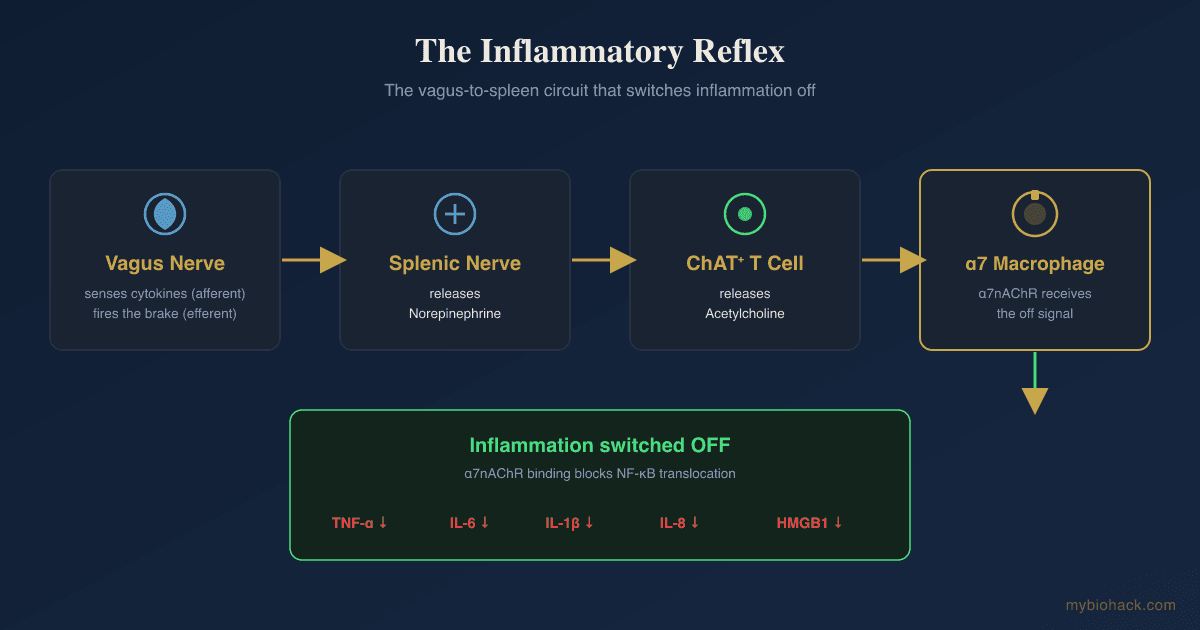
The vagal anti-inflammatory pathway runs through alpha-7 nicotinic acetylcholine receptors on your macrophages, which is one mechanism behind why some people find low-dose nicotine helpful while stuck in this loop.

7. Do The Limbic Work

This step is foundational, not optional.

A subconscious threat loop keeps the HPA axis firing, which keeps mast cells degranulating and the sympathetic nervous system dominant.

In my clinical experience people rarely recover with supplements and modalities alone without addressing the subconscious patterns driving the stress response.

Programs like DNRS, the Gupta Programme, and NLP, along with meditation and time in nature, are the tools that build the synaptic plasticity needed to exit the loop.

What To Stay Away From

  • High-intensity exercise during a flare (overexertion damages the glycocalyx further, and post-exertional malaise is a real mechanism, not deconditioning)
  • L-arginine and nitric oxide boosters (in this state nitric oxide becomes peroxynitrite, and arginine can reactivate latent viruses; L-citrulline is the safer option)
  • Resveratrol (it induces IDO1, which worsens the kynurenine shunt)
  • High-sugar and high-glycemic eating (hyperglycemia alters glycocalyx sulfation and makes it physically harder to rebuild)

Testing

The goal here is to confirm the vascular, immune, and detox drivers rather than chase symptoms.

Inflammation And Endothelial Markers

A broad inflammatory panel including TNF-alpha, hsCRP, IL-6, IL-8, and VEGF maps the downstream activity.

I use the Cardio Zoomer to assess lipoprotein, insulin, endothelial, and ceramide markers relevant to vascular damage.

Gut And Endotoxin

I use the Gut Zoomer to assess the microbiome, intestinal permeability via zonulin, and pathogens driving the endotoxin loop.

Toxins And Stealth Infections

I use the Toxin Zoomer to assess mycotoxins, heavy metals, and environmental chemicals that keep the immune system activated.

Mitochondria And Methylation

I use the Cellular Zoomer to assess organic acids, mitochondrial function, oxidative stress, and methylation markers.

Bundle

For Long Covid specifically I use the Long Covid bundle, which combines the cardio, toxin, gut, cellular, and viral panels.

Mechanisms Of Action

Simple:

  • The virus strips the protective sugar layer off your blood vessels, and they start to leak.
  • Leaky vessels mean your tissues do not get enough blood, which starves your mitochondria of oxygen.
  • A leaky gut lets bacterial toxins into the blood, which keeps your immune system switched on.
  • Chronic immune activation steals the raw material your brain uses to make serotonin and melatonin.

Advanced:

  • Glycocalyx degradation Spike binds heparan sulfate, activates TGF-beta and heparanase, and immune-derived hyaluronidase and MMPs cleave the remaining glycosaminoglycans, exposing tight junctions and producing TCLS. R
  • Persistent shedding Syndecan-1 remains elevated in convalescent mild Covid, indicating the glycocalyx injury outlasts the acute infection. R
  • Microclot formation Spike induces fibrin(ogen) resistant to fibrinolysis, occluding the microcirculation already compromised by TCLS. R
  • Kynurenine shunt IDO1 activation raises the kynurenine-to-tryptophan ratio, depleting serotonin and melatonin precursors and generating neuroactive metabolites. R

Genetics

ACE2

ACE2 encodes the primary receptor for SARS-CoV-2 and regulates the renin-angiotensin system at the vessel wall.

Variants affect both spike binding affinity and baseline ACE2 expression.

rs2285666 is associated with altered ACE2 expression and Covid severity.

AGER (RAGE)

AGER encodes the receptor for advanced glycation end-products, which spike can activate directly to drive NF-kB inflammation.

rs2070600 (Gly82Ser) alters RAGE binding affinity and inflammatory set point.

SOD2

SOD2 encodes the mitochondrial superoxide dismutase that quenches the free radicals generated during hypoxia.

rs4880 (Ala16Val) reduces mitochondrial import efficiency and is the most common redox variant I see clinically.

For a full readout I use the Cellular Zoomer genetics add-ons and 23andMe raw data analysis.

More Research

  • Low-dose naltrexone combined with NAD has been studied specifically for persistent post-Covid fatigue, with early signals of benefit. R
  • Nattokinase degrades spike protein in cell culture, though no human trial has yet confirmed a clinical benefit for Long Covid. R
  • Sulfated polysaccharides inhibit SARS-CoV-2 in vitro by competing with the heparan sulfate co-receptor, which is the rationale for using fucoidans for glycocalyx support. R
  • The kynurenine-to-tryptophan ratio is significantly elevated in Long Covid and correlates with cognitive impairment, supporting NAD and serotonin precursor support. R

Where To Go From Here

Everything above is the free, complete protocol.

If you want to go deeper, here is how the rest of the tools map to where you are.

The full mechanism behind this post, every cascade in detail and all 47 chapters of the framework, lives in the Junction Dysfunction guide, which is included with the Path plan at $120 a year.

If you are testing your own labs, the Health Hub charts markers like syndecan-1, your inflammatory panel, and your daily symptoms over time so you can actually see the protocol working.

The Health Hub comes with the Pro plan at $180 a year, along with unlimited use of the Biohacking Bot to interpret your results inside this exact framework.

If your case is complex or you want a plan built around your specific testing, that is what a consultation is for.

You do not need any of that to start.

The protocol above is the same one I would walk you through, and it is free.

JG

Jacob Gordon

INHC, FMT-C

Board Certified Health Coach

I spent years battling unexplained chronic illness before discovering biohacking, epigenetics, and functional medicine. Now I share that research at MyBioHack to help others find their own answers.

Book a Consultation

Related Protocols & Supplements

Deep-dive chapters and recommended supplements for this topic

Recommended Supplements

Electrolyte Complex

1 scoop/day

CoQ10

200mg/day

Magnesium Glycinate

400mg at bedtime
Protocols from Jacob's Junction Dysfunction guideView Full Guide

What's Working For You?

What has been your experience with this topic? Unlock the full community archive with Pro.

Sign in to share your stack