DAO Supplement: Histamine Degradation, HNMT Genetics, And When To Use It
By Jacob Gordon, INHC, FMT-CDietary histamine from fermented foods, aged cheeses, cured meats, alcohol, and certain vegetables can accumulate to symptomatic levels when the body's primary degradation enzyme is not keeping up.
This is especially relevant for people with mast cell disorders where total histamine burden is already elevated from endogenous degranulation.
In this post, we will discuss what Diamine Oxidase (DAO) is, how it degrades histamine in the gut, how Histamine N-Methyltransferase (HNMT) handles intracellular histamine, the four major DAO gene variants, the supplements and foods that support or interfere with DAO activity, and how to test for DAO deficiency.

What Is DAO
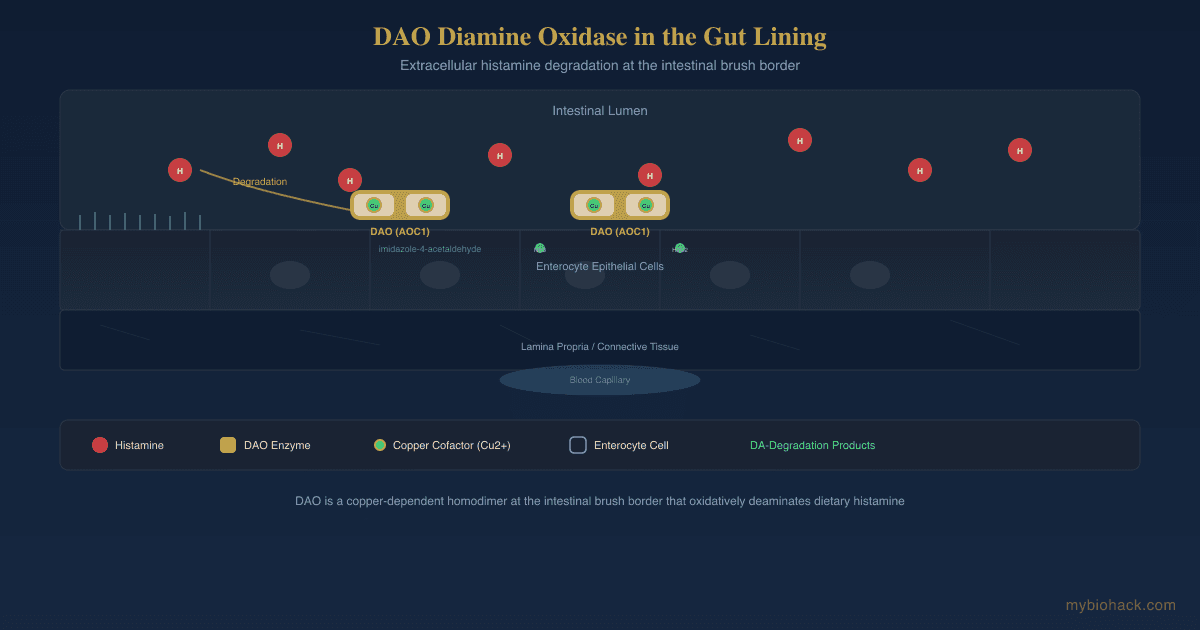
Diamine Oxidase (DAO), encoded by the AOC1 gene on chromosome 7, is a copper-containing enzyme that catalyzes the oxidative deamination of histamine and other biogenic diamines in the intestinal lumen.
DAO is the primary extracellular gatekeeper against dietary histamine, expressed most heavily in the villus epithelial cells of the small intestine, the kidney, and the placenta.
DAO is also known as amiloride binding protein 1 (ABP1), a historical misnomer that still appears in some genetic databases.
DAO is a homodimer: each subunit contains one copper ion and a topaquinone (TPQ) cofactor derived from post-translational modification of a tyrosine residue.
The copper ion is essential for TPQ biogenesis and catalytic activity.
For more on copper status and how it interacts with zinc and ceruloplasmin, see the post on zinc, copper, and ceruloplasmin.
The enzyme prefers diamines as substrates, with histamine and 1-methylhistamine being its highest-affinity targets.
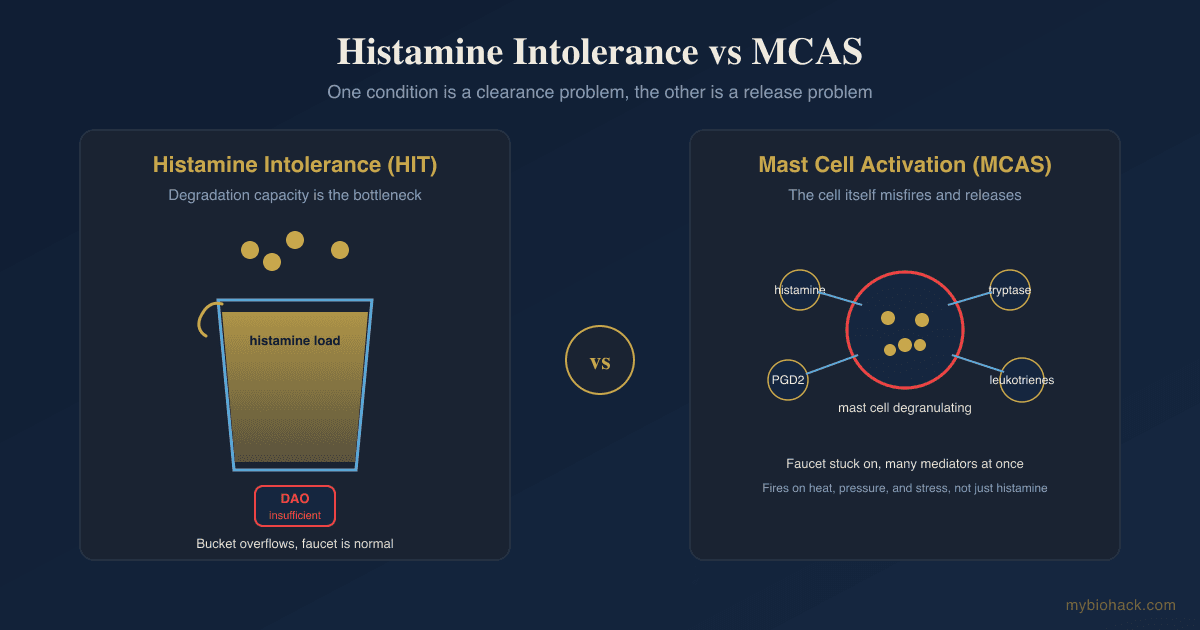
When DAO activity is insufficient relative to histamine load, histamine intolerance (HIT) results, characterized by gastrointestinal, cutaneous, respiratory, cardiovascular, and neurological symptoms.
See the post on histamine intolerance vs MCAS for how to distinguish HIT from mast cell activation syndromes.
What Is HNMT

Histamine N-Methyltransferase (HNMT), encoded by the HNMT gene on chromosome 2, is the primary enzyme for intracellular histamine degradation.
While DAO handles extracellular dietary histamine in the gut, HNMT methylates histamine inside cells, particularly in the bronchial epithelium, central nervous system, and red blood cells.
HNMT uses S-adenosyl methionine (SAMe) as a methyl donor to convert histamine into N-methylhistamine, which is then further oxidized by monoamine oxidase B (MAO-B) or excreted.
HNMT activity is genetically regulated, and common polymorphisms significantly affect enzyme activity.
The two enzymes work in tandem: DAO handles the luminal histamine load, while HNMT manages histamine that has already entered cells and tissues.
For more on why histamine accumulates in the first place, see the post on histamine intolerance and its root causes.
Benefits Of DAO Supplementation
1. Reduces Histamine-Associated Gastrointestinal Symptoms
DAO supplementation significantly reduced bloating, abdominal pain, postprandial fullness, belching, diarrhea, and nausea in a 4-week open-label study of 28 histamine-intolerant patients with serum DAO below 10 U/mL. R
When patients stopped taking DAO, symptom scores increased again, confirming the effect was supplement-dependent. R
A retrospective study of 14 patients found that 13 out of 14 reported improvement in at least one food-intolerance-related symptom after DAO supplementation (Daosin, one capsule twice daily before meals). R
2. Improves Headache And Migraine
Oral DAO supplementation (10,000 HDU per capsule) taken before a histamine challenge significantly reduced headache symptoms in a double-blind, placebo-controlled crossover trial of 39 histamine-intolerant patients. R
Another study found that DAO supplementation significantly reduced the duration of migraine attacks in patients with histamine intolerance. R
3. Reduces Skin Symptoms Including Urticaria
DAO supplementation for 30 days in 20 patients with histamine intolerance improved urticaria (hives) symptoms in a double-blind, placebo-controlled crossover investigation. R
The same study found that symptoms of flushing and pruritus also improved with DAO compared to placebo.
4. Supports Fibromyalgia Symptom Management
Mast cell degranulation driven by hypoxic connective tissue is a known contributor to fibromyalgia symptoms.
For more on this connection, see the post on mast cells, substance P, and neurogenic inflammation.
An 8-week double-blind placebo-controlled trial of 100 women with fibromyalgia found that DAO supplementation (4.2 mg pig kidney extract, three tablets per day before meals) improved fatigue, anxiety, depression, and the sense of burning compared to placebo. R
Approximately 75% of fibromyalgia patients in the study population carried at least one risk allele for DAO deficiency. R
5. Reduces Cardiovascular Symptoms
DAO supplementation improved palpitations, tachycardia, and blood pressure fluctuations in patients with histamine intolerance during the Schnedl et al. 2019 open-label study. R
6. May Improve Respiratory Symptoms
Respiratory complaints including rhinoconjunctivitis, asthma-like symptoms, and airway discomfort improved with DAO supplementation, though respiratory symptoms returned fastest after the washout period. R
Natural Sources
DAO is not found intact in most foods because it is a protein enzyme that is denatured by cooking.
The richest natural dietary sources are those that contain DAO activity in raw form:
- Fermented vegetables (raw sauerkraut, kimchi): contain microbial DAO activity from lactic acid bacteria, though levels vary widely. R
- Pea sprouts (Pisum sativum): plant-derived DAO with high specific activity, used as a source for some commercial supplements. R
- Lentils and legumes: raw sprouted legumes contain DAO activity, but cooking destroys it.
- Kidney beans: raw sprouted kidney beans are a traditional source of DAO in some supplement manufacturing processes.

Most commercial DAO supplements are sourced from pig kidney extract (porcine DAO) because pig kidney contains high DAO concentrations relative to tissue mass. R
Newer microbial DAO sources (Yarrowia lipolytica DAO-1 and Aspergillus niger DAO) are being developed for more scalable and consistent production. R
Plant-derived DAO from Pisum sativum (pea) is also commercially available and offers a vegan alternative to porcine kidney DAO. R
Dosage And Safety
Typical Dosing
Most clinical trials used DAO supplements standardized to 10,000 HDU (histamine degrading units) per capsule, taken up to three times daily, 15-20 minutes before meals containing histamine-rich foods. R
The dose used in the Schnedl et al. 2019 study was 4.2 mg pig kidney protein extract (containing 0.3 mg purified
DAO) per capsule, taken three times daily before meals. R
In the Yacoub et al. urticaria study, patients took 10,000
HDU DAO twice daily for 30 days. R
In the fibromyalgia trial, patients took three DAO tablets per day, 20 minutes before main meals, for 8 weeks. R
Timing Matters
DAO supplements must be taken before the meal, not after, because the enzyme needs to be present in the stomach and small intestine simultaneously with the incoming histamine.
Most commercial DAO products use gastro-resistant capsules or tablets to protect the enzyme from stomach acid degradation. R
Safety
DAO supplements are classified as foods for special medical purposes or dietary supplements in most jurisdictions.
No serious adverse events have been reported in clinical trials.
Mild gastrointestinal side effects including transient bloating or nausea have been noted in some participants.
DAO is generally well-tolerated and safe for long-term use, though formal long-term safety studies beyond 8-12 weeks are limited. R
Who Should Not Use DAO
Pregnant or breastfeeding women should consult a practitioner before using DAO supplements, as DAO is naturally produced by the placenta at high levels during pregnancy and the effect of supplemental DAO in this context has not been studied.
People with known allergy to pig proteins should avoid porcine-sourced DAO and use pea-sourced or microbial DAO instead.
What Inhibits DAO
Medications
Many common medications inhibit DAO activity in vitro, often at pharmacologically relevant concentrations:
- Chloroquine: greater than 90% DAO inhibition at pharmacologic concentrations. R
- Clavulanic acid (the augmentin component): greater than 90% DAO inhibition. R
- Cimetidine (H2 blocker, Tagamet): approximately 50% DAO inhibition. R
- Verapamil (calcium channel blocker): approximately 50% DAO inhibition. R
- Isoniazid (tuberculosis treatment): moderate inhibition (greater than 20%). R
- Metamizole (dipyrone, an analgesic): moderate inhibition (greater than 20%). R
- Acetylcysteine (NAC, a common supplement): moderate inhibition (greater than 20%). R
- Amitriptyline (tricyclic antidepressant): moderate inhibition (greater than 20%). R
- Citalopram (SSRI): reduced DAO activity in in vitro assays at high concentrations. R
- Pentamidine and berenil: very potent DAO inhibitors (nanomolar IC50) via non-covalent binding in the active site channel. R
Medications that did NOT inhibit DAO include ibuprofen, cyclophosphamide, sertraline, pregabalin, paroxetine, alprazolam, lorazepam, methylphenidate, and lisdexamfetamine. R R R
Alcohol And Energy Drinks
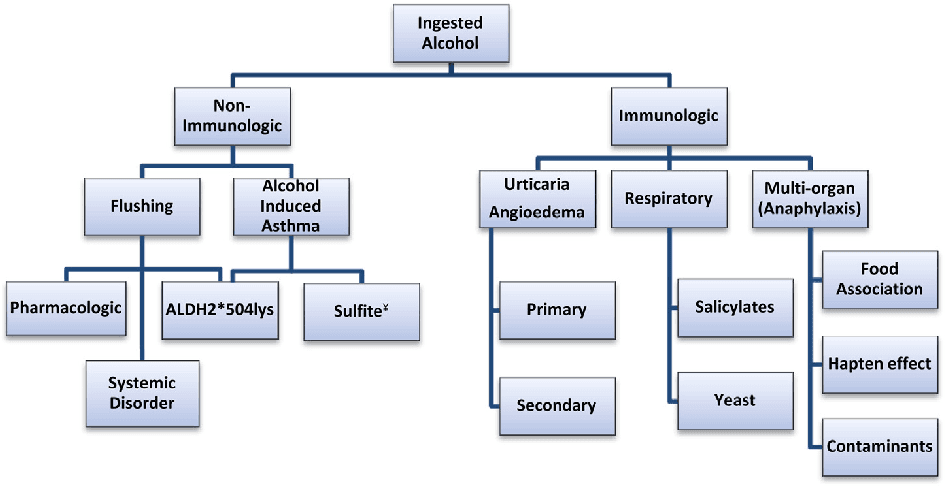
Alcohol is a well-established trigger for histamine intolerance symptoms, operating through multiple mechanisms: it contains histamine as a fermentation byproduct, it releases histamine from mast cells, and it may directly inhibit DAO activity. R
Red wine and beer are particularly high in histamine and other biogenic amines that compete with histamine for DAO degradation. R
Energy drinks and certain medications containing caffeine and taurine have been identified as DAO inhibitors in some food lists, though the mechanistic evidence is less robust.
Other Biogenic Amines Competing For DAO
Putrescine and cadaverine, two diamines commonly found in fermented foods, aged cheeses, and spoiled fish, competitively inhibit histamine degradation by DAO. R
When putrescine or cadaverine concentrations are 20-fold higher than histamine, histamine degradation is reduced by 70% and 80% respectively. R
Tyramine, spermidine, and spermine also inhibit histamine degradation but only at very high (20:1) ratios. R
This competitive inhibition explains why some people react to foods that are not necessarily high histamine but high in other biogenic amines.
Gut Pathology
Conditions that damage the intestinal mucosa reduce DAO production by enterocytes.
See the post on dysbiosis and SIBO for how gut microbial imbalances drive enterocyte dysfunction.
- Inflammatory bowel disease (Crohn's, ulcerative colitis) reduces DAO expression in affected mucosa. R
- Celiac disease damages the villus epithelium where DAO is produced.
- SIBO (small intestinal bacterial overgrowth) can impair enterocyte function and DAO production.
- Dysbiosis reduces the microbial DAO contribution and increases luminal histamine from bacterial histidine decarboxylase activity. See the post on gut microbiome and insomnia for how gut dysbiosis-driven histamine affects sleep via the gut-brain axis.
- Intestinal permeability (leaky gut) allows histamine to bypass the DAO barrier and enter circulation directly.
Testing
Serum DAO Activity
Serum DAO activity is the most commonly used laboratory test for histamine intolerance, though its diagnostic value remains debated. R
The most common cutoffs are: normal above 10 U/mL, slightly decreased at 3-10 U/mL, and distinctively decreased below 3 U/mL. R
In a retrospective study of 249 patients with suspected histamine intolerance, patients with high clinical probability had median DAO of 8 U/mL compared to 18 U/mL in healthy controls. R
Specificity at the less than 3 U/mL cutoff was 100%, but sensitivity was only 2%, meaning very low DAO almost certainly indicates deficiency but most deficient patients will not fall below this threshold. R
A population-based study of 1,051 Swedish adults found that 44% had DAO below 10 U/mL, suggesting the current cutoffs may need revision. R
Serum DAO fluctuates throughout the day and is affected by diet, circadian rhythm, and recent histamine intake. R
I use the Histamine test (plasma histamine) and Immune Zoomer (includes tryptase and mast cell markers) along with clinical symptom assessment to evaluate histamine intolerance.
For the full diagnostic picture including gut health, I use the Gut Zoomer (Vibrant Wellness) to assess microbiome composition, permeability markers, and SIBO indicators that may contribute to DAO deficiency.
For copper status testing, I use the Nutrient Zoomer (Vibrant Wellness), which includes serum copper, zinc, and ceruloplasmin.
Clinical Diagnosis
The current gold standard for histamine intolerance diagnosis remains clinical: two or more typical symptoms that improve with a low-histamine diet and recur upon reintroduction of histamine-rich foods.
For a comprehensive approach to managing histamine intolerance through diet, gut health, and methylation support, see the post on naturally treating histamine intolerance and related conditions.
DAO serum measurement is a supportive tool, not a standalone diagnostic test.
Mechanisms Of Action
Simple:
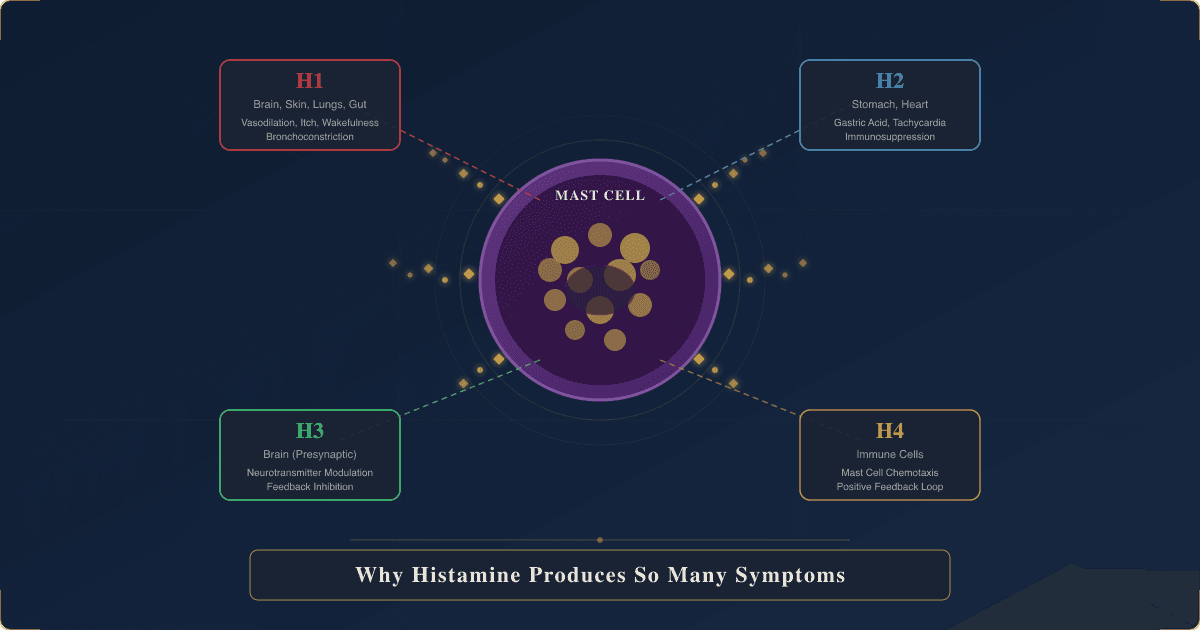
- DAO breaks ingested histamine down into imidazole-4-acetaldehyde and ammonia before it can cross the intestinal barrier and enter the bloodstream, preventing histamine from binding to H1, H2, H3, and H4 receptors throughout the body.
Advanced:
- Oxidative Deamination Of Histamine DAO catalyzes the conversion of histamine to imidazole-4-acetaldehyde, ammonia, and hydrogen peroxide (H2O2) via its TPQ cofactor. The copper ion at the active site is required for TPQ biogenesis and for the catalytic cycle. The hydrogen peroxide is normally cleared by catalase in the intestinal mucosa. R
- Substrate Specificity Via Asp186 A conserved aspartic acid residue (Asp186) in the DAO active site channel interacts with the second amine group of diamine substrates like histamine, conferring substrate specificity that distinguishes DAO from other copper amine oxidases. R
- Copper-Dependent TPQ Biogenesis The topaquinone cofactor forms through a self-processing reaction that requires copper and molecular oxygen. Without adequate copper, TPQ cannot form and DAO is inactive. Zinc can partially occupy the copper site but does not support TPQ formation. R
- HNMT Methylation Pathway HNMT transfers a methyl group from SAMe to histamine, producing N-methylhistamine. This is the primary pathway for histamine degradation in bronchial epithelium and the central nervous system. HNMT activity varies 3-5 fold between individuals due to genetic polymorphisms. R
- Competitive Substrate Kinetics Other diamines (putrescine, cadaverine) compete with histamine for DAO's active site. When these competing diamines are present at higher concentrations than histamine, they significantly reduce the rate of histamine degradation, explaining why foods high in putrescine or cadaverine can trigger histamine intolerance symptoms even when their histamine content is low. R
Genetics
AOC1 (DAO) Highest Population Risk
The AOC1 gene on chromosome 7 encodes diamine oxidase.
Four single nucleotide polymorphisms are primarily associated with reduced DAO enzyme activity in the Caucasian population. R
rs1049793 (His645Asp) the most prevalent DAO risk variant, found in approximately 30-40% of European populations.
This missense mutation reduces DAO enzyme activity by altering protein stability.
Homozygous risk genotype occurs in approximately 11-12% of individuals. R
rs10156191 (Thr16Met) a missense variant that reduces DAO activity.
Found at varying frequencies across populations, with higher prevalence in European cohorts. R
rs2052129 (G4586T) an intronic variant that modulates DAO expression.
This is a regulatory SNP that affects promoter activity rather than protein structure. R
rs1049742 (Ser332Phe) a missense variant with moderate population frequency that reduces DAO catalytic efficiency. R
The prevalence of DAO genetic deficiency (at least one risk allele) in the general population may be as high as 78-85%. R
A 2023 study of Spanish fibromyalgia patients found that 74.5% of DAO deficiency cases could be attributed to genetic factors. R
HNMT
The HNMT gene on chromosome 2 encodes histamine N-methyltransferase.
Common polymorphisms significantly affect histamine methylation capacity. R
rs1801105 (Thr105Ile, C314T) the functionally significant HNMT coding SNP.
The T allele (encoding isoleucine) is associated with decreased HNMT enzyme activity and reduced mRNA stability.
The T allele is associated with higher risk of asthma and atopic dermatitis. R R
rs1050891 (1097A/T, also described as 939A>G) a 3' untranslated region SNP that correlates with HNMT activity.
The C allele (at the T939C position) is associated with increased transcript stability and higher HNMT activity.
This SNP is in strong linkage disequilibrium with the Thr105Ile coding variant. R
rs2071048 (-1637T/C) and rs11569723 (-411C/T) 5' flanking region SNPs that may conditionally regulate HNMT activity, with some evidence of female-specific effects on enzyme activity in Chinese populations. R
More Research
- DAO activity at different times of day varies significantly in the same individual serum DAO follows a circadian pattern, and single-point measurement may not reflect overall histamine degradation capacity. Serial testing or standardized sampling times are recommended for clinical use. R
- A low-histamine diet can increase serum DAO activity over 6-12 months in patients with highly reduced DAO who followed a histamine-free diet for 6-12 months, serum DAO activity increased significantly and symptoms disappeared, suggesting that reducing histamine load allows enterocyte DAO production to recover. R
- Microbial DAO from Yarrowia lipolytica can degrade approximately 30% of histamine under simulated intestinal conditions a single tablet containing 690 nkat of microbial DAO-1 degraded 22 mg of histamine in 90 minutes in the presence of food matrix, comparable to what might be needed for clinical benefit. R
- DAO activity in commercial pig kidney supplements is highly variable one in vitro study found that a commercially available pig kidney DAO preparation had no detectable DAO activity, while another analysis suggested at least 50 nkat of activity is needed for food-relevant histamine degradation. Product quality varies significantly between manufacturers. R
- Copper status directly affects DAO function DAO is a copper-dependent enzyme, and both copper deficiency (impaired TPQ formation) and copper excess (zinc displacement) can affect activity. The active site can be partially occupied by zinc, which does not support catalytic function. Testing copper and ceruloplasmin is recommended before long-term DAO supplementation.
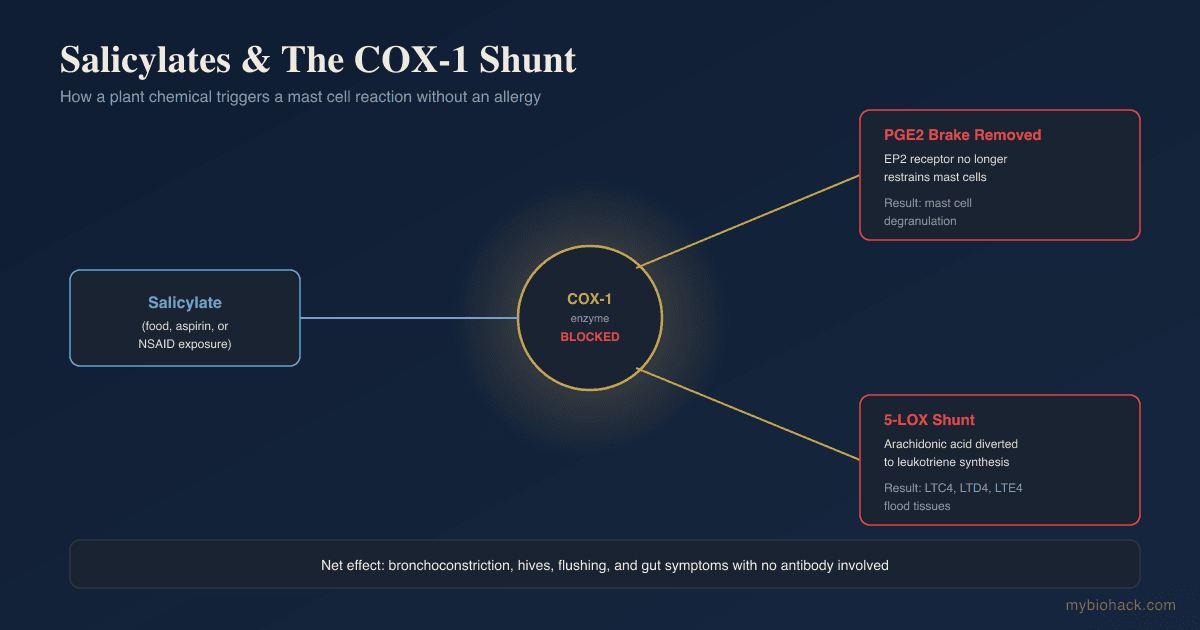
- DAO rs1049793 is associated with hypersensitivity to NSAIDs the His645Asp variant that reduces DAO activity also increases risk of hypersensitivity reactions to non-steroidal anti-inflammatory drugs, suggesting DAO plays a broader role in drug tolerance beyond dietary histamine. R
- DAO supplementation may reduce overall antihistamine medication use patients who use DAO before meals report needing fewer H1 and H2 antihistamine medications for symptom control. R
- The interplay between DAO and HNMT is not fully understood at the clinical level while DAO handles luminal histamine and HNMT handles intracellular histamine, the relative contribution of each pathway in different tissues and under different pathological conditions remains an active area of research. R
- For biomarker testing I use the Nutrient Zoomer to assess copper and zinc status, the Gut Zoomer to evaluate gut health and permeability, and the Immune Zoomer to assess mast cell and histamine-related markers.
Jacob Gordon
INHC, FMT-C
Board Certified Health Coach
I spent years battling unexplained chronic illness before discovering biohacking, epigenetics, and functional medicine. Now I share that research at MyBioHack to help others find their own answers.
Book a ConsultationRelated Protocols & Supplements
Deep-dive chapters and recommended supplements for this topic
Quercetin
500mg 2x/day
Vitamin D3 + K2
5000 IU + 200mcg/day
DAO Enzyme
1 cap before meals