Multiple Chemical Sensitivity And TRP Receptors: How TRPV1 And TRPA1 Drive MCS, And How To Inhibit Them
By Jacob Gordon, INHC, FMT-CThis article contains affiliate links. As an Amazon Associate, MyBioHack earns from qualifying purchases at no extra cost to you. We only link products we research and stand behind.
Multiple Chemical Sensitivity is a condition where low levels of everyday chemicals, the kind most people never notice, trigger disabling neurological and physical symptoms.
In this post, we will discuss what MCS is, how the TRPV1 and TRPA1 receptors sense and amplify chemical exposures, why they sensitize in chronic illness, which brain regions and comorbid conditions are involved, and how to inhibit them.

Basics Of Multiple Chemical Sensitivity
Multiple Chemical Sensitivity (MCS), also called chemical intolerance, is a chronic condition in which low-level exposures to common chemicals provoke reproducible, often disabling symptoms across multiple organ systems. R
The triggers are mostly volatile organic compounds (VOCs), small lipophilic molecules that evaporate at room temperature and are most concentrated in indoor air. R
Common offenders include fragrances and perfumes, cleaning products, new paint and plastics, petrol fumes, formaldehyde, and solvents.
The symptoms that most consistently separate MCS patients from controls are central nervous system symptoms: a stronger sense of smell than others, difficulty concentrating, feeling dull or groggy, and feeling spacey. R
MCS has been dismissed for decades, in part because earlier provocation studies used flawed methods, including poor blinding and the deliberate exclusion of capsaicin challenges that would have demonstrated sensory hyper-reactivity. R
That picture has changed: functional imaging now shows measurable brain changes in MCS, and those changes map onto regions that express the same two receptors that sense the offending chemicals. R
As the most thorough recent review puts it, to deny the existence of MCS as a distinct medical condition is wrong. R
What TRP Receptors Are
Transient Receptor Potential (TRP) channels are a superfamily of ion channels that act as the body's primary sensors for temperature, mechanical force, and chemical stimuli.
The 2021 Nobel Prize in Physiology or Medicine went to David Julius and Ardem Patapoutian for identifying the transient receptor potential vanilloid 1 (TRPV1) receptor and the broader family of sensory channels. R
Two of these channels matter most for chemical sensitivity: TRPV1 and the transient receptor potential ankyrin 1 (TRPA1) receptor. R
TRPV1 is the receptor for capsaicin, the pungent compound in chili peppers, and it also responds to heat, acid, inflammatory mediators, and products of oxidative stress. R
TRPA1 is the most broadly tuned chemosensory channel known, with more than 130 identified chemical activators, including a large number of VOCs. R
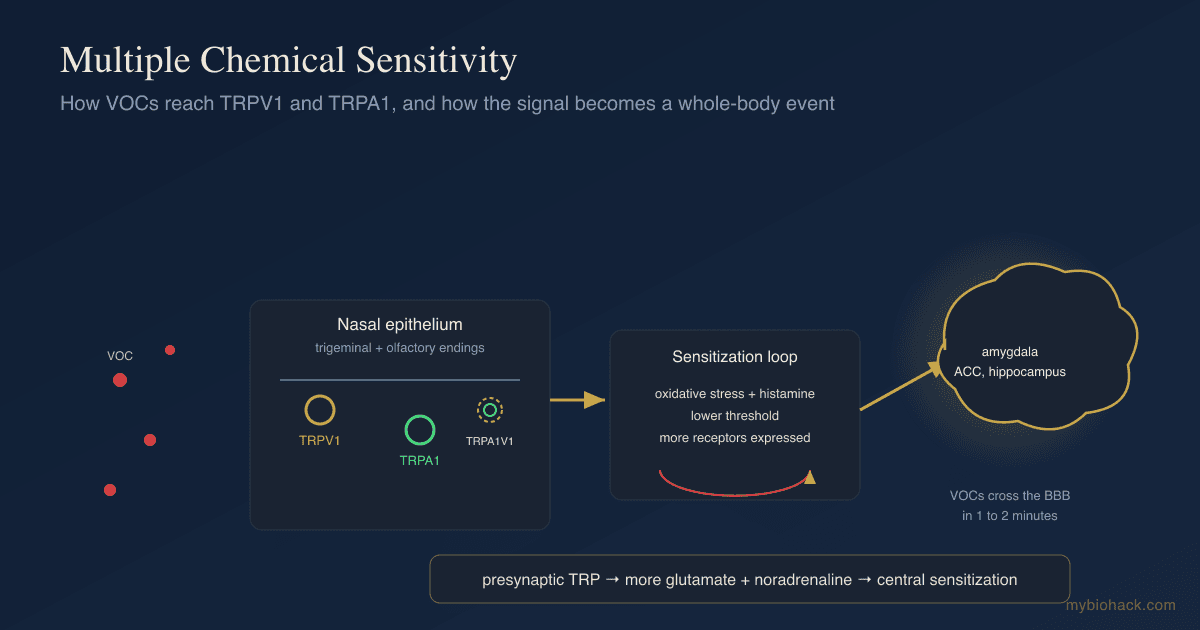
Both receptors are highly expressed in the olfactory and trigeminal nerve endings, which sit within a few microns of the surface of the nasal epithelium, giving lipid-soluble chemicals almost direct access to them. R
The specific VOCs sensed by TRPV1 include benzene, ethylbenzene, formaldehyde, styrene, toluene, and m-xylene, the same chemicals to which MCS patients react most strongly. R
Two terms matter for understanding what goes wrong in MCS.
Upregulation is an increase in the number or density of receptors on a cell surface, which raises the cellular response to a given stimulus.
Sensitization is receptor hyperexcitability, where a normal or even subthreshold input is perceived as noxious. R
For a deeper look at the full TRPV family and the six TRPV subtypes, see the companion post on TRPV receptors and proteins.
How TRPV1 And TRPA1 Drive MCS
TRPV1 and TRPA1 do not work alone, and that is the core of the MCS mechanism.
They co-localize and co-express in the same sensory neurons, and they enhance each other's function by sensitizing one another. R
When both are activated at once, the effect can be synergistic rather than additive. R
For example, repeated low-dose exposure to acrolein, a reactive aldehyde in smoke and overheated cooking oils, sensitizes TRPA1 and in turn enhances TRPV1 sensitization to its classic agonist, capsaicin. R
When the two channels are upregulated together by shared triggers, they assemble into heterotetramers, combined units sometimes written as TRPA1V1. R
These combined channels respond to chemical stimuli at a lower threshold and produce reactions of greater strength and longer duration. R
Both channels are also activated by the things that accumulate in chronic illness: air pollution, oxidative stress, and systemic inflammation. R
Repeated, chronic activation of TRPV1 and TRPA1 leads to upregulation and sensitization, which is a self-reinforcing loop: the more you activate the channels, the more of them you express. R
Their activation enables crosstalk between neurons, immune cells, and epithelial cells, which is how a chemical smell becomes a whole-body event. R
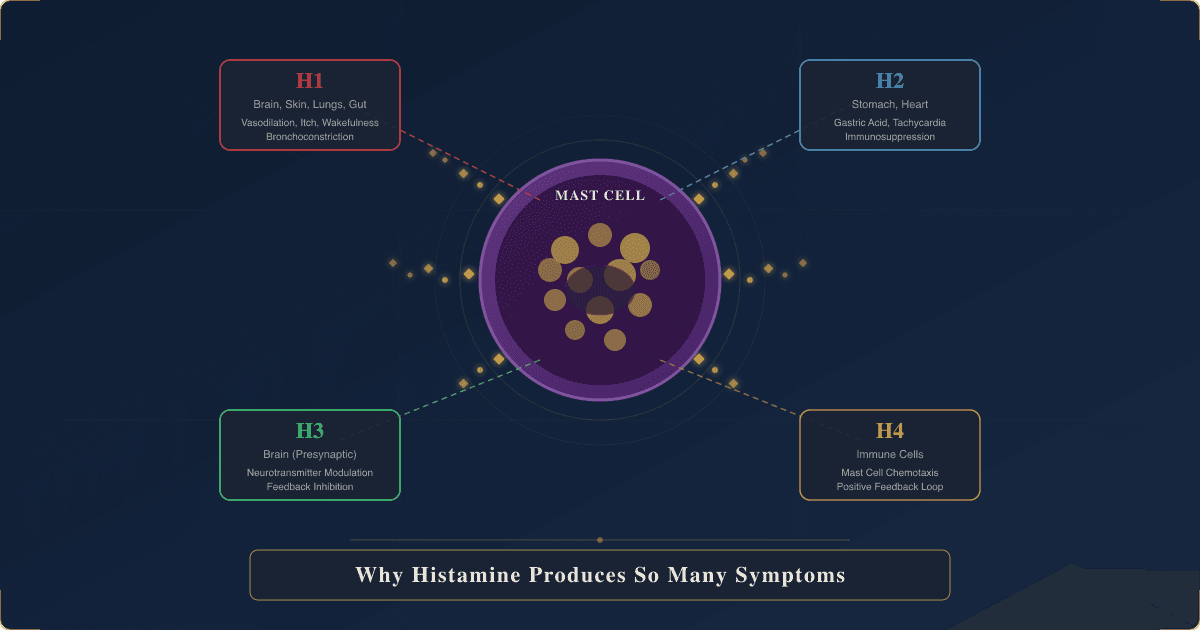
Histamine is a major amplifier of this loop, because it sensitizes TRPV1 through the H1 receptor and potentiates TRPA1, a mechanism shown to drive visceral hypersensitivity and abdominal pain in irritable bowel syndrome. R R
Both TRPV1 and TRPA1 are also expressed on mast cells themselves, where they participate in activation and degranulation, releasing still more histamine to feed the cycle. R
This is why MCS patients show respiratory sensory hyper-reactivity, and why the capsaicin inhalation cough challenge, a reliable and reproducible measure of TRPV1 sensitivity, consistently lights up in this population. R

TRP Receptors In The Brain
TRP channels are not confined to the nose and skin; they are widely expressed throughout the central nervous system. R
They are found in the somatosensory cortex, prefrontal cortex, anterior cingulate cortex, amygdala, hippocampus, thalamus, hypothalamus, periaqueductal grey, locus coeruleus, and cerebellar cortex. R
When located on the presynaptic terminal, their activation potentiates the release of excitatory glutamate and of adrenaline and noradrenaline, which pushes the brain toward an excitatory, sympathetic state. R
Because VOCs are small, lipophilic, and largely non-polar, they diffuse passively across the blood-brain barrier and accumulate in the brain within one to two minutes of inhalation, producing direct CNS effects on cognition and mood. R
Functional imaging studies in MCS show increased activity in regions tied to emotional and non-conscious processing, including the amygdala, hippocampus, anterior cingulate cortex, orbitofrontal cortex, and prefrontal cortex. R
One detail ties the whole imaging literature together: the majority of the challenge substances used in these studies, including vanillin, acetone, eugenol, limonene, and menthol, are TRPV1 or TRPA1 agonists. R
There is an apparent paradox worth sitting with here.
MCS patients describe a heightened sense of smell, yet repeated testing shows they do not have a lower threshold for detecting or discriminating odors. R
Signal detection theory resolves the contradiction: the issue is not a more sensitive detector but a more lenient criterion for deciding that a faint signal matters, which is what you would expect when sensory neurons are in a state of increased excitability or when the signal duration is longer than usual. R
That altered state of the sensory nerves is exactly what sensitization of TRPV1 and TRPA1 produces. R
MCS And Overlapping Conditions
MCS rarely travels alone, and the conditions it clusters with share the same TRP and central sensitization machinery.
A cluster of comorbidities tracks with MCS severity. R
- Allergies
- Anxiety
- Asthma
- Depression
- Eczema
- Migraine
- Psoriasis
Central Sensitization And Generalized Sensory Hypersensitivity
Central sensitization is a state where CNS neurons have lower firing thresholds, expanded receptive fields, and prolonged, stimulus-independent activity, which amplifies sensory signaling across the board. R
The result is generalized sensory hypersensitivity, where the same person reacts not only to chemicals but to sound, light, and touch. R
This is why MCS overlaps so heavily with fibromyalgia, chronic migraine, and irritable bowel syndrome, which all feature multi-sensory hypersensitivity and noise sensitivity. R
Mast Cells And MCAS
Both TRPV1 and TRPA1 sit on mast cells and drive their degranulation, and histamine released from those mast cells sensitizes the same channels in return. R
This bidirectional loop helps explain why people with Mast Cell Activation Syndrome (MCAS) so often report chemical intolerances that look like MCS. R
If you are working through this overlap, the posts on histamine intolerance and the gut-serotonin-mast cell axis go deeper on the mediators involved.
Pain
When healthy MCS participants with normal lung function and no psychiatric history underwent a capsaicin challenge, they showed a lower pain threshold and higher intrinsic connectivity of their salience network than controls. R
The same machinery underlies conditions like trigeminal neuralgia and centralized pain states where TRPV1 sensitization plays a role.
The Junction Dysfunction View
In the Junction Dysfunction framework, TRPV1 and TRPA1 sit at the center of a central sensitization positive feedback loop: the more the receptors fire, the more receptors the body makes, and histamine drives them to express even more often.
Jacob's framing here is important and goes against the usual instinct to simply block the receptor.
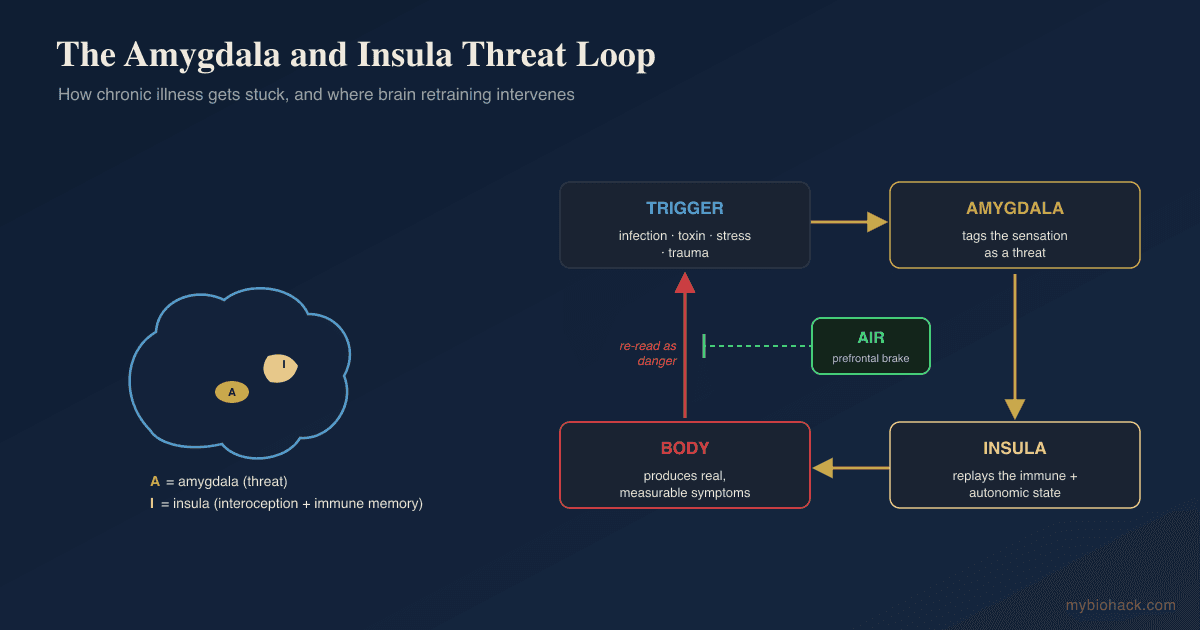
Because the loop is self-reinforcing and wired into the limbic system, the durable fix is not blocking but redirecting, using psychotechnologies like NLP, meditation, DNRS, and the Gupta Programme to introduce new variables and rebuild synaptic plasticity through BDNF, NGF, and related neurotrophins. R
The practical entry point for this is covered in the post on amygdala and insula retraining.
This loop also overlaps with CIRS and the broader sensitivity picture and with the mast cell-glia interaction in chronic inflammation.
Neurodevelopment And Neurodegeneration
Chemical intolerance in parents has been associated with higher odds of autism spectrum and attention deficit diagnoses in their children across a five-country replication, with the authors pointing to shared limbic, immune, and oxidative-stress mechanisms rather than any single cause. R
On the other end of life, the pathways to neurodegeneration and to MCS appear to overlap through these same receptors, and polymorphisms in TRPV1 and TRPA1 are hypothesized to influence why some people diverge toward one outcome rather than the other. R
How To Inhibit TRPV1 And TRPA1
The goal is not to fully block these channels.
Complete TRPV1 blockade has repeatedly failed in clinical trials because the receptor also maintains body temperature, so full antagonists cause hyperthermia, and because TRPV1 is needed to detect genuinely dangerous heat. R
The better strategy is soft modulation: reduce sensitization, promote desensitization, quench the oxidative stress and histamine that keep the channels primed, and rebuild the limbic loop that holds them there.

1. Caffeine
Caffeine suppresses human TRPA1 channels, in contrast to its activating effect on the rodent version, which is one reason animal and human data on caffeine and pain can look contradictory. R
On TRPV1, caffeine appears to act as a mild agonist that drives desensitization and downregulation of the channel over time, which is the proposed basis for its adjuvant analgesic effect. R
The caveat is real: caffeine is also a stimulant that raises adrenergic tone, so it can backfire in people whose MCS overlaps with anxiety or dysautonomia, and timing matters (see the post on how to have coffee).
2. Neohesperidin
Neohesperidin, a citrus flavonoid, acts as a TRPV1 antagonist and produces analgesia by blocking TRPV1, reducing capsaicin-evoked calcium responses in sensory neurons. R
Notably, it did so without altering body temperature, the side effect that sank most pharmaceutical TRPV1 antagonists. R
3. Noopept
Noopept attenuated neuropathic pain and oxidative neurotoxicity in part through inhibition of the TRPV1 channel in a diabetic rat model. R
This is animal data, so treat it as a promising signal rather than a settled human protocol, and note that noopept has its own broader profile worth understanding first.
4. Specialized Pro-Resolving Mediators And Omega-3
Specialized pro-resolving mediators are metabolites of the omega-3 fatty acids EPA and DHA, and they actively turn off inflammation rather than just blocking it.
Resolvins, including RvD1 and RvD2, directly inhibit TRPV1 and TRPA1 activation on sensory neurons. R
More broadly, these resolution mediators act on nociceptive neurons to reduce TRPV1 and TRPA1 activity, dampen glutamate release, and lower spinal pain transmission. R
The practical lever is supplying the precursors with a high-quality EPA and DHA fish oil, or the mediators themselves with an SPM supplement.
5. Palmitoylethanolamide
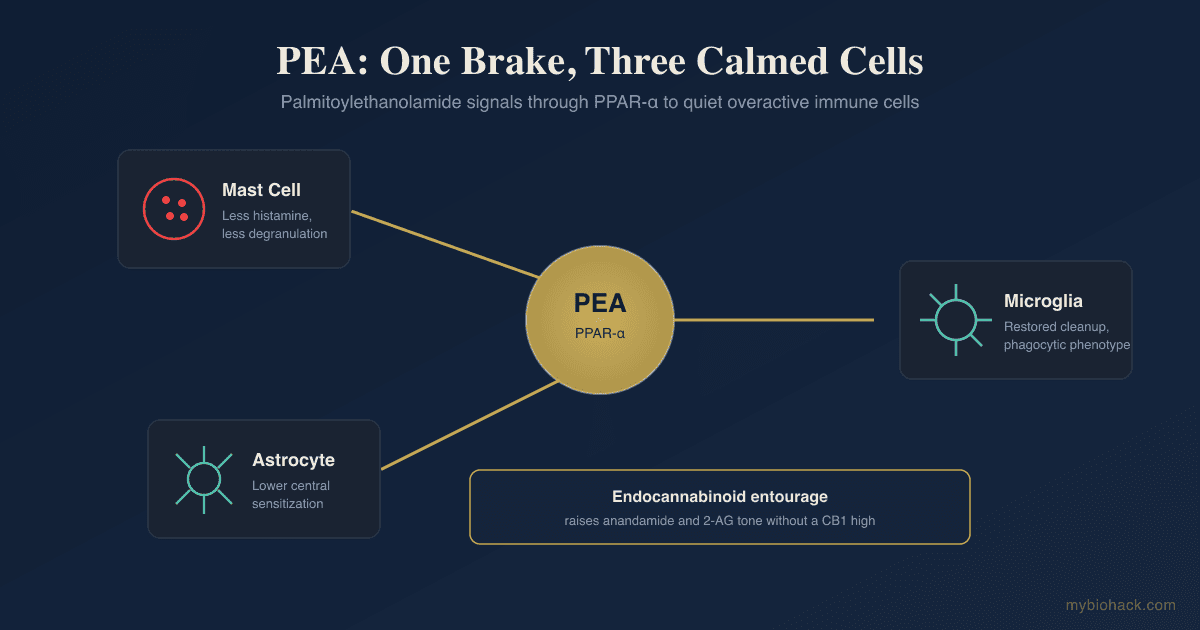
Palmitoylethanolamide (PEA) is an endogenous lipid that reduces mast cell degranulation and nerve-fiber hyperalgesia, lowering the histamine that keeps TRPV1 primed. R
It also counteracts substance P-induced mast cell activation, which is central to the neurogenic inflammation loop in chemical sensitivity. R
PEA is often paired with luteolin as PeaLut to add glial modulation on top of the mast cell effect.
6. Cannabidiol
Cannabidiol (CBD) binds TRPV1 and, like capsaicin, first activates and then desensitizes the channel, producing an antihyperalgesic effect. R R
The nuance is that CBD is technically a TRPV1 agonist, so a subset of very reactive people feel worse before they feel better, which is why low and slow dosing matters.
This same agonist-then-desensitize behavior is why high-dose topical capsaicin is used clinically to deplete and quiet TRPV1 nerve terminals, and it is the mechanism behind the cannabinoid hyperemesis picture when the system is pushed the wrong way.
7. Quercetin And Luteolin
Quercetin blocks TRPV1 indirectly, by stabilizing mast cells and cutting histamine release, which then prevents the downstream PKC-dependent activation of TRPV1. R
There is a genuine caveat: quercetin itself can directly activate TRPA1, so its net benefit comes from mast cell stabilization, and a minority of strongly TRPA1-driven people may not tolerate it. R
Luteolin works through the same mast cell stabilizing route and is well tolerated by most.
8. Vitamin D
The vitamin D metabolite 25-hydroxyvitamin D is an endogenous partial agonist of TRPV1 that binds the same pocket as capsaicin but antagonizes the stimulatory effect of full agonists like capsaicin and oleoyl dopamine. R
In practice, this means adequate vitamin D status occupies the receptor in a way that blunts strong activation, so correcting a deficiency is a quiet but real lever on TRPV1 tone. R
9. Antioxidants To Quench The Upstream Trigger
Because TRPV1 and TRPA1 are sensors of oxidative stress, lowering the oxidative load lowers the stimulus that keeps them firing. R
French maritime pine bark is a useful ROS and RNS scavenger here, covered in depth in the Pycnogenol post.
Supporting conjugation and detox pathways reduces the reactive metabolites that activate these channels in the first place.
10. Limbic Retraining
None of the above resolves MCS on its own, because the central sensitization loop is anchored in the limbic system.
I do not see people get better, with all the supplements and modalities in the world, without working on the subconscious limbic patterns that keep the loop running.
This is the redirecting-not-blocking approach: introducing new variables through limbic retraining to rebuild plasticity, detailed in the post on amygdala and insula retraining.
What To Stay Away From
Direct TRPV1 and TRPA1 agonists during a flare (not an exclusive list):
- Acrolein from cigarette smoke and overheated cooking oils, which sensitizes TRPA1 and cross-primes TRPV1 R
- Capsaicin from chili peppers as a dietary load while the system is hyper-reactive
- Formaldehyde and solvents from new furniture, paint, and building materials R
- Fragrances and perfumes, where a single scented product can emit more than a hundred different VOCs R
- Petrol and exhaust fumes, which contain toluene, benzene, and cyclohexane R
Avoidance is necessary in the acute phase, but pure avoidance as the only long-term strategy is a trap.
An attention bias toward chemical exposures is part of the MCS picture, and a life organized entirely around vigilance can deepen the central sensitization rather than calm it, which is why the limbic work matters. R
Be cautious with reflexive high-dose NRF2 activation too, since the same hormetic interventions that help a robust system can backfire when redox capacity is already broken.
Testing
There is no direct commercial blood test for TRPV1 or TRPA1 activity, so testing focuses on the drivers and the comorbidities.
Provocation Testing
The capsaicin inhalation cough challenge is the most validated functional measure of TRPV1 sensitivity, with good short- and long-term reproducibility, and it is performed in specialized respiratory clinics rather than at home. R
Mast Cell And Histamine Markers
Because histamine sensitizes TRPV1, I assess the mast cell axis with Plasma Histamine and Tryptase (Quest Diagnostics), or the broader Immune Zoomer (Vibrant Wellness) for mast cell and autoantibody markers together.
Toxic Load And VOC Exposure
To map the chemical burden feeding the receptors, I use the Toxin Zoomer (Vibrant Wellness) for environmental chemicals, heavy metals, and mycotoxins, or the Mycotoxins Profile (RealTime Labs) for mold specifically.
Detox Capacity And Genetics
A genetic risk in the phase I and phase II liver enzymes that handle xenobiotics contributes to VOC sensitization in MCS, so detox capacity is worth mapping. R
I use the Toxin Genetics panel for detox SNPs and the Methylation Genetics panel for the methylation cycle, and the post on PON1 and organophosphate detox covers one of the most relevant enzymes.
TRPV1 and TRPA1 polymorphisms themselves can be read from 23andMe raw data, which is the cheapest way to see your baseline channel variants.
Mechanisms Of Action
Simple:
- TRPV1 and TRPA1 are the body's chemical alarm sensors, and in MCS they have been turned up so high that harmless smells set off the alarm.
- The two sensors make each other more sensitive, and the more they fire, the more of them the body builds, so the alarm gets louder over time.
- Calming them means lowering oxidative stress and histamine, gently desensitizing the channels, and retraining the brain loop that keeps the alarm on.
Advanced:
- Heterotetramer formation When TRPV1 and TRPA1 are co-upregulated, they assemble into TRPA1V1 heterotetramers with a lowered activation threshold and potentiated, prolonged responses to chemical stimuli. R
- Oxidative gating Both channels are directly gated by reactive oxygen and nitrogen species and by electrophilic products of lipid peroxidation such as acrolein, linking systemic oxidative stress to sensory firing. R
- Histamine-PKC sensitization Histamine acting at the H1 receptor sensitizes TRPV1 through a PKC-dependent pathway, lowering its threshold and amplifying nociceptive signaling, a loop that quercetin interrupts by stabilizing mast cells. R R
- Presynaptic excitation Central TRP channels on presynaptic terminals potentiate glutamate and catecholamine release, biasing the CNS toward excitatory, sympathetic signaling during chemical exposure. R
- Resolution pharmacology Specialized pro-resolving mediators down-regulate TRPV1 and TRPA1 indirectly through receptors such as CMKLR1, GPR32, and FPR2 on neurons and nearby glia, which is a distinct mechanism from antioxidant quenching. R
- Partial agonism by vitamin D 25-hydroxyvitamin D occupies the capsaicin binding pocket as a weak partial agonist, thereby antagonizing full agonists and inhibiting PKC-mediated potentiation of TRPV1. R
Genetics
Genetic mutations in TRPV1 and TRPA1 have been found that are associated with increased sensitivity to chemicals and with an enhanced perception of odorous stimulants, which is part of why MCS runs in families and varies so much between individuals. R
TRPV1
TRPV1 encodes the capsaicin and heat-sensing vanilloid channel.
Functional variants alter the channel's activation threshold and its response to inflammatory sensitization.
rs8065080 (Ile585Val) and rs222747 (Met315Ile) are common coding variants linked to differences in capsaicin and cough sensitivity. R
TRPA1
TRPA1 encodes the broadly tuned electrophile and irritant sensor.
Gain-of-function changes lower the threshold for activation by reactive chemicals.
rs920829 (Glu179Lys) is a variant associated with altered TRPA1 function and irritant sensitivity. R
Phase I And Phase II Detox Genes
Variants in xenobiotic-handling enzymes raise the burden of reactive metabolites that gate TRPV1 and TRPA1, so detox genetics modify chemical sensitivity even when the TRP channels themselves are normal. R
This is not the sole driver, because even MCS patients without detox polymorphisms show greater oxidative stress and systemic inflammation than controls. R
More Research
Several open questions and clinical notes are worth tracking.
Cannabis and THC act on TRPV1 as agonists, which raises the obvious question of whether they help MCS through desensitization or hurt it through initial activation, and the honest answer is that it depends on the dose, the individual, and how TRPA1-dominant their picture is. R
For biomarker tracking I use the Immune Zoomer and Toxin Zoomer to follow the mast cell and chemical-burden drivers over time, since the TRP channels themselves cannot yet be measured directly in routine practice.
The odor-threshold paradox remains one of the most useful teaching points in MCS, because it shows the problem is amplified signaling, not a more sensitive nose, and it argues against the dismissal of MCS as purely psychological. R
The limbic system remains the lever that most consistently moves the needle, and in my experience the people who recover are the ones who pair receptor-level support with consistent limbic retraining.
If you want a personalized read on which of these drivers is loudest for you, that is what a consultation is for.
Jacob Gordon
INHC, FMT-C
Board Certified Health Coach
I spent years battling unexplained chronic illness before discovering biohacking, epigenetics, and functional medicine. Now I share that research at MyBioHack to help others find their own answers.
Book a ConsultationRelated Protocols & Supplements
Deep-dive chapters and recommended supplements for this topic
Glutathione (Liposomal)
500mg 2x/day
Activated Charcoal
500mg away from food/meds
NAC
600mg 2x/day