Acne And Intestinal Permeability: How A Leaky Gut Barrier Drives Breakouts Through Zonulin And Bacterial Fragments
By Jacob Gordon, INHC, FMT-CThis article contains affiliate links. As an Amazon Associate, MyBioHack earns from qualifying purchases at no extra cost to you. We only link products we research and stand behind.
Acne is increasingly understood not as a surface skin problem but as a visible readout of what is happening inside the gut.
In this post, we will discuss how a compromised intestinal barrier lets bacterial fragments and food antigens drive the immune activation behind breakouts, why zonulin ties diet to acne, and why the specific food that triggers you (legumes for one person, dairy for another) is bioindividual.

The Basics: Acne As A Gut-Skin Problem
Acne vulgaris is a chronic inflammatory disease of the pilosebaceous unit, not just a cosmetic blemish. R
The idea that the gut drives skin disease is not new.
Dermatologists John Stokes and Donald Pillsbury proposed the gut-skin connection in the 1930s, and modern work revived it as the gut-brain-skin axis. R
The core claim is simple.
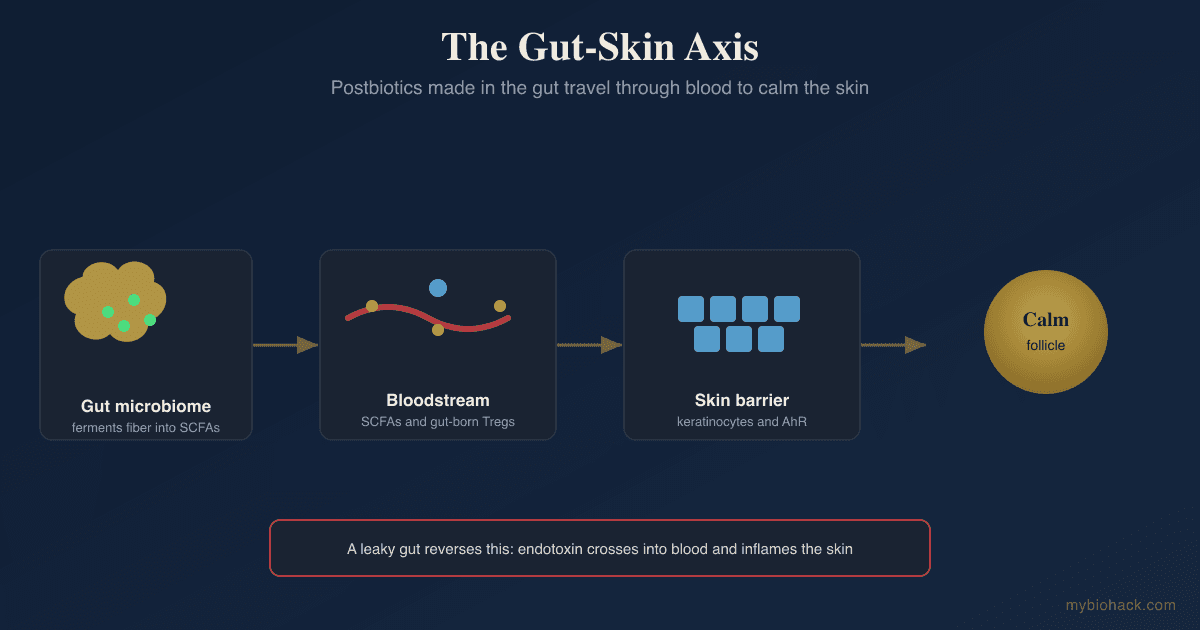
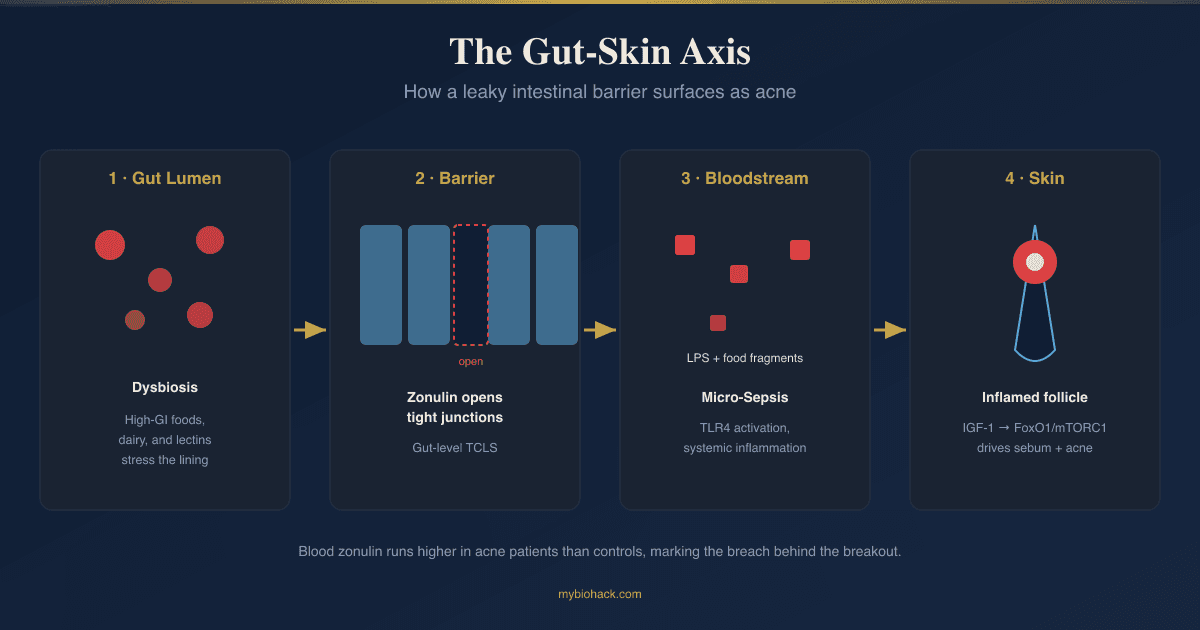
When the intestinal barrier is compromised, the contents of the gut (bacteria, bacterial fragments, and partially digested food) gain more access to the bloodstream than they should. R
That breach triggers a low-grade systemic immune response, and in susceptible people one of the places that immune activation surfaces is the skin. R
Zonulin is the protein that lets us measure this breach.
Zonulin is secreted by enterocytes (the cells lining the gut) and it reversibly opens the tight junctions between those cells, increasing intestinal permeability. R
When zonulin goes up, tight junctions loosen, and more luminal contents cross into circulation. R
Elevated blood zonulin is already documented across disorders defined by a leaky barrier, and a 2025 study set out to ask whether acne belongs on that list. R
What The Zonulin Study Actually Found
The study compared 75 acne patients against 75 age and sex matched healthy controls, measuring blood zonulin by ELISA and recording detailed dietary intake. R
The headline result is clean.
Mean blood zonulin was significantly higher in the acne group than in controls (195.54 ng/mL versus 158.45 ng/mL, p = 0.001). R
That is direct evidence of greater intestinal permeability in people with acne. R
The dietary pattern is where it gets interesting, because it is not a simple "plants good, animals bad" story.
The acne group consumed significantly more milk, more high glycemic index foods, more fast food, more ready-to-eat desserts, more sugary soft drinks, more refined cereals, more red meat, more processed meat, and more legumes. R
The acne group consumed significantly less fish, olive oil, fruit, nuts, and dark chocolate. R
Two diet findings tie directly to the barrier.
Red meat consumption positively correlated with blood zonulin in the acne group (r = 0.273, p = 0.018), meaning the more red meat, the higher the permeability marker. R
Legume consumption was significantly higher in the severe acne group specifically (p = 0.038), which is the plant-food signal worth paying attention to. R
This is a cross-sectional study, so it shows association, not proof of causation, and the authors are explicit that the mechanism still needs to be worked out. R
How A Compromised Barrier Turns Food Into Acne
The mechanism runs in a sequence, and each step is documented.
Start with the barrier itself.
In Jacob's Junction Dysfunction framework, leak of the gut epithelium is Transient Capillary Leak Syndrome (TCLS) at the level of the intestinal lining, and it is what lets dysbiosis and systemic endotoxemia develop through the liver's portal vein. R
Once tight junctions open, the most inflammatory molecule in the gut gets through.
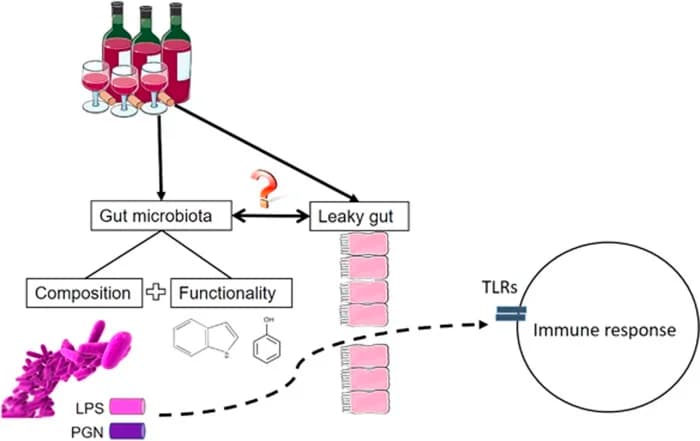
Lipopolysaccharide (LPS) is a fragment of the outer membrane of gram-negative bacteria, and it is a potent immune trigger even at low concentration. R
A persistent two to three fold rise in circulating LPS, which researchers named metabolic endotoxemia, is enough on its own to drive low-grade systemic inflammation with elevated IL-1, IL-6, and TNF-alpha. R
Translocated LPS binds Toll-Like Receptor 4 (TLR4) on immune cells, switching on NF-kB and the inflammasome, which is the engine of that systemic inflammatory tone. R
This is the picture Jacob calls Micro-Sepsis (MSS): a chronic, sub-lethal version of sepsis that runs below the diagnostic threshold but operates by the same LPS and TLR4 mechanics. R
When this loop runs continuously, it is a slow-burning source of systemic inflammation, and the skin is one of its end organs. R

Now add the second arm, which is hormonal.
High glycemic index foods and dairy both raise insulin and Insulin-Like Growth Factor 1 (IGF-1), and IGF-1 is the growth signal that drives the sebaceous follicle toward acne. R
IGF-1 and insulin suppress the transcription factor FoxO1 and activate mTORC1, the master growth switch, which increases sebum production, keratinocyte proliferation, and androgen signaling in the skin. R
At the level of the oil gland itself, IGF-1 induces SREBP-1 through the PI3K/Akt pathway, directly driving the lipogenesis that fills the follicle. R
Melnik has since reframed acne itself as an inflammasomopathy of the sebaceous follicle produced by this deviated FoxO1/mTORC1 signaling. R
So the two arms converge.
The barrier breach supplies the systemic inflammatory load (LPS, TLR4, immune activation), the high-glycemic and dairy intake supplies the IGF-1 and mTORC1 drive, and acne is what happens where those two signals meet in the skin. R

This also explains the study's protective foods.
Olive oil, dark chocolate polyphenols, nuts, and fruit all tend to lower intestinal permeability or feed a healthier microbiome, which is the opposite of the LPS-driven arm. R
Why It Is Not One Size Fits All
This is the part most diet-and-acne advice gets wrong.
The trigger food is not universal, because it depends on the state of your barrier and your genetics, not on the food's reputation as "healthy" or "unhealthy."
Consider the plant-food side first.
Legumes are rich in lectins, and lectins like concanavalin A and Wheat Germ Agglutinin (WGA) have been shown to increase intestinal permeability to larger molecules in animal models. R
In a person with an intact, well-fortified barrier, a bowl of properly soaked and cooked lentils is a fiber and polyphenol win.
In a person whose barrier is already compromised, that same lectin load can pry open junctions that are already loose, push more bacterial fragments across, and feed the systemic immune activation that surfaces as acne. R
That is why the study found legumes tracking with severe acne specifically, not with acne in general. R
Now consider the dairy side.
For a different person, milk is the dominant lever, because dairy carries IGF-1 and provokes an insulin response that drives the mTORC1 arm independent of any lectin. R
Large cohort data backs this up, with skim and low-fat milk showing the strongest association with teenage acne, likely because removing fat concentrates the bioactive whey and IGF-1 signal. R
Interestingly, fermented dairy like yogurt and kefir does not carry the same acne association, because lactobacilli reduce IGF-1 during fermentation. R
So you can have two people with the same diagnosis and two completely different drivers.
One person clears up by dropping legumes and refined grains and repairing the barrier, and the other clears up by dropping milk. R
The unifying thread is not the food.
It is the compromised barrier plus the individual's specific sensitivities, which is exactly why elimination and barrier repair beat any fixed "acne diet" handed out without context.
Acne And Overlapping Conditions
Acne rarely travels alone in people with a leaky barrier.
The same elevated-zonulin, increased-permeability pattern shows up across inflammatory skin and systemic conditions, which is why these tend to cluster.
- Dysbiosis (the upstream driver of barrier breakdown and endotoxemia) R
- Histamine intolerance (often shares the dysbiosis and mast cell root) R
- Mast cell activation (degranulation adds to the inflammatory and vasodilatory load) R
- Psoriasis (another barrier-and-immune skin condition with overlapping cytokines) R
- SIBO and sluggish bile (poor fat digestion and bacterial overgrowth feed the same loop) R
If you have acne plus bloating, flushing, food reactions, or a skin condition that will not resolve, the barrier is the common denominator worth investigating.
How To Improve Acne From The Gut Up
The logic here is sequence-driven: lower the inputs that open the barrier, repair the barrier, then rebuild the microbiome that keeps it closed.
1. Remove The Inputs That Open Junctions
This is the highest-leverage step and it costs nothing.
Cut the high glycemic index load first, because a low-glycemic-load diet measurably lowers IGF-1 and improves acne in randomized trials. R R
Refined cereals, sugary drinks, and ready-to-eat desserts drove both acne and zonulin in the source data, so they go first. R
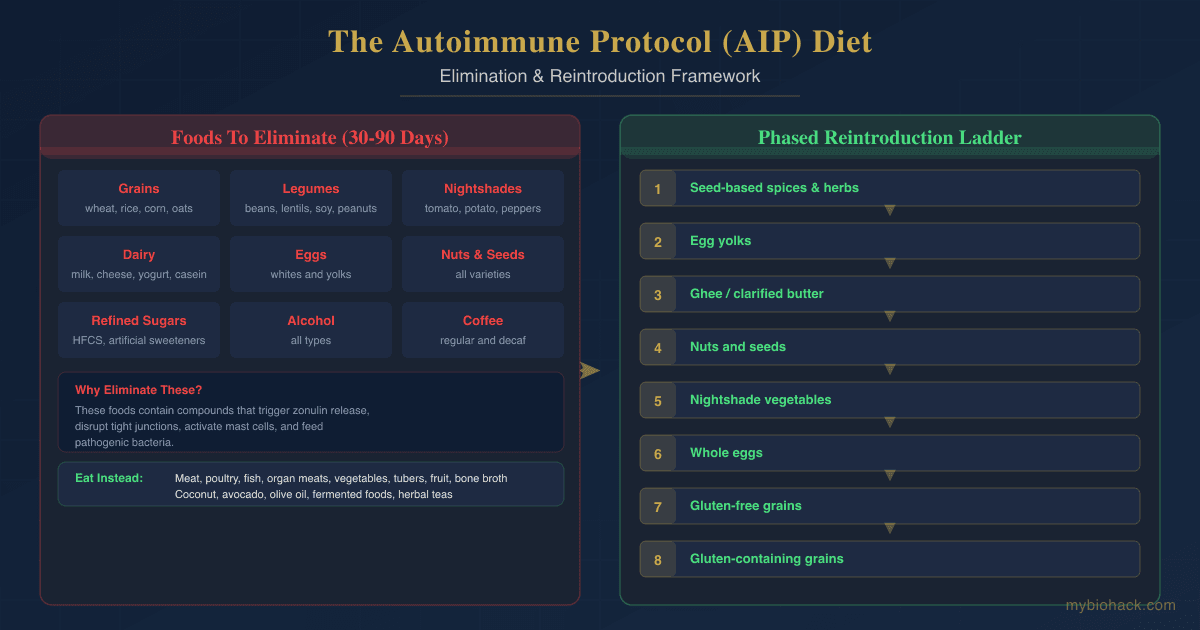
Run a structured elimination of the two most likely individual triggers, dairy and legumes, one at a time for three to four weeks each, and watch the skin. R
A Mediterranean pattern rich in olive oil, fish, and polyphenols reduced acne lesions in an intervention study, though case-control data is mixed on adherence, so treat it as a sensible base rather than a guarantee. R R
2. Repair The Barrier
L-Glutamine: the primary fuel for enterocytes, it induces tight junction proteins (claudin-1, occludin, ZO proteins) and promotes enterocyte proliferation. R
Zinc Carnosine: stabilizes the gut lining, and oral zinc independently improved acne versus placebo in double-blind trials. R
Vitamin D3 With K2: vitamin D regulates the barrier epithelium, and higher vitamin D status tracks with lower plasma endotoxin and zonulin. R
Quercetin: a polyphenol that strengthens tight junctions by assembling ZO-2, occludin, and claudin-1 and raising claudin-4 in intestinal cells. R
3. Lower The Endotoxin Load
Berberine: reshapes the microbiome away from gram-negative blooms and prevented LPS-induced tight junction damage in an endotoxemia model. R
Saccharomyces Boulardii: a probiotic yeast that preserves barrier function and reduced intestinal permeability in clinical disorders of barrier disruption. R
Immunoglobulins (Serum-Derived IgG): binds LPS and Lipid A in the gut lumen and blocked immune activation in an intestinal co-culture model before fragments could cross. R
4. Rebuild The Microbiome That Keeps Junctions Closed
Tributyrin Or Sodium Butyrate: butyrate is the short-chain fatty acid that raises tight junction protein expression and reduces permeability in human colonic tissue. R
Bifidobacteria-Dominant Probiotic: high red meat intake lowers beneficial genera and decreases tight junction protein expression, so rebuilding Bifidobacteria is targeted repair. R
Omega-3 Fish Oil: nearly all acne patients in the intervention data were omega-3 deficient, and correcting it reduced lesions, partly by inhibiting IGF-1 and leukotriene B4. R
Feed the rebuild with the protective foods from the study itself: fish, olive oil, fruit, nuts, and dark chocolate over milk chocolate. R
What To Stay Away From
- Fast food and ready-to-eat desserts (raised both acne and zonulin) R
- High glycemic index refined cereals and sugary soft drinks (drive insulin, IGF-1, and permeability) R
- Low-fat and skim milk (strongest dairy association with acne) R
- Milk chocolate (high glycemic load plus dairy, raised zonulin in the acne group) R
- Raw or undercooked legumes if your barrier is already compromised (lectin load on loose junctions) R
- Excess red and processed meat (correlated with higher zonulin and reduced tight junction proteins) R
A note on legumes, because this is the nuanced one.
Legumes are not inherently bad, and for many people they are a healthy staple.
The caveat is specific: if your barrier is already leaking and your acne is severe, the lectin load is worth removing during the repair phase, then reintroducing (well soaked and pressure cooked) once the gut is rebuilt. R
Testing
The point of testing is to confirm the barrier breach and find the individual driver rather than guessing.
Blood And Urine Markers
Blood zonulin is the direct readout of tight junction permeability, elevated at a mean of roughly 195 ng/mL in acne patients versus 158 ng/mL in controls in the source study. R
LPS / endotoxin and LPS-binding protein indicate how much bacterial fragment load is reaching circulation, the metabolic endotoxemia signature. R
Functional Lab Panels
I use the Gut Zoomer (Vibrant Wellness) to assess microbiome balance, gram-negative overgrowth, zonulin, and intestinal permeability in one panel.
For a PCR-based stool alternative, the GI-MAP (Diagnostic Solutions) maps pathogens, dysbiosis, and bacterial overgrowth driving the endotoxin load.
To identify the individual food drivers behind the immune activation, the Food Zoomer (Vibrant Wellness) measures IgG and IgA reactivity across 200-plus foods, which is how you separate the dairy responder from the legume responder.
For the insulin and IGF-1 arm, the Cardio Zoomer (Vibrant Wellness) covers fasting insulin and metabolic markers tied to the high-glycemic driver. R
Provocation / Elimination Testing
A structured elimination of dairy, then legumes, then high-glycemic grains, removed one at a time for three to four weeks with the skin as the readout, remains the most practical way to find your personal trigger. R
If you want this interpreted in the context of your full picture, this is the kind of bioindividual workup I do on a consult.
Mechanisms Of Action
Simple:
- A leaky gut lets bacteria and food fragments slip into the blood, your immune system reacts to clean them up, and that body-wide inflammation shows up on your face as acne.
- High-sugar foods and milk separately pour fuel on the fire by raising the growth hormone IGF-1, which makes skin oil glands overproduce.
Advanced:
- Zonulin and tight junction opening Zonulin released from enterocytes in response to bacterial products and dietary triggers reversibly disassembles the tight junction complex, increasing paracellular permeability and allowing macromolecular and microbial trafficking into the lamina propria and portal circulation. R
- LPS, TLR4, and metabolic endotoxemia A sustained two to three fold rise in translocated LPS engages TLR4 and NF-kB, producing the chronic low-grade endotoxemia that raises IL-1, IL-6, and TNF-alpha and supplies the systemic inflammatory tone behind inflammatory acne. R
- IGF-1, FoxO1, and mTORC1 Hyperglycemic and dairy-driven insulin and IGF-1 signaling exports FoxO1 out of the nucleus while activating mTORC1, and at the sebocyte IGF-1 induces SREBP-1 via PI3K/Akt to drive lipogenesis, keratinocyte proliferation, and androgen receptor transactivation in the pilosebaceous unit. R R
- Lectin-induced permeability Dietary lectins such as WGA and concanavalin A bind glycoproteins on the enterocyte brush border and alter junctional integrity, increasing permeability to larger molecules and providing a plant-food route to the same barrier breach. R
- SCFA barrier maintenance Butyrate from a fiber-fermenting microbiome is a primary colonocyte fuel and upregulates tight junction proteins, which is why dysbiosis and red-meat-driven loss of beneficial genera tips the barrier toward leak. R R
Genetics
FUT2
FUT2 encodes a fucosyltransferase that determines whether you secrete blood-group antigens into mucus, which shapes the gut microbiome and Bifidobacteria populations. R
Non-secretor variants reduce bifidobacterial diversity, richness, and abundance, shifting the mucosal community toward a less barrier-protective state. R
rs601338 — the non-secretor (A/A) genotype is associated with reduced Bifidobacteria and altered mucosal immunity. R
VDR
VDR encodes the vitamin D receptor, which regulates tight junction genes (claudin-2, -5, -12, -15) and maintains the intestinal barrier against inflammation and bacterial invasion. R
Variants that reduce VDR signaling blunt this barrier-protective effect, requiring higher active vitamin D to achieve the same junctional support. R
rs2228570 (FokI) — alters receptor activity and downstream barrier and immune regulation. R
MTHFR
MTHFR encodes the enzyme that converts folate into its active methylation form, and reduced activity raises homocysteine and inflammatory load. R
These variants cluster with the dysbiosis, mast cell, and histamine issues that overlap with the acne-prone leaky-gut phenotype.
rs1801133 (C677T) — the TT genotype reduces enzyme activity by roughly 55 to 65 percent and raises homocysteine. R
More Research
Blood zonulin did not correlate with acne severity within the acne group even though it separated acne from controls, which suggests permeability is part of the setup rather than a linear dose-dial for how bad the acne gets. R
Body mass index correlated with zonulin in the acne group, consistent with the broader literature that higher caloric and carbohydrate intake raises permeability while low-carbohydrate eating lowers it. R
Dark chocolate behaved oppositely to milk chocolate, with its polyphenols and higher cocoa exerting prebiotic and permeability-lowering effects, a clean example of how the same food category splits along processing and sugar content. R
Fermented dairy did not carry the acne signal that fresh milk did, pointing to IGF-1 reduction during fermentation as the differentiator rather than dairy as a monolith. R
The Mediterranean diet story is genuinely mixed, with one intervention showing lesion reduction but several case-control studies finding no association with adherence, so it is a reasonable base diet and not a proven cure. R R
For barrier and microbiome testing I use the Gut Zoomer to track zonulin and dysbiosis over a repair protocol, and the Food Zoomer to pin down whether dairy, legumes, or grains is the individual driver.
This is a study-rich but still early area, and the authors are clear that larger trials are needed to move from association to proven mechanism. R
Jacob Gordon
INHC, FMT-C
Board Certified Health Coach
I spent years battling unexplained chronic illness before discovering biohacking, epigenetics, and functional medicine. Now I share that research at MyBioHack to help others find their own answers.
Book a ConsultationRelated Protocols & Supplements
Deep-dive chapters and recommended supplements for this topic
Spore-Based Probiotics
1 cap with food
L-Glutamine
5g 2x/day on empty stomach
Butyrate
300mg 2x/day with meals