Vitamin D Is Not One Thing: Sun, Liver, Kidneys, And The Cofactors That Make It Work
By Jacob Gordon, INHC, FMT-CThis article contains affiliate links. As an Amazon Associate, MyBioHack earns from qualifying purchases at no extra cost to you. We only link products we research and stand behind.
Vitamin D is not a vitamin.
It is a steroid prohormone that requires two organ-level conversions before it can do anything in your body, and most people supplementing it are missing the cofactors that make those conversions possible.
In this post, we will discuss how vitamin D is made from sunlight, how the liver and kidneys activate it, what separates sun-derived vitamin D from supplement-derived vitamin D, what active vitamin D actually does once it reaches the nucleus, and why K2 (MK-7) and magnesium are non-negotiable partners for anyone taking D3 supplements.

Basics Of Vitamin D: What It Actually Is
Vitamin D is classified as a fat-soluble vitamin, but that label is misleading.
It functions as a secosteroid prohormone, meaning it must be enzymatically converted at least twice before it becomes biologically active. R
The body produces it from cholesterol in the skin, not from dietary sources alone.
There are two naturally occurring forms: vitamin D2 (ergocalciferol), derived from plants and fungi, and vitamin D3 (cholecalciferol), synthesized in human skin and found in animal sources. R
Neither form has meaningful biological activity until it is hydroxylated twice, first in the liver and then in the kidneys. R
The final active form is calcitriol (1,25-dihydroxyvitamin D3, or 1,25(OH)2D3), which binds to the vitamin D receptor (VDR) and acts as a transcription factor regulating hundreds of genes. R
Approximately 40% of the worldwide population is vitamin D deficient by standard serum markers. R
Most of that deficiency is not caused by low dietary intake.
It is caused by inadequate sunlight, impaired conversion enzymes, or missing cofactors.
How The Skin Makes Vitamin D From Sunlight
7-dehydrocholesterol (7-DHC) is the precursor molecule found in the epidermal layers of skin, specifically the stratum spinosum and stratum basale, where concentrations reach approximately 25 to 50 micrograms per square centimeter. R
When ultraviolet B (UVB) photons in the 290 to 315 nanometer range strike 7-DHC, they break the B-ring of the sterol, producing previtamin D3. R R
Previtamin D3 is thermally unstable and undergoes a temperature-dependent isomerization to vitamin D3 (cholecalciferol) over a period of approximately three days inside the plasma membrane. R
The vitamin D binding protein (DBP) then preferentially binds cholecalciferol and transports it from the skin into circulation. R
This DBP-transport step is one of the critical distinctions from orally ingested vitamin D (see the supplement section below).
One important built-in safety valve: prolonged sun exposure does not cause vitamin D toxicity.
When previtamin D3 accumulates past roughly 10 to 15% of the original 7-DHC content, it begins photoisomerizing into two biologically inert byproducts, lumisterol3 and tachysterol3, rather than continuing to produce more previtamin D3. R
This photocap mechanism means the skin self-regulates production; oral supplementation at high doses does not have this protection.
Factors that reduce skin synthesis: (not exclusive list)
- Age (older skin has lower 7-DHC concentrations and converts less efficiently) R
- Dark skin pigmentation (melanin competes with 7-DHC for UVB photons; darker-skinned individuals may require up to 10 times more sun exposure to produce equivalent D3) R
- High latitude or winter months (UVB angles above approximately 35 degrees latitude during winter do not generate adequate previtamin D3 in the skin) R
- Obesity (vitamin D sequesters in adipose tissue, reducing circulating levels) R
- Sunscreen use (blocks UVB penetration significantly) R
A full-body sun exposure producing one minimal erythemal dose (MED) is equivalent to ingesting between 10,000 and 25,000 International Units (IU) of oral vitamin D2, which illustrates how much sun generates vs. what most people supplement with. R
The Liver Conversion: 25-Hydroxylation Via CYP2R1
After skin synthesis or oral ingestion, cholecalciferol travels to the liver where it undergoes the first hydroxylation step.
The primary enzyme responsible is CYP2R1 (cytochrome P450 2R1), a microsomal enzyme located in the endoplasmic reticulum of hepatocytes. R
CYP2R1 adds a hydroxyl group at carbon-25, converting cholecalciferol into 25-hydroxyvitamin D (25(OH)D, also called calcifediol or calcidiol). R
25(OH)D is the major circulating form of vitamin D and is the standard marker used in blood testing to assess vitamin D status. R
A secondary mitochondrial enzyme, CYP27A1, can also perform 25-hydroxylation but does not hydroxylate D2 and appears to have redundant or minor in vivo significance; deletions of CYP27A1 in humans impair bile acid synthesis but not vitamin D metabolism. R
Genetic evidence for CYP2R1 being the key enzyme: a patient with a homozygous L99P mutation in CYP2R1 (leucine to proline substitution at amino acid 99) showed completely eliminated 25-hydroxylase activity and presented with classic vitamin D deficiency despite adequate sun exposure and dietary intake. R
Obesity suppresses CYP2R1 expression in both the liver and several extrahepatic tissues including the kidney, brown adipose tissue, and testis; this is one mechanistic explanation for why obese individuals tend to have lower 25(OH)D levels regardless of supplementation. R
The 25-hydroxylation step in the liver is considered largely unregulated and constitutive; 25(OH)D levels reflect vitamin D input (sun or supplements) more than active enzymatic throttling. R
This differs sharply from the second hydroxylation step in the kidney, which is tightly feedback-regulated.
After hepatic hydroxylation, 25(OH)D returns to circulation bound to DBP and albumin, where it circulates as the body's vitamin D reserve until the kidney converts it into calcitriol on demand. R
The Kidney Conversion: Final Activation Via CYP27B1
The kidney is the principal site of the second and final hydroxylation step that produces active vitamin D.
CYP27B1 (25-hydroxyvitamin D 1-alpha-hydroxylase) is expressed in the mitochondria of proximal renal tubular cells, where it adds a hydroxyl group at carbon-1, converting 25(OH)D into 1,25-dihydroxyvitamin D3, which is calcitriol. R R
Calcitriol is the biologically active hormonal form that binds the VDR and drives gene expression. R
CYP27B1 is tightly regulated by three primary counter-acting hormones:
- Parathyroid hormone (PTH) stimulates CYP27B1 via cyclic AMP signaling; when blood calcium drops, PTH rises, and more calcitriol is produced to increase intestinal calcium absorption R R
- Fibroblast growth factor 23 (FGF23), secreted by osteocytes in bone, suppresses CYP27B1 expression and simultaneously upregulates the degradation enzyme CYP24A1, and rising calcitriol stimulates more FGF23 release, completing a negative feedback loop R R
- Calcitriol itself suppresses its own synthesis by inhibiting CYP27B1 and stimulating CYP24A1, the primary degradation enzyme R
CYP24A1 (24-hydroxylase) terminates calcitriol activity by hydroxylating it at carbon-24, producing the inactive metabolite 24,25-dihydroxyvitamin D and ultimately calcitroic acid. R
This means calcitriol levels are tightly controlled regardless of how much 25(OH)D is in circulation; the kidney acts as a thermostat, not a direct conduit.
Practical implication: supplementing vitamin D3 raises 25(OH)D (the storage/transport form measured on labs), but the kidneys decide how much calcitriol gets made based on PTH, FGF23, calcium, and phosphate status, not based on how much D3 you take.
Loss of CYP27B1 function produces vitamin D-dependent rickets type 1A (VDDR1A), an autosomal recessive condition characterized by severe hypocalcemia, secondary hyperparathyroidism, and osteomalacia despite normal or elevated 25(OH)D. R
Extrarenal CYP27B1 expression: the 1-alpha-hydroxylase gene is expressed in numerous non-renal tissues including macrophages, keratinocytes, prostate, breast, and parathyroid gland. R
In macrophages, CYP27B1 activity is driven by inflammatory signals (Toll-like receptor 4 (TLR4) ligand lipopolysaccharide (LPS), tumor necrosis factor-alpha (TNF-alpha)) rather than PTH, and CYP24A1 is defective or absent in these cells, meaning macrophage-produced calcitriol is not self-limiting. R
This is one reason granulomatous diseases like sarcoidosis can produce hypercalcemia through unregulated macrophage calcitriol synthesis.
What Active Vitamin D Does: Calcitriol And The VDR
Calcitriol enters target cells and binds the nuclear VDR (vitamin D receptor), a member of the steroid hormone nuclear receptor superfamily. R
The VDR has three functional domains: an N-terminal DNA-binding domain containing two zinc fingers that interact with specific DNA sequences called vitamin D response elements (VDREs), a C-terminal ligand-binding domain, and a hinge region connecting the two. R
After binding calcitriol, the VDR heterodimerizes with RXR (retinoid X receptor) and the complex binds VDREs in gene promoter regions to activate or repress transcription. R
Primary actions of calcitriol via VDR signaling:
- Bone (increases osteocalcin and other bone matrix proteins, regulates osteoblast and osteoclast activity) R
- Calcium and phosphate homeostasis (increases intestinal calcium absorption via transient receptor potential vanilloid 6 (TRPV6) channels and calbindin-D9k; increases renal calcium reabsorption; drives phosphate absorption) R
- Immune regulation (modulates T cell differentiation, reduces Th1 inflammatory cytokines, promotes Treg activity; macrophage production of antimicrobial peptides like cathelicidin) R
- PTH suppression (calcitriol directly suppresses parathyroid gene expression and parathyroid cell proliferation) R
The VDR is expressed in virtually every nucleated cell in the body, which explains why vitamin D deficiency has effects far beyond bone health.
Supplement Form vs. Sun: The Key Differences
Most people assume vitamin D from a capsule and vitamin D from sun exposure are interchangeable.
They are not, for several reasons.
1. The sunlight safety cap does not apply to supplements.
As described above, prolonged sun exposure drives previtamin D3 toward inert photoproducts (lumisterol, tachysterol) rather than producing more previtamin D3. R
Oral vitamin D3 bypasses this cap entirely; there is no upper limit on how much the gut can absorb and deliver to the liver.
This makes vitamin D toxicity (hypercalcemia, hypercalciuria, soft tissue calcification) genuinely possible at high supplement doses but effectively impossible from sun alone. R
2. The DBP transport kinetics differ.
Sun-derived vitamin D3 is released from the skin directly into the DBP-mediated transport system, which moves it gradually into circulation over hours to days. R
Oral vitamin D3 is absorbed through the lymphatic system (as a chylomicron-associated fat-soluble compound) and delivers a bolus to the liver far faster. R
3. D3 is meaningfully superior to D2 in supplements.
A systematic review and meta-analysis found that vitamin D3 is significantly more efficacious than vitamin D2 at raising serum 25(OH)D concentrations. R
In a direct comparison study using 50,000 IU single doses, D3 continued raising 25(OH)D through 14 days while D2-treated subjects returned to baseline by day 14. R
The mechanistic reason: after CYP24A1-mediated catabolism, D3 produces 1,24,25(OH)3D3, which retains VDR-binding capacity and requires an additional side-chain oxidation step before full inactivation, whereas D2 is fully inactivated after its first catabolism step. R
Additionally, vitamin D2 binds DBP with lower affinity and is cleared from circulation faster. R
4. Transcript-level differences.
A genome-wide blood transcriptome study found that D2 and D3 regulate overlapping but distinct sets of immune genes, and they are not biologically identical at the gene expression level. R
The bottom line on supplement form: always use D3 (cholecalciferol), not D2 (ergocalciferol), for supplementation.
D3 raises and sustains 25(OH)D levels more effectively, has longer half-life in circulation, and better matches the form the body produces endogenously from sunlight.
Why Magnesium Is A Non-Negotiable Cofactor
Magnesium is involved in over 300 enzymatic reactions in the body. R
For vitamin D metabolism specifically, it is a required inorganic cofactor for all of the cytochrome P450 enzymes involved in both activating and deactivating vitamin D. R
The magnesium-dependent enzymes in the vitamin D pathway:
- CYP2R1 (hepatic 25-hydroxylase) requires magnesium as a cofactor R
- CYP27B1 (renal 1-alpha-hydroxylase) is magnesium-dependent in both in vitro and in vivo models R
- CYP24A1 (24-hydroxylase, the inactivation enzyme) is also magnesium-dependent R
These enzymes share a requirement for magnesium ions, molecular oxygen, and reduced pyridine nucleotides. R
Magnesium deficiency has been documented to produce "magnesium-dependent vitamin D-resistant rickets", a condition in which vitamin D supplementation fails to raise calcitriol or correct calcium metabolism until magnesium is replete. R
A randomized controlled trial in 180 subjects found that magnesium supplementation significantly impacts vitamin D metabolism in a direction dependent on baseline 25(OH)D status. R
When baseline 25(OH)D was below 30 ng/mL, magnesium supplementation increased 25(OH)D3.
When baseline 25(OH)D was above 30 ng/mL, magnesium reduced 25(OH)D3, suggesting magnesium also supports the activation of the inactivation enzyme (CYP24A1), which serves as a safety valve against toxicity. R
Magnesium deficiency also reduces the number of available VDRs in target cells, decreases PTH synthesis and secretion, and impairs vitamin D binding to DBP. R
There is also a bidirectional relationship: calcitriol upregulates intestinal magnesium absorption, meaning low calcitriol leads to lower magnesium absorption, which further impairs the enzymes needed to make calcitriol.
This creates a feedback spiral downward. R
Taking high-dose vitamin D3 without adequate magnesium can actually deplete magnesium because the activation and metabolism of supplemental D3 consumes magnesium at each enzymatic step. R
The practical issue: the majority of people in Western populations are already magnesium-deficient by intake criteria, and they are simultaneously supplementing high-dose vitamin D3 that further consumes the magnesium they have.
Why K2 (MK-7) Is Required When Taking D3
This is the most clinically underappreciated aspect of vitamin D supplementation.
What D3 does without K2:
Calcitriol produced from D3 supplementation increases intestinal calcium absorption and drives the liver to synthesize more osteocalcin protein (the bone matrix protein that binds calcium) and more Matrix Gla Protein (MGP) (the vascular calcification inhibitor). R R
But osteocalcin and MGP are both synthesized in inactive, undercarboxylated forms.
They require gamma-carboxylation of specific glutamic acid (Glu) residues to become biologically active, and this carboxylation step is entirely dependent on vitamin K2 as a cofactor. R R
Without K2, D3 supplementation increases calcium absorption but leaves the proteins that direct calcium into bone (carboxylated osteocalcin) and out of arteries (carboxylated MGP) in their inactive, undercarboxylated states.
The result is calcium that has nowhere safe to go; it circulates in the blood and deposits in arteries, heart valves, kidneys, and soft tissues.
The GGCX Enzyme And The Vitamin K Cycle
The carboxylation enzyme is gamma-glutamyl carboxylase (GGCX), which catalyzes the conversion of glutamic acid (Glu) residues into gamma-carboxyglutamate (Gla) residues in vitamin K-dependent proteins (VKDPs). R
GGCX requires vitamin K in its reduced hydroquinone form (KH2) to function.
During the carboxylation reaction, KH2 is oxidized to vitamin K epoxide.
Vitamin K epoxide reductase (VKOR) then regenerates the reduced form through the vitamin K cycle; VKOR converts the epoxide back to KH2, allowing the same K2 molecule to be recycled through multiple carboxylation reactions. R
Warfarin works by blocking VKOR, which is why warfarin-treated patients develop uncarboxylated osteocalcin and MGP, leading to accelerated arterial calcification and reduced bone quality over time. R
Osteocalcin: The Calcium Routing Protein
Osteocalcin (OC) is produced by osteoblasts.
In its carboxylated form (cOC), it binds to calcium ions and to hydroxyapatite in the extracellular matrix of bone, incorporating calcium into the bone mineral matrix where it provides structural strength. R
In its undercarboxylated form (ucOC), it cannot bind calcium, and bone mineral density declines despite adequate calcium intake. R
K2-carboxylated osteocalcin also activates osteoprotegerin (OPG), a decoy receptor that sequesters RANK ligand (RANKL) and thereby prevents osteoclast activation and bone resorption. R
Elevated ucOC is used clinically as a biomarker of functional vitamin K2 deficiency in bone tissue. R
Matrix Gla Protein: The Vascular Calcification Inhibitor
Matrix Gla Protein (MGP) is produced in vascular smooth muscle cells, the heart, kidneys, and lungs.
It is the most potent known endogenous inhibitor of vascular and soft tissue calcification. R
In its carboxylated form (cMGP), it directly inhibits calcium crystal nucleation in arterial walls and suppresses vascular smooth muscle cell trans-differentiation toward an osteogenic phenotype via bone morphogenetic protein 2 (BMP-2) inhibition. R
In its undercarboxylated form (ucMGP or dp-ucMGP, dephosphorylated, non-carboxylated MGP), it is completely inactive and calcification proceeds unchecked. R
Elevated dp-ucMGP is associated with significantly higher mortality in patients with aortic stenosis, end-stage renal disease, and chronic heart failure. R
dp-ucMGP is used clinically as a biomarker of functional vitamin K2 deficiency in the vasculature. R
The key insight: D3 stimulates production of both osteocalcin and MGP protein. R
K2 is the cofactor that activates those proteins so they can do their jobs.
D3 without K2 is like stimulating production of a key without cutting the teeth.
Why MK-7 Specifically
There are multiple forms of vitamin K2: MK-4, MK-7, and longer-chain menaquinones (MK-8, MK-9, MK-10, MK-11, MK-12, MK-13).
MK-7 (menaquinone-7) has a half-life of approximately 48 to 72 hours, which is significantly longer than MK-4 (a few hours). R
This longer half-life allows once-daily dosing to maintain stable serum concentrations throughout the day and night.
MK-7 is absorbed more readily than shorter-chain K2 forms and has been shown to activate extrahepatic VKDPs including MGP in the vasculature and osteocalcin in bone more effectively than MK-4. R
Vitamin K1 (phylloquinone, from leafy greens) preferentially activates hepatic VKDPs involved in coagulation; it does not effectively activate extrahepatic proteins like MGP and osteocalcin. R
This is why adequate green vegetable intake does not protect against vascular calcification the way K2 does.
Standard supplemental doses of MK-7 (100 to 200 mcg daily) do not meaningfully interfere with warfarin anticoagulation because warfarin targets clotting factor carboxylation (K1-dependent hepatic pathway) while MK-7 acts primarily on extrahepatic proteins. R
(If you are on warfarin, discuss with your prescriber before adding any K2.)
How To Supplement: Protocol
1. Vitamin D3
Take D3, not D2.
D3 is the form identical to what the skin produces and is significantly more potent at raising and sustaining 25(OH)D. R
Dose to a target 25(OH)D level rather than a fixed IU; the therapeutic range for most adults is 40 to 80 ng/mL on serum testing, with 50 to 70 ng/mL being a reasonable functional target for chronic conditions.
Take with a fatty meal for optimal absorption (D3 is fat-soluble and absorbs with dietary fat via chylomicron packaging).
2. Vitamin K2 MK-7
Take 100 to 200 mcg of MK-7 daily, always with D3.
This is the non-negotiable pairing; D3 without K2 directs calcium into circulation without routing it correctly. R
MK-7 derived from natto (fermented soybean) is the most bioavailable natural source and the form used in most clinical trials. R
3. Magnesium
Take 300 to 400 mg of elemental magnesium daily.
The form matters: magnesium glycinate is highly bioavailable, well-tolerated, and crosses the blood-brain barrier (relevant for neurological applications). R
Avoid magnesium oxide; it has poor bioavailability and is primarily a laxative. R
4. Optimize Sunlight When Possible
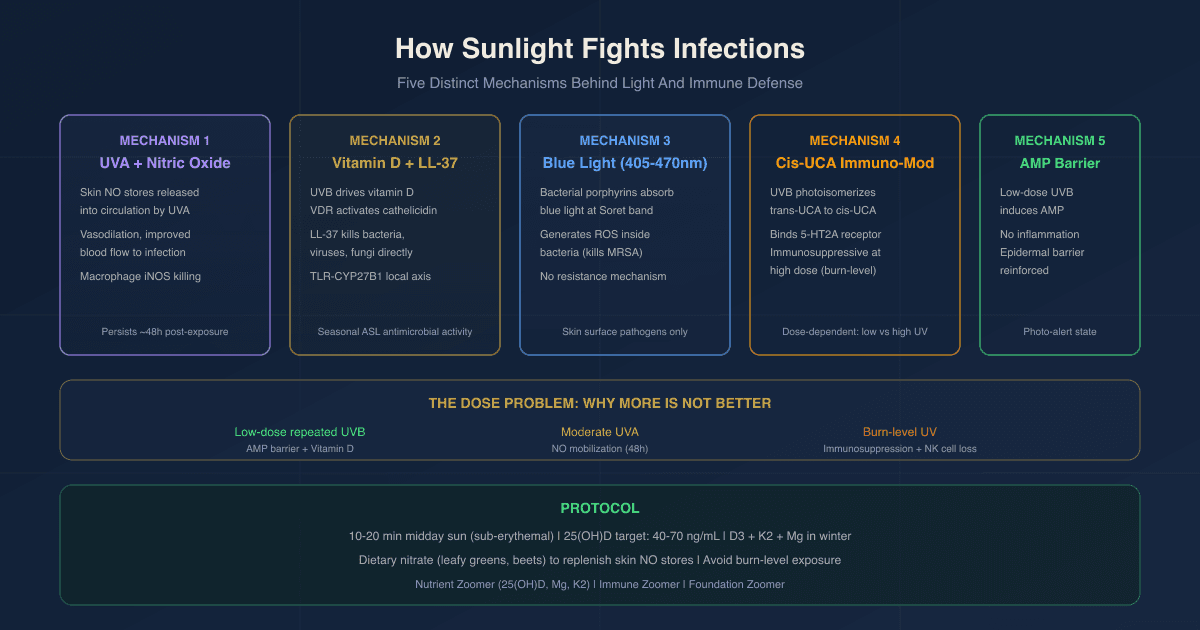
For people who can get midday sun exposure (UVB angle adequate, roughly late spring through early fall at latitudes below 35 degrees), 10 to 20 minutes of full-body or limb exposure without sunscreen around solar noon is the most physiologically complete way to obtain vitamin D. R
This provides the DBP-mediated gradual release, the photocap safety mechanism, and produces additional UVB-derived metabolites that oral supplementation does not replicate (there is evidence the skin can produce calcitriol locally from 7-DHC). R
What To Stay Away From
- Vitamin D2 supplements (ergocalciferol): inferior to D3 at raising and sustaining 25(OH)D; catabolized more rapidly; different DBP binding kinetics; not the endogenous human form. R
- High-dose D3 without K2 and magnesium: increases calcium absorption without activating the proteins (MGP, osteocalcin) that route calcium safely; potential soft tissue and arterial calcification risk. R
- Calcitriol (1,25(OH)2D3) as a supplement without medical supervision: bypasses the kidney's regulatory thermostat entirely; can cause rapid hypercalcemia; appropriate only in chronic kidney disease (CKD) patients under nephrology supervision. R
- Sunscreen during peak UVB hours if sun-derived D3 is the goal: sunscreens significantly block UVB penetration; if using sunscreen for cancer prevention, compensate with D3 supplementation. R
- Calcium supplementation without D3 and K2: calcium alone without the machinery to route it into bone and out of arteries is not helpful and may worsen cardiovascular risk. R
Testing
Blood Markers
25-hydroxyvitamin D (25(OH)D) is the standard serum marker of vitamin D status, reflecting combined sun and dietary/supplement input. R
Optimal functional range: 40 to 80 ng/mL (conventional deficiency cutoff is below 20 ng/mL, which is too low for immune, neurological, and cardiometabolic functions).
Ionized calcium and serum phosphate should be monitored in anyone supplementing at higher doses (above 5,000 IU daily), as calcitriol drives intestinal absorption of both.
PTH (parathyroid hormone) is an indirect indicator of functional vitamin D status; persistently elevated PTH with adequate 25(OH)D suggests impaired conversion, low calcium, or low magnesium.
Magnesium (red blood cell (RBC) magnesium) is a more accurate measure of intracellular magnesium status than serum magnesium, which stays normal until stores are severely depleted.
Functional Lab Panels
I use the Nutrient Zoomer (Vibrant Wellness) to assess 25(OH)D, magnesium, vitamin K2, and other micronutrient levels in a comprehensive panel.
I use the Foundation Zoomer for baseline calcium, phosphate, and PTH as part of initial assessment.
For suspected CYP27B1 or CYP2R1 dysfunction (25(OH)D stubbornly low despite adequate supplementation, or calcitriol low despite adequate 25(OH)D), the Cellular Zoomer can evaluate organic acids and metabolic markers that reflect mitochondrial enzyme function.
Mechanisms Of Action
Simple:
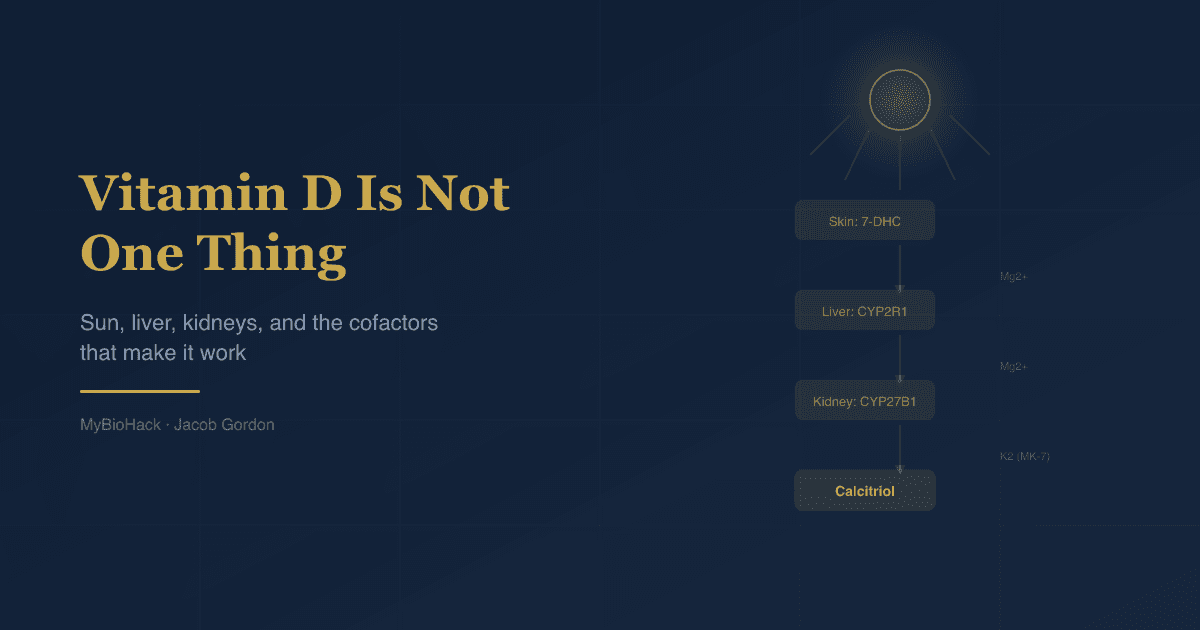
- UVB photons convert 7-dehydrocholesterol in your skin into previtamin D3, which thermally isomerizes to vitamin D3 and enters the bloodstream.
- The liver adds a hydroxyl group to produce 25(OH)D, the circulating storage form measured on labs.
- The kidney adds a second hydroxyl group to produce calcitriol, the active hormone that binds the vitamin D receptor and turns on gene expression.
- Calcitriol production in the kidney is tightly controlled by PTH (upregulates it) and FGF23 (suppresses it); more D3 supplementation does not automatically mean more calcitriol.
- Magnesium is a required cofactor for both conversion steps in the liver and kidneys.
- K2 activates the proteins (osteocalcin and MGP) that D3-stimulated calcium absorption depends on to be safely routed into bone and out of arteries.
Advanced:
- Skin photochemistry: UVB photons at 290 to 315 nm absorbed by 7-DHC in stratum spinosum and stratum basale break the B-ring via electrocyclic ring opening to produce previtamin D3. R Previtamin D3 thermally isomerizes to cholecalciferol over 1 to 3 days inside the lipid bilayer. R Excess previtamin D3 photoisomerizes to lumisterol3 and tachysterol3 (biologically inert), creating a production ceiling that prevents sun-mediated vitamin D toxicity. R DBP (vitamin D binding protein) selectively extracts cholecalciferol from the skin into circulation. R
- Hepatic 25-hydroxylation: CYP2R1, a microsomal cytochrome P450 enzyme in the endoplasmic reticulum of hepatocytes, is the principal 25-hydroxylase for both D2 and D3. R CYP27A1 (mitochondrial) has secondary activity but does not hydroxylate D2 and is not essential for vitamin D metabolism. R Obesity suppresses CYP2R1 expression in liver and kidney through unresolved transcriptional mechanisms. R The 25-hydroxylation step is not tightly feedback-regulated, so 25(OH)D levels track input linearly over physiological ranges.
- Renal 1-alpha-hydroxylation: CYP27B1 in mitochondria of proximal tubular cells performs 1-alpha-hydroxylation, producing calcitriol. R PTH stimulates CYP27B1 via cAMP signaling, with upstream consensus cAMP response elements in the proximal CYP27B1 promoter. R FGF23, secreted by osteocytes in response to rising calcitriol and phosphate, signals through the FGFR1c/Klotho complex in the proximal tubule to activate the MAPK cascade, suppressing CYP27B1 and upregulating CYP24A1. R Calcitriol induces its own degradation by inducing CYP24A1, which performs 24-hydroxylation to produce 24,25-dihydroxyvitamin D and ultimately calcitroic acid. R
- VDR genomic signaling: Calcitriol binds the ligand-binding domain of VDR; the complex dimerizes with RXR and binds VDREs in target gene promoters. R VDR regulates transcription of genes including TRPV6 (calcium channel), calbindin-D9k (calcium-binding protein), osteocalcin, CYP24A1, cathelicidin, and PTH itself. R
- GGCX/VKOR carboxylation cycle: Vitamin K2 (KH2 form) is the cofactor for GGCX, which converts Glu residues to Gla residues in VKDPs. R During carboxylation, KH2 is oxidized to vitamin K epoxide; VKOR (vitamin K epoxide reductase) regenerates KH2, allowing vitamin K2 to be recycled. R Warfarin blocks VKOR, inhibiting this recycling and depleting functional K2 for extrahepatic carboxylation of osteocalcin and MGP. R MK-7 preferentially reaches extrahepatic tissues (bone, vasculature) via low-density lipoprotein (LDL) distribution due to its long isoprene side chain, while K1 and MK-4 are primarily hepatic. R
- MGP BMP-2 inhibition: Carboxylated MGP (cMGP) inhibits bone morphogenetic protein 2 (BMP-2), a key driver of vascular smooth muscle cell osteogenic trans-differentiation. R ucMGP cannot inhibit BMP-2, allowing smooth muscle cells to transition to an osteoblast-like phenotype and deposit calcium hydroxyapatite in the arterial wall. R K2 also inhibits vascular smooth muscle cell apoptosis through the Gas6/AxL/Akt anti-apoptotic signaling pathway, with Gas6 itself being a VKDP dependent on K2 for activation. R
- Magnesium-CYP enzyme interaction: CYP2R1, CYP27B1, and CYP24A1 all share a requirement for Mg2+ ions, molecular oxygen, and reduced pyridine nucleotides (nicotinamide adenine dinucleotide phosphate (NADPH)). R Magnesium deficiency impairs CYP27B1 1-alpha-hydroxylase activity in both animal models and human case reports. R Calcitriol upregulates intestinal magnesium absorption by upregulating the transient receptor potential melastatin 6 (TRPM6) and TRPM7 transporter channels, creating a bidirectional dependency. R
Genetics
CYP2R1
CYP2R1 encodes the principal hepatic vitamin D 25-hydroxylase, located on chromosome 11p15.2. R
CYP2R1 polymorphisms have the greatest effect on individual serum 25(OH)D concentrations compared with any other gene variant in genome-wide association studies. R
L99P: homozygous transition mutation (T to C at codon 99) substituting proline for leucine; eliminates CYP2R1 enzyme activity and causes vitamin D-dependent rickets type IB (VDDR1B) with very low 25(OH)D. R
K242N: lysine to asparagine at position 242; similar phenotype to L99P with low 25(OH)D and rickets-like symptoms. R
Common CYP2R1 variants (less severe than L99P/K242N) are associated with lower 25(OH)D levels in population studies and may explain why some individuals require higher supplementation doses to reach adequate serum levels.
CYP27B1
CYP27B1 encodes renal 1-alpha-hydroxylase, located on chromosome 12q13. R
Loss-of-function mutations cause vitamin D-dependent rickets type 1A (VDDR1A), characterized by low calcitriol despite normal or elevated 25(OH)D, severe hypocalcemia, secondary hyperparathyroidism, and classic rickets that does not respond to D3 supplementation. R
Rare CYP27B1 variants are associated with increased risk of multiple sclerosis, suggesting that the degree of extrarenal calcitriol production in immune cells matters for autoimmune susceptibility. R
VDR (Vitamin D Receptor)
VDR loss-of-function mutations cause vitamin D-dependent rickets type 2A (VDDR2A); in this condition, calcitriol is synthesized normally but cannot signal through the receptor; the clinical picture is severe rickets with very high calcitriol levels. R
Common VDR polymorphisms (BsmI, TaqI, ApaI, FokI) are associated with differences in bone mineral density, cancer susceptibility, and autoimmune disease risk across multiple population studies.
GC (Group-Specific Component / Vitamin D Binding Protein)
GC encodes DBP, the primary vitamin D transport protein.
rs7041: the most widely studied DBP variant; associated with altered DBP concentrations and, consequently, different free 25(OH)D fractions, which may affect bone density and PTH suppression independently of total 25(OH)D. R
Populations with lower DBP concentrations (including some African-ancestry populations) may have higher free 25(OH)D relative to their total 25(OH)D, which may partially explain the paradox of lower total 25(OH)D in these populations but equivalent or higher bone density compared to white populations. R
More Research
- Calcitriol produced by macrophages in granulomatous diseases (sarcoidosis, tuberculosis) is not downregulated by the normal CYP24A1 feedback mechanism because macrophage CYP24A1 is defective; patients with active granulomatous disease can develop hypercalcemia from endogenous calcitriol even with low serum 25(OH)D. R
- Elevated dp-ucMGP (the undercarboxylated, non-phosphorylated form of MGP) predicts mortality in patients with aortic stenosis, end-stage renal disease, and chronic heart failure, making it an emerging cardiovascular biomarker for functional K2 status. R
- FGF23 is increasingly recognized as an independent cardiovascular risk factor; elevated FGF23 suppresses calcitriol via CYP27B1 inhibition in the kidney and simultaneously upregulates CYP24A1; in CKD, FGF23 levels rise dramatically and may explain the paradoxical resistance to vitamin D therapy in this population. R
- High altitude (above 5,300 meters at Everest base camp) produces approximately a 4-fold increase in previtamin D3 synthesis in the skin compared with sea level; UVB intensity increases with altitude due to thinner atmosphere. R
- Skin is technically an autonomous organ in the vitamin D pathway; epidermal keratinocytes express both CYP2R1 and CYP27B1 and can complete the entire conversion from 7-DHC to calcitriol locally, producing calcitriol for autocrine/paracrine use in the skin independent of the liver-kidney axis. R
- Uremia (as in CKD) directly interferes with GGCX enzyme activity in addition to suppressing CYP27B1; patients with chronic kidney disease have both reduced calcitriol production and impaired K2 carboxylation activity, compounding their arterial calcification risk. R
- VDR expression and signaling is active in vascular smooth muscle cells; calcitriol has a direct vascular anti-inflammatory effect distinct from its calcium-regulating role, which is relevant to understanding why epidemiological studies consistently link low 25(OH)D to cardiovascular disease even after adjusting for calcium intake.
- For biomarker testing I use the Nutrient Zoomer (Vibrant Wellness) to assess 25(OH)D, magnesium, and micronutrient status, and the Foundation Zoomer for baseline calcium, phosphate, PTH, and liver markers.
Jacob Gordon
INHC, FMT-C
Integrative Nutrition Health Coach
I cover mold illness, post-viral recovery, methylation, and complex chronic disease, drawing on ten years of clinical research, work inside a functional medicine clinic, and my own recovery from all of it. Every claim here is cited.
Book a ConsultationRelated Protocols & Supplements
Deep-dive chapters and recommended supplements for this topic
Ashwagandha (KSM-66)
600mg/day
Vitamin D3 + K2
5000 IU + 200mcg/day
Zinc
30mg/day with food