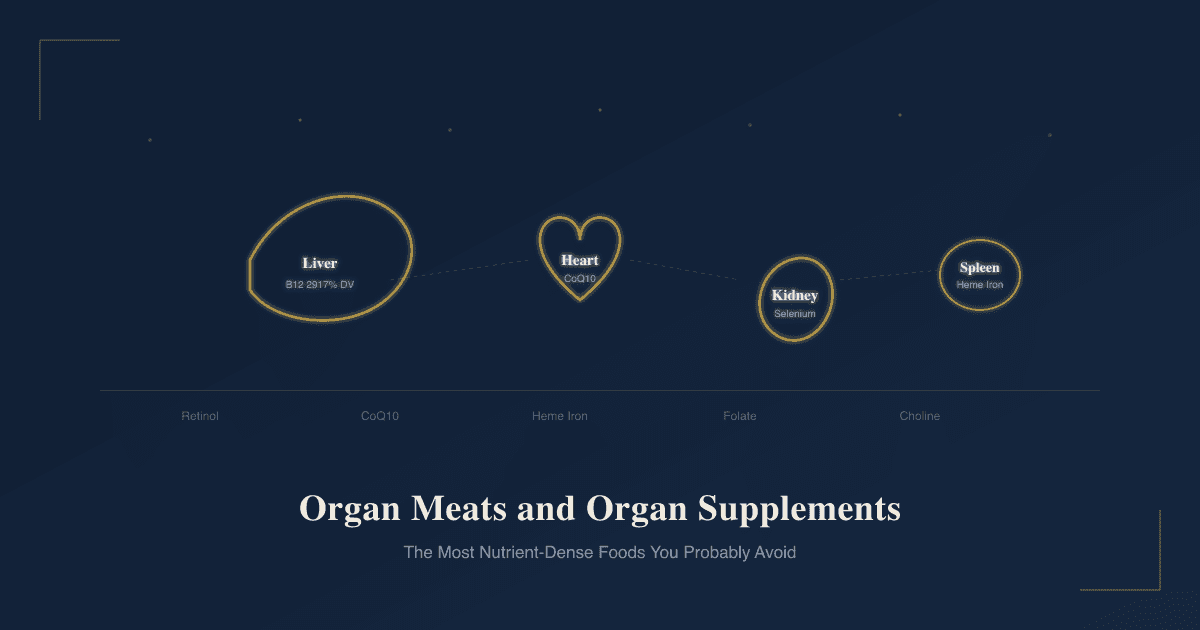
Organ Meats And Organ Supplements: The Most Nutrient-Dense Foods You Probably Avoid
By Jacob Gordon, INHC, FMT-CThis article contains affiliate links. As an Amazon Associate, MyBioHack earns from qualifying purchases at no extra cost to you. We only link products we research and stand behind.
Organ meats are the most nutritionally dense foods available in the human diet, and the modern tendency to discard them in favor of muscle meat represents a real and documented nutritional regression.
In this post, we will discuss what each major organ provides, why food-form nutrients are more bioavailable than synthetic equivalents, what organ supplements deliver for those who cannot or will not eat whole organs, who needs them most, and what to be careful about.

What Organ Meats Are And Why They Matter
Organ meats (also called offal or variety meats) are the internal organs of animals consumed as food.
The primary ones discussed in this post are liver, heart, kidney, spleen, brain, and bone marrow.
Every traditional culture on earth prized these organs and reserved them for pregnant women, warriors, children, and the sick, specifically because they were understood to be more nourishing than muscle meat.
Modern nutritional analysis has confirmed this intuition repeatedly.
Gram for gram, organ meats contain higher concentrations of virtually every essential vitamin and mineral than their muscle meat equivalents, and they contain several compounds (CoQ10, carnitine, taurine, choline) that are either absent or negligible in muscle meat. R
Offal items declined in Western diets following industrialization, refrigeration, and the sanitized packaging of muscle cuts.
The nutritional cost of this shift has not been trivial.
Common conditions that respond to nutrient patterns organ meats address: (not exclusive list)
- Anemia and low ferritin (heme iron deficiency)
- Brain fog and fatigue (B12, choline, CoQ10 deficiency)
- Copper deficiency (liver is the densest dietary copper source)
- Fertility and reproductive dysfunction (retinol, zinc, B12, CoQ10)
- Hypothyroidism (selenium from kidney)
- Low testosterone (zinc, retinol, cholesterol precursors)
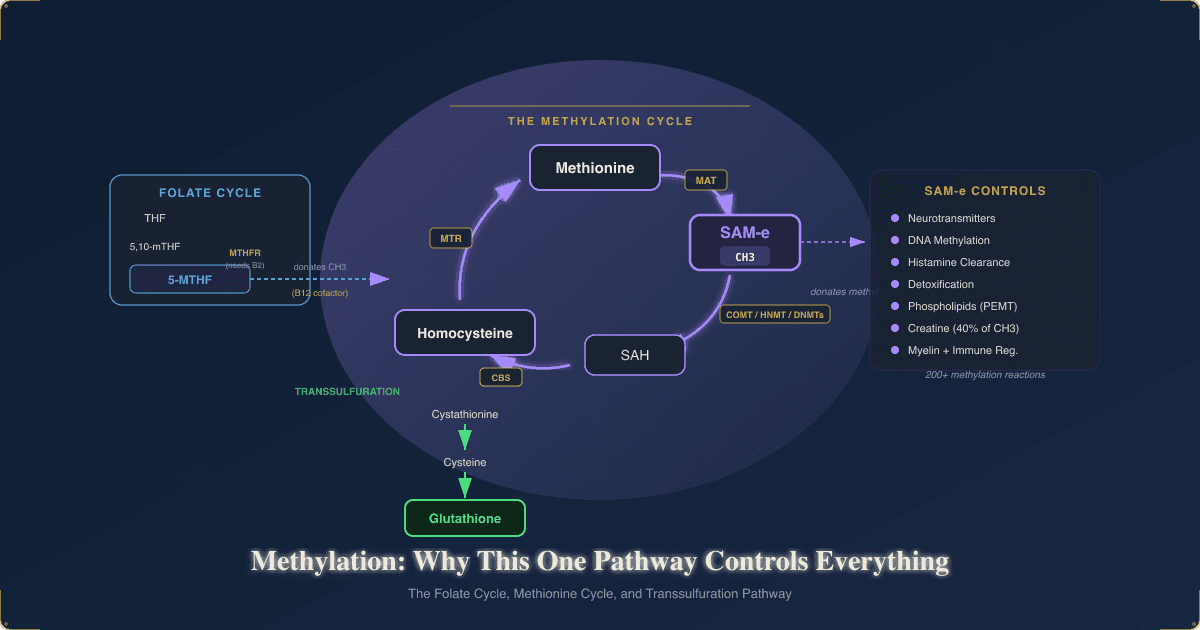
- Methylation dysfunction (natural folate, B12, choline, B6, B2)
- Poor wound healing and immune function (zinc, copper, vitamin A)
The key distinction between organs and synthetic supplements is not just nutrient concentration.
It is form.
Preformed retinol vs. beta-carotene, methylcobalamin vs. cyanocobalamin, natural folate vs. folic acid, heme iron vs. ferrous sulfate: these distinctions matter clinically, and organ meats consistently provide the more bioavailable form. R
Liver: The Nutritional Benchmark
Beef liver is arguably the most nutrient-dense food available, and it is the standard against which other foods and supplements are measured. R
Per 100g of raw beef liver, the approximate nutrient profile is: R
- Calories: 135 kcal
- Protein: 20.4g
- Vitamin B12: 59mcg (2,917% DV)
- Vitamin A (retinol): 9,442mcg (1,049% DV)
- Copper: 14mg (1,578% DV)
- Riboflavin (B2): 3.4mg (263% DV)
- Folate: 253mcg (63% DV)
- Niacin (B3): 18mg (110% DV)
- Pantothenic acid (B5): 7.1mg (142% DV)
- Iron: 6.5mg (36% DV, as heme iron)
- Selenium: 36mcg (66% DV)
- Zinc: 5.3mg (48% DV)
- Choline: approximately 330mg (60% DV)
- CoQ10: approximately 3.9mg
These are not marginal contributions.
A 100g serving of beef liver provides more than the full daily requirement for B12, vitamin A, copper, riboflavin, niacin, and pantothenic acid in a single meal. R
What liver is particularly useful for: (not exclusive list)
- Anemia unresponsive to plant-based iron (heme iron in liver has 15-35% absorption vs 2-10% for non-heme sources)
- B12 deficiency (the highest concentration of B12 in any food)
- Choline deficiency (choline is essential for liver fat metabolism, neurotransmitter production, and methylation, and approximately 90% of Americans do not meet adequate intake)
- Copper deficiency (liver contains more copper than any other food by a wide margin; 14mg per 100g vs. 3.7-4.8mg in heart and kidney)
- MTHFR variants (natural food folate from liver is not folic acid and does not require the MTHFR enzyme for conversion; it enters the folate cycle downstream of the enzymatic bottleneck)
- Retinol deficiency (preformed retinol in liver does not require BCO1 enzyme conversion, unlike beta-carotene from vegetables; poor BCO1 converters cannot rely on plant-based vitamin A sources)
Frequency: 1-2 servings (100g each) per week is widely considered appropriate for most adults, balancing the extraordinary nutrient density against the high vitamin A and copper content that limits daily consumption.
Grass-fed sourcing: Grass-fed and pasture-raised liver has a better fatty acid profile (higher omega-3, higher CLA content) and lower risk of heavy metal accumulation than conventionally raised. R
The myth that liver stores toxins: The liver metabolizes and neutralizes toxins but does not stockpile them.
Toxins are processed and excreted; the liver stores vitamins and minerals.
A healthy animal on a clean diet has a liver that is a nutrient repository, not a toxin repository.
Source quality matters for heavy metal exposure, but this is a reason to source carefully, not a reason to avoid liver entirely.
Heart: The CoQ10 Organ
Beef heart is technically a muscle, which makes it the easiest entry point for people new to organ meats, as it has a texture and flavor closer to steak than to liver.
It is also the richest dietary source of Coenzyme Q10 (CoQ10) on the planet.
Heart tissue contains approximately 11.3-12.8mg of CoQ10 per 100g, which is 3-4 times higher than skeletal muscle meat. R
CoQ10 is the electron carrier in the mitochondrial electron transport chain that shuttles electrons between Complexes I/II and Complex III, and it is simultaneously a potent lipid-soluble antioxidant in cell membranes. R
Deficiencies of CoQ10, carnitine, taurine, and B vitamins are documented in the failing myocardium, and correction of these deficits can improve cardiac outcomes. R
Per 100g of beef heart, the approximate profile includes: R
- Protein: 28g (dense, similar to steak)
- CoQ10: 11.3-12.8mg
- Vitamin B12: approximately 300% DV
- Riboflavin (B2): 70% DV
- Iron: 24% DV (heme)
- Selenium: 20% DV
- Taurine: approximately 1g per 100g
- L-carnitine: significant amounts (heart has among the highest carnitine concentrations of any food)
- Choline: 28% DV
- Copper: 20% DV
Taurine is an amino acid that is critical for cardiac rhythm stability (taurine deficiency causes cardiomyopathy in animals), bile acid conjugation, retinal function, and skeletal muscle contractility.
It is not found in meaningful amounts in plant foods.
L-carnitine transports long-chain fatty acids into the mitochondrial matrix for beta-oxidation.
Heart tissue concentrates it because the heart runs primarily on fatty acid oxidation.
What beef heart is particularly useful for: (not exclusive list)
- Cardiovascular support (CoQ10, carnitine, taurine, B vitamins)
- Chronic fatigue and mitochondrial dysfunction (CoQ10 is the rate-limiting electron carrier)
- Statin use (statins deplete endogenous CoQ10 by inhibiting the mevalonate pathway that produces both cholesterol and CoQ10)
- Exercise performance and recovery (carnitine, taurine, CoQ10, B vitamins)
- Aging (endogenous CoQ10 production declines measurably after age 30)
Kidney: The Selenium Organ
Beef kidney is the most concentrated dietary source of selenium among commonly available foods.
A 3.5-ounce (100g) serving delivers approximately 256% of the daily selenium requirement.
Selenium is required for:
- Conversion of inactive T4 to active T3 thyroid hormone (via selenoprotein deiodinases)
- Glutathione peroxidase (GPx) function, the primary enzymatic antioxidant against lipid peroxidation
- Protection of the thyroid gland from hydrogen peroxide produced during thyroid hormone synthesis
- Sperm motility and male fertility
Beyond selenium, kidney provides: R
- B12 (high)
- B2, B3, B5, B6 (all present)
- Copper (4.8mcg/g, lower than liver but still meaningful)
- Heme iron
- Zinc
Betaine and choline are also concentrated in kidney more than any other organ except liver, with betaine providing direct methyl groups to the homocysteine-to-methionine conversion via BHMT (betaine-homocysteine methyltransferase), bypassing MTHFR entirely. R
What kidney is particularly useful for: (not exclusive list)
- Hypothyroidism and low T3 (selenium for deiodinase function)
- Methylation support (betaine, choline, B12, B6, B2)
- Oxidative stress and antioxidant deficit (selenium/GPx)
- Thyroid autoimmunity (selenium reduces thyroid peroxidase antibody levels in Hashimoto's) R
Spleen: The Iron Organ
Spleen is the least commonly consumed of the major organs in Western countries, but it has a strong claim to being the single most concentrated source of bioavailable heme iron in the entire food supply.
Spleen is denser in iron than liver, often providing more than 200% of the daily iron requirement per 100g, and the iron is entirely in heme form with 15-35% absorption. R
The spleen is the body's primary blood filtering organ and site of red blood cell recycling, which explains why it concentrates iron more than any other tissue.
Beyond iron, spleen provides heme iron alongside immune-modulating peptides related to its role as a lymphoid organ.
What spleen is particularly useful for: (not exclusive list)
- Iron-deficiency anemia (particularly where plant-based and supplemental iron has failed or been poorly tolerated)
- Chronic fatigue from low ferritin (ferritin below 30-50 ng/mL is functionally low even when flagged as "normal")
- Pregnancy and postpartum iron needs
- Distance athletes with iron losses from hemolysis and sweat
Spleen is most commonly consumed dried and powdered in organ supplement blends rather than as a whole food in the West.
Brain, Bone Marrow, And Other Organs
Brain
Brain is the single richest dietary source of DHA (docosahexaenoic acid), the omega-3 fatty acid that constitutes approximately 15% of the dry weight of the cerebral cortex.
It is also rich in phosphatidylserine (PS), a phospholipid critical for neuronal membrane fluidity and cellular signaling, and choline.
Brain consumption is the most controversial of the organ meats due to theoretical risks from prion diseases (particularly bovine spongiform encephalopathy / BSE) in conventionally raised cattle.
Sourcing from grass-fed, pasture-raised animals from countries with low BSE risk substantially reduces this concern, but it remains a real consideration for those who eat brain regularly.
The practical alternative is to obtain DHA from fatty fish and PS from food or supplementation.
Bone Marrow
Bone marrow is exceptionally rich in:
- Fat-soluble vitamins A, D, E, and K2 (in meaningful amounts)
- Alkylglycerols (immune-supporting lipids)
- Collagen precursors (glycine, proline, hydroxyproline)
- Calcium (among the highest concentrations in any meat product)
Bone marrow is consumed by roasting marrow bones and scooping out the soft interior.
The gelatinous texture and buttery, rich flavor make it more approachable than many other organs.
Thymus (Sweetbreads)
Thymus is the glandular organ responsible for T-cell maturation.
It is concentrated in thymosin peptides, thymulin (zinc-dependent), and immune-regulatory compounds.
It is used in traditional medicine for immune reconstitution and has theoretical use in thymic involution associated with aging.
Pancreas
Pancreas contains natural digestive enzymes (lipase, protease, amylase) in their food form alongside fat-soluble vitamins and B vitamins.
Freeze-dried pancreas supplements are used by some practitioners for digestive enzyme support.
Why Bioavailability From Food Beats Synthetic Supplements
This is not a philosophical argument against supplementation.
It is a mechanistic one.
Vitamin A (retinol vs. beta-carotene): Beef liver provides preformed retinol, which is absorbed at 70-90% efficiency.
Most multivitamins and plant sources provide beta-carotene, a provitamin that requires conversion to retinol by the BCO1 enzyme.
Average conversion efficiency is approximately 12:1 (12mcg beta-carotene to produce 1mcg retinol), and individual rates vary from 3:1 to 28:1 depending on genetics.
People with BCO1 polymorphisms are poor converters who may be clinically vitamin A deficient despite adequate dietary carotenoid intake, without ever knowing it. R
Vitamin B12 (methylcobalamin vs. cyanocobalamin): Liver provides methylcobalamin and adenosylcobalamin, the active coenzyme forms of B12 the body uses directly.
Most supplements and fortified foods contain cyanocobalamin, a synthetic form that requires enzymatic conversion to become metabolically active.
In neurological applications, methylcobalamin shows superior retention and better clinical outcomes in peripheral neuropathy compared to equivalent doses of cyanocobalamin. R
Folate (food folate vs. folic acid): Liver provides natural food folate with approximately 80% bioavailability.
Folic acid is a synthetic form that requires the MTHFR enzyme (specifically the MTHFR C677T and A1298C variants) to be converted to 5-methyltetrahydrofolate (5-MTHF), the active form.
People with MTHFR variants, estimated at 40-60% of some populations, convert folic acid poorly and may accumulate unconverted folic acid, which has its own downstream effects on folate receptor saturation. R
Natural food folate from liver bypasses this enzymatic step entirely. R
Iron (heme vs. non-heme): Heme iron from organ meats is absorbed at 15-35%, mediated by a separate receptor-based pathway that is not inhibited by phytates, calcium, polyphenols, or other dietary factors that suppress non-heme iron absorption.
Non-heme iron (ferrous sulfate supplements, plant sources) is absorbed at 2-10% and is blocked by many common dietary compounds.
To achieve the same increase in ferritin, you need approximately 3-6 times more non-heme iron than heme iron. R
CoQ10 (food-form vs. synthetic ubiquinone): Heart tissue CoQ10 is delivered in a lipid matrix with natural cofactors.
Synthetic CoQ10 supplements (ubiquinone or ubiquinol) require fat for absorption and are poorly absorbed without it.
Food-form CoQ10 from heart arrives already embedded in fatty tissue, which optimizes its uptake.
Organ Supplements: What They Are And Who Should Use Them
Desiccated (freeze-dried) organ supplements are whole organs that have been sliced thin and freeze-dried at low temperatures to preserve heat-sensitive nutrients (CoQ10, choline, enzymes, active B vitamins), then encapsulated in powder form.
They are not extracts, concentrates, or synthetic isolates.
They are dehydrated food.
The nutrient density per capsule is real, though lower than eating the equivalent fresh organ, because the dose per serving (typically 2-6g of dried organ) is much smaller than a full food serving (100g fresh).
Beef Liver Capsules are the most widely available and most studied single-organ supplement.
Grass-Fed Beef Organ Complex blends (liver + heart + kidney + spleen + pancreas) provide broader coverage than single-organ products.
Usage: single-organ vs. blend supplements are used differently.
Single-organ supplements (liver only, heart only, kidney only) can be used continuously when there is a specific, ongoing deficiency being corrected, such as liver capsules for a person with confirmed low B12 or ferritin, or heart capsules for someone on a statin.
Generalized organ blend supplements covering multiple organs simultaneously are better used seasonally or biseasonally, meaning one full bottle or a defined course of 4-6 weeks, two to four times per year, rather than daily year-round.
The rationale is that a broad multi-organ blend provides a concentrated, front-loaded burst of the full spectrum of fat-soluble vitamins, fat-soluble coenzymes, and trace minerals simultaneously.
Running that continuously long-term creates a risk of cumulative accumulation of fat-soluble nutrients (particularly retinol and copper, which are the limiting factors in both whole liver and liver-containing blends) without the natural dietary variation that comes from rotating whole food sources.
Seasonal or biseasonal use aligns with how traditional cultures ate: organs were consumed in concentrated bursts when an animal was slaughtered, not in identical daily doses indefinitely.
What to look for in organ supplements: (not exclusive list)
- Freeze-dried, not heat-processed: Heat destroys CoQ10, choline, and active enzymes; freeze-drying preserves them
- Grass-fed, pasture-raised sourcing: Better fatty acid profile, lower heavy metal accumulation risk
- No fillers, binders, or flow agents: Most good products contain only the organ powder and a capsule
- New Zealand or Argentinian sourcing: These countries have the longest track record of clean, BSE-free grass-fed organ supplements
- Third-party tested: Heavy metals and contaminants are real quality control issues in this market
At typical supplement doses (3,000-6,000mg dried organ per day), the vitamin A and copper content is substantially lower than eating a full 100g serving of fresh liver.
This is still meaningfully below the daily upper limits for retinol and copper in a short course, which is why seasonal use works well without risk of accumulation.
Who Benefits Most
Women of reproductive age: Iron deficiency is the most common nutritional deficiency in the world, and heme iron from organ supplements has fewer GI side effects than ferrous sulfate while achieving comparable or better ferritin increases. R
Choline is also a common deficiency during pregnancy with significant consequences for fetal brain development, and most prenatal vitamins do not provide adequate amounts.
People with MTHFR variants: The natural folate in liver bypasses the MTHFR bottleneck that makes folic acid supplementation less effective for a significant portion of the population. R
The same logic applies to methylcobalamin (B12) in the active form.
Vegetarians and vegans returning to animal foods: Organ meats rapidly correct the B12, heme iron, zinc, and retinol deficits that develop on prolonged plant-only diets.
For those who are reintroducing animal foods but have difficulty with the taste and texture of whole organs, supplements are a practical bridge.
Adults over 40: B12 absorption declines with age as intrinsic factor production decreases.
CoQ10 synthesis declines measurably after age 30 and accelerates after 40.
Organ meats and organ supplements address both simultaneously alongside a broad spectrum of micronutrients that support aging tissue. R
People on statins: Statins inhibit HMG-CoA reductase, the rate-limiting enzyme in the mevalonate pathway.
This pathway produces both cholesterol and ubiquinone (CoQ10).
Statin use measurably reduces plasma and tissue CoQ10 levels.
Heart organ or CoQ10 supplementation is a direct and logical correction.
Chronic illness and fatigue: Patients with dysbiosis, CIRS, mast cell activation, Long COVID, or other complex chronic conditions frequently have multiple overlapping micronutrient deficiencies driven by poor absorption, increased metabolic demand, or reduced dietary variety.
Organ supplements provide broad-spectrum, food-form nutrition with high bioavailability, which is particularly relevant when GI absorption is compromised.
What To Stay Away From
- Daily liver consumption in large portions (vitamin A and copper are both fat-soluble and accumulate; the tolerable upper intake for retinol is 3,000mcg/day for adults, and a single 100g serving of beef liver contains roughly 9,000mcg; 1-2 servings per week is the practical ceiling for most people) R
- Liver in pregnancy in large amounts (excessive preformed retinol is teratogenic in the first trimester; 1 ounce of liver already delivers close to the daily upper limit; small amounts weekly are fine, daily liver or high-dose liver supplements are not) R
- Organ meats in gout (organs are high in purines, which metabolize to uric acid; gout flares are a real risk with frequent organ consumption in susceptible individuals)
- Organ meats in Wilson disease (Wilson disease is a copper accumulation disorder; liver's extreme copper density makes it directly contraindicated)
- Iron overload conditions (hereditary hemochromatosis, transfusional iron overload, or confirmed elevated ferritin without iron deficiency; heme iron is efficiently absorbed even in iron-replete individuals and will worsen overload)
- Heat-processed organ supplements (the processing temperature matters; heat above 47°C destroys CoQ10, deactivates enzymes, and degrades choline; freeze-drying preserves these; check that the label states freeze-dried, not heat-processed)
- Unverified sourcing (the heavy metal accumulation concern for liver is real in conventionally raised, industrial animals on contaminated feed; grass-fed and pasture-raised sourcing in clean environments substantially reduces this risk; do not buy budget organ supplements without third-party testing)
- Brain from unknown sources (prion risk from conventionally raised cattle is low but real; brain from grass-fed, BSE-tested, pasture-raised sources in low-risk regions is considerably safer)
- Expecting organ supplements to replace all other nutrition (organ supplements outperform multivitamins on B12, vitamin A, heme iron, CoQ10, choline, and copper, but they do not provide meaningful vitamin D, vitamin E, calcium, or magnesium; they complement rather than replace a complete supplement protocol)
Mechanisms Of Action
Simple:
- Every organ in an animal's body concentrates the nutrients most critical to its own function; the liver concentrates B12, copper, retinol, and folate because it needs them to perform detoxification, methylation, and blood protein synthesis; the heart concentrates CoQ10 because it is contracting continuously and needs maximum mitochondrial energy output; eating an organ delivers what that organ needed most.
- Heme iron travels through the gut wall on a dedicated receptor (HCP1) that is not affected by dietary compounds like phytates, calcium, or polyphenols that block non-heme iron; this is why liver iron corrects anemia in cases where plant iron and ferrous sulfate have both failed.
- Natural food folate from liver enters the folate cycle downstream of the MTHFR enzyme, which means MTHFR variants that cannot convert folic acid to 5-MTHF get fully active folate from liver without needing that enzymatic step.
- The vitamin A in liver is preformed retinol, ready to use immediately; the vitamin A equivalent in carrots or sweet potatoes is beta-carotene, which requires an enzyme (BCO1) for conversion; people with BCO1 variants convert it poorly and can be vitamin A deficient despite eating large amounts of vegetables.
- CoQ10 in beef heart is delivered embedded in natural fat, which optimizes its absorption; it is the most concentrated food source of this compound, which the mitochondria of every cell require for electron transport and ATP production.
Advanced:
- Heme iron receptor-mediated absorption: Heme iron is transported across the apical membrane of duodenal enterocytes via HCP1 (heme carrier protein 1 / PCFT), a proton-coupled transporter distinct from the DMT1 transporter used by non-heme iron. Inside the enterocyte, heme oxygenase releases Fe2+ from the porphyrin ring. This released Fe2+ enters the same labile iron pool as non-heme iron and exits via basolateral ferroportin. The HCP1 pathway is not regulated by hepcidin or phytates, which explains why heme iron achieves consistent absorption even in iron-replete individuals and is unaffected by simultaneous calcium or polyphenol consumption. R
- MTHFR and food-form folate: Folic acid (synthetic) requires reduction by DHFR (dihydrofolate reductase) before entering the folate cycle, and then conversion by MTHFR (methylenetetrahydrofolate reductase) to 5-MTHF. People with MTHFR C677T (TT genotype) have approximately 70% reduced MTHFR activity; people with A1298C compound heterozygosity have approximately 40% reduction. These individuals cannot efficiently convert folic acid. Natural food folates from liver are primarily 5-methyltetrahydrofolate (5-MTHF), polyglutamate forms, or 10-formyl-THF, all of which enter the cycle downstream of the MTHFR enzyme, bypassing the enzymatic bottleneck entirely. R
- BCO1 and retinol conversion: Beta-carotene cleavage to retinal (the first step in retinol synthesis from plant carotenoids) is catalyzed by BCO1 (beta-carotene oxygenase 1). Common BCO1 polymorphisms (including R267S and A379V) reduce enzymatic activity by 32-69%. In populations with high BCO1 polymorphism frequency, a significant proportion of individuals cannot maintain adequate retinol status from plant sources alone. Preformed retinol from liver requires no enzymatic conversion and enters retinol metabolism directly, making it the reliable source of vitamin A regardless of BCO1 genotype. R
- CoQ10 in the electron transport chain: CoQ10 (ubiquinone) is the mobile electron carrier that accepts electrons from NADH (via Complex I) and FADH2 (via Complex II) and delivers them to Complex III (ubiquinol-cytochrome c reductase) in the inner mitochondrial membrane. It is the only electron carrier in the respiratory chain that is not a fixed protein complex; its mobility between the membrane-embedded complexes is essential for efficient oxidative phosphorylation. In addition to its role in ATP synthesis, reduced CoQ10 (ubiquinol) is a potent lipid-soluble antioxidant in cell membranes, recycled from its oxidized form by Complex I. Statin drugs inhibit HMG-CoA reductase in the mevalonate pathway, reducing the isoprenoid side chain that distinguishes CoQ10 from other quinones, directly lowering tissue CoQ10 biosynthesis. Heart tissue, which contracts continuously and has among the highest mitochondrial density of any tissue, concentrates CoQ10 accordingly. R
- Taurine and cardiac function: Taurine is the most abundant free amino acid in the heart (approximately 20-40mmol/L intracellular). It modulates intracellular calcium handling by influencing the sarcolemmal Na+/Ca2+ exchanger and ryanodine receptor activity, stabilizing calcium transients during systole and diastole. Taurine deficiency causes dilated cardiomyopathy in cats (which cannot synthesize taurine endogenously) and impairs cardiac function in animal models across species. In humans, taurine is conditionally essential under high metabolic stress. Deficiencies of taurine, along with carnitine and CoQ10, are documented in the failing human myocardium. Beef heart delivers all three simultaneously. R
- Choline and methylation: Choline is a methyl donor that enters methylation pathways through two routes: (1) it donates a methyl group via betaine (oxidized choline) to the BHMT (betaine-homocysteine methyltransferase) reaction, directly converting homocysteine to methionine without requiring MTHFR or B12; (2) it is the substrate for phosphatidylcholine synthesis, essential for VLDL secretion from the liver, cell membrane composition, and acetylcholine neurotransmitter production. Approximately 90% of Americans do not reach the adequate intake level for choline (550mg/day for men, 425mg/day for women). Liver and kidney are the most concentrated food sources of choline, providing a broad-spectrum, food-form delivery of this critical methyl donor alongside the B vitamins it works with. R
More Research
- A USDA-funded nutrient analysis of U.S. beef offal items found that every organ tested (heart, liver, kidney, tongue, tripe, oxtail, bone marrow, and blood) qualified as either a "good source" or "excellent source" of at least one essential nutrient per FDA labeling criteria, with liver demonstrating the broadest multi-nutrient coverage. R
- The Nutrient Zoomer (Vibrant Wellness) is the most comprehensive baseline test for determining which specific nutrient deficiencies organ meats would most directly address, covering vitamins, minerals, amino acids, fatty acids, and antioxidants in a single panel.
- The Foundation Zoomer provides CBC, liver function, iron studies, and thyroid markers that reveal the downstream consequences of the deficiencies organ meats address (anemia, elevated homocysteine, low ferritin, liver function).
- Muscle meat, while a quality protein source and a significant contributor of creatine, niacin, and potassium, consistently clusters near the bottom of comparative nutrient density analyses when evaluated against organ meats across virtually all measured micronutrients; the two categories of food are nutritionally complementary rather than interchangeable. R
- Natural folate from liver has approximately 80% bioavailability, comparable to folate from vegetables and fruit, and substantially higher effective utilization than synthetic folic acid in individuals with common MTHFR variants, because food folate does not require the MTHFR enzymatic step. R
- Deficiencies of CoQ10, L-carnitine, thiamine, and taurine are all documented in the failing human myocardium, and each of these micronutrients is concentrated in beef heart at levels that make regular consumption of heart tissue a logical nutritional strategy for cardiovascular support. R
- Spleen iron density exceeds liver iron density in most analyses of raw U.S. beef offal, making spleen the single most concentrated source of heme iron in the food supply, though it remains rarely consumed directly in Western diets and is most accessible via freeze-dried organ supplement blends. R
- Grass-fed and pasture-raised sourcing improves the omega-3 fatty acid profile and reduces the potential for heavy metal accumulation in organ meats, making sourcing a clinically meaningful variable rather than a purely ethical or environmental one.
Jacob Gordon
INHC, FMT-C
Board Certified Health Coach
I spent years battling unexplained chronic illness before discovering biohacking, epigenetics, and functional medicine. Now I share that research at MyBioHack to help others find their own answers.
Book a ConsultationRelated Protocols & Supplements
Deep-dive chapters and recommended supplements for this topic
Electrolyte Complex
1 scoop/day
CoQ10
200mg/day
Magnesium Glycinate
400mg at bedtime